THEBUSINESSBYTES
BUREAU
BASEL
(SWITZERLAND), OCTOBER 27, 2026
Syngenta Group has
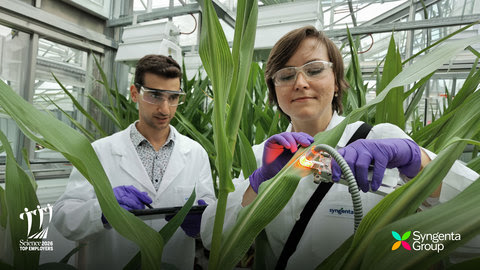
been named the leading employer in the agriculture sector by Science magazine
for the 10th consecutive year, reaffirming its global standing in scientific
innovation and its ability to attract and retain top research talent.
The company ranked
sixth among science-driven organisations globally in the magazine’s annual Top
Employers survey, maintaining its position among the world’s top 10 since 2019.
The survey, based on
feedback from scientists and industry professionals worldwide, recognises
organisations that foster scientific excellence, innovation, trust and employee
engagement.
“Being recognised as a leading science
employer for the tenth consecutive year is a tremendous honour,” Syngenta Group
CEO Hengde Qin said, highlighting the dedication and expertise of scientists
working across the company’s global network.
Qin said the
curiosity and commitment of researchers were driving innovations that could
make a meaningful difference to farmers.
Camilla Corsi,
Syngenta’s global head of Crop Protection Research and Development, said the
recognition reflected a collaborative research culture in which experts across
chemicals, biologicals, plant breeding, traits, data science and artificial
intelligence work together to address complex agricultural challenges.
She emphasised that
scientific excellence, collaboration and a shared purpose were essential to
developing innovations that meet farmers’ evolving needs.
The recognition comes
as Syngenta advances research aimed at helping farmers improve agricultural
productivity while addressing sustainability challenges.
Among its recent
developments are EXORT technology, which is designed to help plants make better
use of their own biological processes, and VIRESTINA technology, described by
the company as the world’s first selective herbicide to control resistant grass
weeds in soybean and cotton in nearly four decades.
The company is also
expanding its global research and development infrastructure, including the
development of an agricultural bioscience research centre in the United Kingdom
and the opening of a vegetable seeds R&D technology centre in Spain.
These investments are expected to strengthen Syngenta’s research capabilities and accelerate the translation of scientific discoveries into practical agricultural solutions for farmers worldwide.
With agriculture facing mounting pressure to produce more with greater resource efficiency, the company’s continued focus on research and talent development underscores the growing importance of science-led innovation in building productive and resilient farming systems.