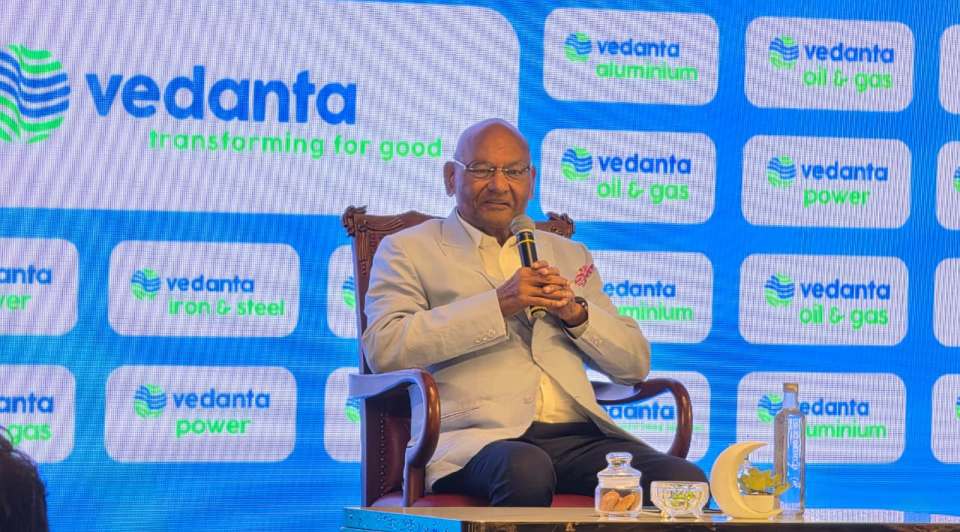
Anil
Agarwal bats for faster exploration and easier clearances; says Odisha can play
a key role in building a self-reliant economy
PRIYABRAT
BISWAL
BHUBANESWAR,
SEPTEMBER 26, 2026
India must unlock its
vast mineral wealth beneath the earth to reduce import dependence and build a
more self-reliant economy, Vedanta Resources Chairman Anil Agarwal said on
Saturday, calling for faster mineral exploration, simpler regulatory processes
and greater utilisation of the country’s rich geological resources.
Interacting with
media persons here today, Agarwal said India had succeeded in achieving greater
self-sufficiency in food by harnessing resources above the earth and should now
replicate that approach in mining and mineral development. “We have our own
resources and need to explore them,” he said, adding that India should shed the
tag of being a “country of import”.
India currently
imports around 90 per cent of its oil, 95 per cent of its copper and 99.5 per
cent of its gold, leaving the economy exposed to geopolitical tensions and
global supply-chain disruptions, particularly amid conflicts and instability in
West Asia. Agarwal said India possesses some of the world’s richest geological
formations, with substantial reserves of hydrocarbons, coal, bauxite, iron ore
and rare earths, but domestic extraction remains constrained.
Batting for large-scale
mineral exploration, Agarwal advocated moving away from rigid lease and auction
constraints, greater use of self-certification and faster regulatory
clearances. He cited the Maharashtra model as an example of a more facilitative
approach that could accelerate industrial development and resource utilisation.
Responding to
questions over reported opposition to the construction of an approach road
linked to Vedanta’s Sijimali bauxite mining project, Agarwal said resistance to
large projects was a natural occurrence. He alleged that “people from foreign
countries” had instigated local communities against new investments around two
decades ago, but said such resistance had reduced significantly in recent
years. He also attributed resistance in some cases to competition among
companies and local issues.
“Sometimes positive feedback also helps us
learn new things,” Agarwal said, adding that he remained hopeful of the early
operation of the Sijimali bauxite mining project. He said 10 to 15 public
hearings had been held to seek villagers’ views as part of the approval process
and claimed that the project had received “unanimous approval” from villagers.
Highlighting Odisha’s
strategic importance to India’s mineral economy, Agarwal said more than 40 per
cent of the country’s total bauxite reserves are located in the
Koraput-Rayagada-Kalahandi region. “It’s unfortunate that we import bauxite
despite having such rich reserves,” he said, expressing hope that bauxite
production would increase significantly over the next two to three years. He
said India was gradually moving from an import-dependent economy towards
greater self-sufficiency, with domestic resource development playing a crucial
role in that transition.
Agarwal also
reiterated Vedanta’s commitment to expanding its industrial footprint in Odisha
through projects spanning aluminium smelting, refining and power generation in
Dhenkanal and Rayagada. The group has already announced a proposed investment
of ₹1 lakh crore in the two districts.
Of the planned investment, 40 per cent is proposed for
smelters, while 30 per cent each would be allocated to refineries and power
plants.
According to Agarwal,
the proposed projects could be completed within three years if government
support and facilitation continue. Vedanta currently operates a 5 MTPA alumina
refinery in Odisha and remains keen on expanding its presence through the
proposed refinery in Rayagada and smelter project in Dhenkanal.
Recalling his long
association with Odisha, Agarwal said former Chief Minister Biju Patnaik had
encouraged him to establish industries in Kalahandi when the district was among
the state’s most underdeveloped regions. He said Vedanta’s presence in the state
has since evolved into a broader industrial vision encompassing mining,
refining, smelting and power.
Agarwal also said
Vedanta had the capability to enter downstream manufacturing on its own but
preferred to create opportunities for smaller entrepreneurs and MSMEs around
its operations. “We can set up downstream units on our own. But we want smaller
players to set up industries and draw power and source aluminium from us,” he
said, adding that access to finance, technology and raw materials could help
smaller businesses grow alongside Vedanta’s operations.