THEBUSINESSBYTES BUREAU
BHUBANESWAR, FEBRUARY 10, 2026
The Tata
Steel Foundation (TSF) has emerged as a significant driver of inclusive and
sustainable development in Odisha, with its wide-ranging interventions touching
nearly 67.65 lakh people across the state over the last three years. The
Foundation’s work spans critical sectors such as education, healthcare,
livelihoods, biodiversity conservation, women empowerment, urban inclusion and
grassroots governance.
 Speaking at
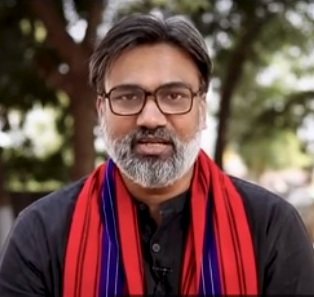
a media interaction in Bhubaneswar on Tuesday, TSF Chief Executive Officer
Sourav Roy underlined the Foundation’s strong commitment to Odisha, stating
that the state accounted for 41 per cent of TSF’s total social development
expenditure between FY21 and FY25. During this period, TSF invested ₹924 crore in Odisha, reflecting
its central role in the Foundation’s national development efforts.
Speaking at
a media interaction in Bhubaneswar on Tuesday, TSF Chief Executive Officer
Sourav Roy underlined the Foundation’s strong commitment to Odisha, stating
that the state accounted for 41 per cent of TSF’s total social development
expenditure between FY21 and FY25. During this period, TSF invested ₹924 crore in Odisha, reflecting
its central role in the Foundation’s national development efforts.
In addition
to social programmes, TSF has contributed to strengthening the local economy
through deep supply-chain integration. In FY25 alone, business worth more than ₹586 crore was awarded to
Odisha-based partners, supporting local enterprises and generating employment.
A key
highlight of TSF’s urban inclusion initiatives is its partnership with the
Odisha Government under the Odisha Liveable Habitat Mission (SAHAJOG). Between
November 2022 and March 2024, the programme covered 1,222 slums across five
cities, focusing on slum mapping, vulnerability assessments, community
institution building and securing land rights for urban poor households.
Through door-to-door surveys, leadership training and the formation of Slum
Dwellers Associations, the initiative enabled equitable land rights for a large
number of economically weaker and highly vulnerable families. Building on this
foundation, Phase II introduced the digital SAHAJOG platform, co-developed with
the Odisha Computer Application Centre, enabling nearly two lakh households to
access labour, housing, health, insurance and social security schemes. TSF now
plays a strategic advisory role in state urban missions.
Addressing
climate and water security challenges, TSF has prioritised natural resource
management and climate resilience. More than 500 ponds have been constructed in
regions such as Joda, Meramandali and Kalinganagar, improving irrigation,
boosting agricultural productivity and supporting allied livelihoods including
fisheries and vegetable cultivation. Since FY2025, the Foundation has created
170 million cubic feet of water conservation capacity, developed irrigation
across 10,000 hectares and benefited nearly 60,000 small and marginal farmers,
achieving close to 30 per cent of its target to create one billion cubic feet
of groundwater conservation capacity by 2030.
Biodiversity
conservation has been integrated with livelihood generation through
community-led initiatives, particularly in Ganjam district. Across seven
villages, TSF supports the conservation of Schedule-I species such as Olive
Ridley turtles, Blackbucks and Indian Peafowl. The programme protects a
five-kilometre turtle nesting beach, engages trained turtle watchers and
supports 740 households through alternative livelihoods, demonstrating a
balance between ecological protection and income security. The Sukinda tasar
silkworm conservation initiative has earned global recognition from the
International Union for Conservation of Nature (IUCN) as a Nature-based
Solution.
 Public
health remains a core focus of TSF’s work in Odisha. Its interventions cover
nutrition, adolescent health, disease prevention, eye care, maternal health and
cancer screening, delivered through a block-saturation model aligned with
government systems. A flagship initiative is the Homi Bhabha Cancer Hospital
near Bhubaneswar, a ₹1,070
crore, 294-bed facility being developed in partnership with the Governments of
India and Odisha, Tata Memorial Centre and NISER. With TSF contributing ₹400
crore, the hospital is expected to become operational by 2027 and will serve as a National Cancer Grid node, offering affordable cancer
care and housing Asia’s most advanced medical cyclotron.
Public
health remains a core focus of TSF’s work in Odisha. Its interventions cover
nutrition, adolescent health, disease prevention, eye care, maternal health and
cancer screening, delivered through a block-saturation model aligned with
government systems. A flagship initiative is the Homi Bhabha Cancer Hospital
near Bhubaneswar, a ₹1,070
crore, 294-bed facility being developed in partnership with the Governments of
India and Odisha, Tata Memorial Centre and NISER. With TSF contributing ₹400
crore, the hospital is expected to become operational by 2027 and will serve as a National Cancer Grid node, offering affordable cancer
care and housing Asia’s most advanced medical cyclotron.
In
education, TSF has partnered with the Odisha Government to establish 30 model
schools with an investment of ₹150 crore, benefiting
more than 15,000 students from rural and tribal areas. Infrastructure
improvements, including classrooms, laboratories and hostels in regions such as
Mayurbhanj and Gorumahisani, have reduced dropouts and improved girls’
retention. TSF’s Education Signature Programme spans four districts and 22
blocks, reaching over five lakh children. It has enabled the re-enrolment of
more than 35,000 children post-pandemic, achieved a 99 per cent transition
rate, strengthened foundational literacy and numeracy for 1.64 lakh children
and facilitated ₹96 crore
in public funding through decentralised planning. Keonjhar district has also
been declared child labour-free.
At the
grassroots level, TSF has empowered 75 gram panchayats across six districts
through data-driven planning and convergence with government schemes, linking
over 57,500 people to social entitlements. Women’s empowerment initiatives have
supported self-help groups and micro-enterprises, benefiting over 13,500 women
and nurturing more than 2,200 women entrepreneurs, while disability inclusion
under the SABAL programme has enhanced dignity and access to services for
persons with disabilities.
Skill development initiatives, including JNTTEC Gopalpur, have produced over 2,100 diploma graduates with strong placement outcomes.
Looking ahead, Roy said TSF aims to positively impact one crore lives annually across India by 2030, including 50 lakh in Odisha alone, reaffirming its role as a catalyst for inclusive and sustainable growth.