THEBUSINESSBYTES BUREAU
NEW DELHI, JUNE 30, 2026
"Tourism has the potential to become a transformative
force in India's growth journey, and creating an enabling ecosystem for
investments, world-class infrastructure and ease of doing business is essential
to unlock its full potential," said Union Minister for Tourism and Culture
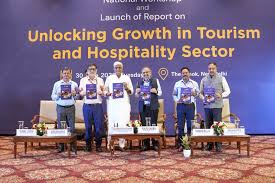
Gajendra Singh Shekhawat while launching the report “Unlocking Growth in
Tourism and Hospitality Sector” at a National Workshop jointly organised by
NITI Aayog and the Ministry of Tourism at Hotel Ashok, New Delhi.
The report presents a comprehensive roadmap to simplify
regulations, improve the ease of doing business, attract investments and foster
sustainable growth in India's tourism and hospitality sector. The event was
attended by Rajiv Gauba, Member, NITI Aayog; Bhuvnesh Kumar, Secretary,
Ministry of Tourism; senior officials from NITI Aayog and the Ministry of
Tourism, along with representatives from State Governments, industry
associations, hospitality enterprises, online travel platforms, academic
institutions, knowledge partners and Central Ministries.
Emphasising tourism's pivotal role in driving India's
economic transformation, Shekhawat called for coordinated efforts to expand
tourism infrastructure, enhance accommodation capacity and create a
business-friendly environment that encourages investment and innovation across
the sector.
Speaking on the occasion, Rajiv Gauba highlighted the immense
untapped potential of India's tourism and hospitality industry, noting its
significant contribution to employment generation, entrepreneurship and
regional development. He observed that tourism investments are highly sensitive
to time, cost and policy predictability, making regulatory reforms and ease of
doing business critical for accelerating private investment.
The day-long workshop focused on policy reforms required to
strengthen tourism-led economic growth and position India as a globally
competitive tourism destination. Participants deliberated on regulatory
bottlenecks affecting tourism enterprises and explored collaborative solutions
involving the Central Government, State Governments and industry stakeholders.
The report offers an extensive assessment of regulations
governing accommodation providers, hospitality establishments, homestays, food
and beverage services, tour operators, tourism infrastructure projects and
visa-related processes. It identifies key challenges in approvals, compliance
requirements, accommodation capacity and institutional coordination that impact
investments and timely project implementation.
Among its key recommendations are simplifying regulatory
procedures, reducing compliance burdens, strengthening inter-departmental
coordination and accelerating tourism infrastructure development. The report
also advocates expanding accommodation capacity, strengthening homestay
ecosystems, promoting tourism entrepreneurship, streamlining approval
mechanisms and creating a more investment-friendly environment for the sector.
The workshop featured dedicated sessions on tourism
investment and approval reforms, accommodation and entrepreneurship,
environmental sustainability, regulatory clearances and visa facilitation.
The dignitaries unanimously underscored tourism's growing importance as a catalyst for economic growth, employment generation and regional development. They stressed the need for stronger collaboration between the Centre, States and industry to improve the business ecosystem, encourage private investment, support local livelihoods, promote entrepreneurship, enhance community participation and advance sustainable tourism practices across the country.
Aligned with the vision of Viksit Bharat 2047, the report lays out a practical roadmap to enhance ease of doing business, accelerate tourism investments and build globally competitive, sustainable and inclusive tourism destinations, reinforcing tourism's role as a key pillar of India's long-term economic growth.