
THEBUSINESSBYTES
BUREAU
BHUBANESWAR,
JULY 20, 2026
In one of the most
comprehensive field-based studies ever conducted on Odisha’s Particularly
Vulnerable Tribal Groups (PVTGs), the Centre of Excellence in Studies on Tribal
and Marginalized Communities (CoE-STMC), Utkal University, has released a
landmark Technical Report mapping the socio-cultural, demographic and
nutritional health status of these communities.
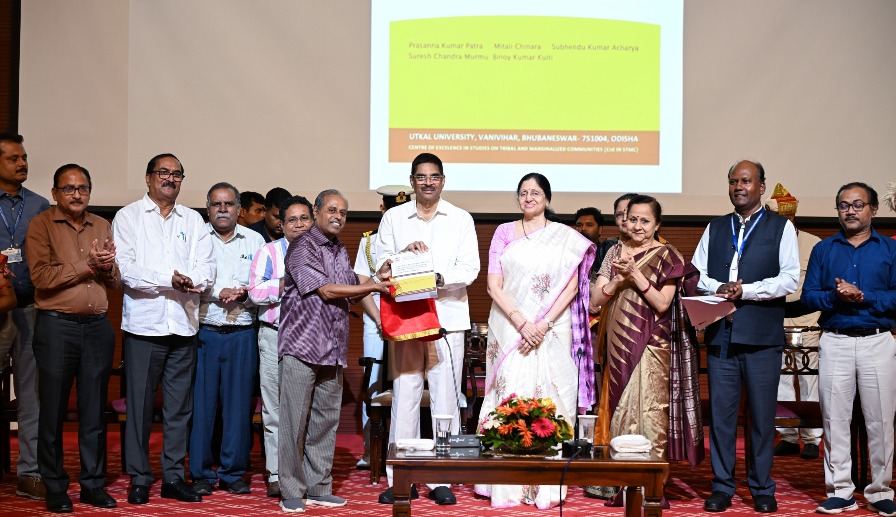
The report, released
by the Governor of Odisha and Chancellor of Utkal University, Dr. Hari Babu
Kambhampati, at Lok Bhavan, presents an evidence-based assessment of both the
resilience and pressing developmental challenges faced by the state’s most
marginalised tribal populations, while recommending that the research model be
expanded across Eastern India and eventually to all 75 PVTGs in the country.
The interdisciplinary
study covered 10 of Odisha’s 13 PVTGs — the Bonda, Didayi, Dongria Kandha,
Kutia Kandha, Juang, Paudi Bhuiya, Hill Kharia, Mankidia, Lodha and Lanjia
Saora communities — across the tribal-dominated districts of Malkangiri,
Rayagada, Kandhamal, Keonjhar, Deogarh, Mayurbhanj and Gajapati. Researchers
surveyed 9,222 individuals from 2,041 households using a combination of
ethnographic fieldwork, structured household surveys, anthropometric
assessments and documentation of tribal languages, oral traditions and
socio-economic profiles.
The report highlights
encouraging signs of cultural continuity and demographic potential. It notes
that family planning awareness has reached 68 percent, with the Juang and
Dongria Kandha communities demonstrating particularly strong antenatal care
coverage. Nutritional indicators have also shown partial improvement in several
groups. Importantly, the study points to a significant demographic advantage,
with nearly half of the PVTG population below the age of 19, presenting a major
opportunity for long-term social and economic development.
Despite these
positive trends, the findings reveal persistent health and nutrition concerns
requiring urgent policy attention. Non-literacy remains at 39 percent, while
access to housing, sanitation and electricity continues to be uneven across
communities. Maternal and menstrual health indicators remain weak, with only 19
percent of women reporting the use of sanitary napkins. Chronic undernutrition
continues to affect children, with height-for-age and weight-for-age
measurements remaining below World Health Organization standards. At the same
time, the study identifies an emerging dual burden of adult metabolic risk,
with anaemia affecting 37 percent of adult men alongside early signs of
hypertension and prediabetes. The report also notes that more than half of
adult women suffer from anaemia and that 59 percent of childbirths still take
place at home.
Emphasising the need
for community-specific interventions, Dr. Subhendu Kumar Acharya, Scientist at
ICMR–Regional Medical Research Centre (RMRC), Bhubaneswar, and Co-Lead of the
study, said, “Considering the high cultural diversity among the communities,
although many of the difficulties and needs of the tribal people are largely similar,
a single, one-size-fits-all solution is not useful. Therefore, there is a need
for PVTG-specific and culturally sensitive development plans to address their
issues around education, livelihood diversification, housing and basic amenity
development, language revitalisation, digital preservation of oral literature,
strengthening of maternal and child health services, institutional delivery,
universal iron-folic acid distribution, non-communicable disease (NCD)
screening, universal access to safe and clean drinking water, sanitation,
electricity facilities, and the problem of school dropouts. Along with this,
continuous monitoring, intervention, and impact evaluation, based on
disaggregated data are essential.”
The report also
recommends migration-sensitive policies, youth capacity-building initiatives,
expansion of land rights, support for agroforestry, non-timber forest produce
value chains and micro-enterprises, adolescent-friendly reproductive health
services, stronger antenatal and postnatal care, community-based growth
monitoring, early NCD screening and surveillance, anti-tobacco and anti-alcohol
behaviour-change programmes, and long-term research on nutrition transitions,
reproductive health, traditional food systems and ethnomedicine.
Reflecting on the
findings, Prof. Prasanna Kumar Patra, Coordinator of CoE-STMC, Utkal
University, said, “What stands out most in this study is the sheer resilience
of these communities — their oral traditions, governance systems and ecological
knowledge have survived intact and are now finding new life within the
Panchayati Raj framework, and with nearly half the PVTG population under 19,
Odisha has a genuine demographic dividend within its tribal areas. But that
resilience should not obscure how serious the health situation remains: anaemia
in more than half of adult women, high childhood stunting, and a home-delivery
rate of 59 percent tell us that basic maternal and nutritional care is still
not reaching these communities consistently. These are solvable problems, but
they need sustained interventions.”
The findings are
expected to serve as an important evidence base for the Ministry of Tribal
Affairs in shaping future policies on PVTG welfare, healthcare, education and
livelihoods. Highlighting the wider significance of the research, Utkal
University has proposed that similar interdisciplinary studies be undertaken in
PVTG-concentrated states such as Jharkhand, West Bengal and Chhattisgarh before
being progressively extended to cover all 75 PVTGs across India, thereby
creating a comprehensive national evidence base for informed policymaking.
Describing the study as a model for policy-oriented academic research, Prof. Chandi Prasad Nanda, Vice Chancellor of Utkal University, said, “This report is exactly the kind of evidence-based, field-rooted research a university should be producing in service of the state and the nation. It gives policymakers a clear, current picture of where our PVTG communities stand - their strengths as well as their vulnerabilities - and Utkal University stands ready to extend this model across Eastern India and, eventually, to all 75 PVTGs of the country.”
A digital copy of the technical report has also been made available, providing policymakers, researchers and development practitioners with an updated and comprehensive reference on the socio-cultural, demographic and health status of Odisha’s Particularly Vulnerable Tribal Groups.