THEBUSINESSBYTES
BUREAU
AYODHYA,
APRIL 2, 2026
“When learning is rooted in values, it does
not just shape individuals, it shapes the future of a nation. Our
responsibility is to carry these traditions forward while preparing for the
opportunities of tomorrow,” said Gautam Adani, Chairman of the Adani Group,
underscoring the importance of sustaining intellectual heritage while embracing
innovation during his visit to Ayodhya.
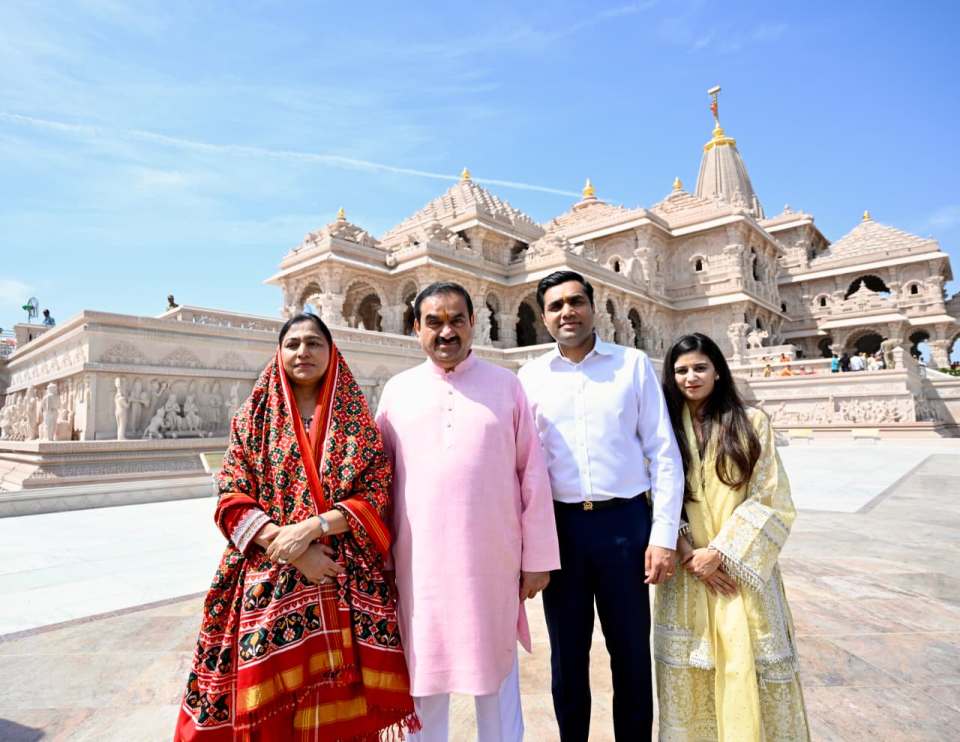
 Adani, accompanied by
his wife Dr Priti Adani, elder son Karan Adani and daughter-in-law Paridhi
Adani, offered prayers at the sacred Shri Ram Temple on the occasion of Hanuman
Jayanti, describing the darshan as a
deeply emotional moment reflecting India’s enduring civilisational continuity,
unity and growing national confidence. He highlighted that the ideals of Lord
Ram — honesty, duty and service — continue to serve as guiding principles for
the nation’s collective progress.
Adani, accompanied by
his wife Dr Priti Adani, elder son Karan Adani and daughter-in-law Paridhi
Adani, offered prayers at the sacred Shri Ram Temple on the occasion of Hanuman
Jayanti, describing the darshan as a
deeply emotional moment reflecting India’s enduring civilisational continuity,
unity and growing national confidence. He highlighted that the ideals of Lord
Ram — honesty, duty and service — continue to serve as guiding principles for
the nation’s collective progress.
Extending this
reflection from faith to education, Adani visited the historic Shri Nishulk
Gurukul Mahavidyalaya, founded in 1935 by Swami Tyaganand Ji and inspired by
the ideals of the Arya Samaj, which promotes Vedic learning, social upliftment
and accessible education through the traditional residential gurukul system.
 Interacting with
students and faculty, Adani observed a learning ecosystem where discipline,
inquiry and values coexist to preserve and transmit India’s knowledge
traditions. Reaffirming support through the Adani Foundation, he announced the
development of an AI-enabled laboratory aimed at fostering a meaningful convergence
of tradition and technology, ensuring that ancient wisdom remains relevant in a
rapidly evolving digital era.
Interacting with
students and faculty, Adani observed a learning ecosystem where discipline,
inquiry and values coexist to preserve and transmit India’s knowledge
traditions. Reaffirming support through the Adani Foundation, he announced the
development of an AI-enabled laboratory aimed at fostering a meaningful convergence
of tradition and technology, ensuring that ancient wisdom remains relevant in a
rapidly evolving digital era.
With nearly 200
students receiving free education, the gurukul represents an inclusive approach
to knowledge dissemination. The campus also houses a traditional gaushala,
reflecting a holistic integration of cultural, ecological and rural practices.
The institution’s distinguished legacy includes visits by Mahatma Gandhi and
Subhas Chandra Bose, reinforcing its historical and intellectual significance.
As students recited
Sanskrit shlokas in unison, the
rhythmic resonance across the campus symbolised a living continuum of
tradition. Seated among them, Adani engaged with faculty and observed a system
where learning extends beyond textbooks into everyday life, nurturing both
knowledge and character.
For Adani, such
engagements embody the philosophy of seva,
often expressed as “Seva Hi Sadhana Hai,” where service becomes a sustained
commitment rooted in humility and purpose. The visit builds upon his continued
engagement with India’s cultural heritage, including participation in the Maha
Kumbh Mela at Prayagraj and the revered Rath Yatra in Puri, reflecting a
broader commitment to preserving and promoting India’s civilisational ethos for
future generations.