THEBUSINESSBYTES
BUREAU
NEW
DELHI, APRIL 18, 2026
On World Heritage
Day, Vedanta Limited reinforced its commitment to preserving India’s rich
cultural legacy while transforming it into a sustainable engine of livelihood
generation. The company has positively impacted over 8 lakh people in FY26,
supporting more than 600 artisans and promoting over 100 cultural events and
platforms across the country.
At a time when many
traditional art forms and artisan communities face dwindling incomes and
limited market access, Vedanta’s community-led initiatives are bridging the gap
between heritage preservation and economic empowerment. Aligned with the United
Nations Sustainable Development Goals — particularly SDG 8 (Decent Work &
Economic Growth) and SDG 11 (Sustainable Cities & Communities) — the
company is fostering a model where culture and commerce coexist sustainably.
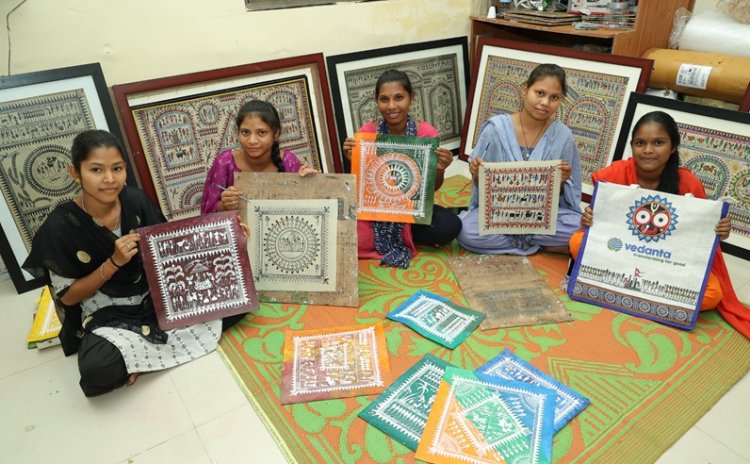 Vedanta’s cultural
stewardship is built on a three-pronged strategy: preserving and reviving
endangered art forms, enabling sustainable livelihoods through skilling and
capacity building, and enhancing market access by connecting artisans to
national and global platforms.
Vedanta’s cultural
stewardship is built on a three-pronged strategy: preserving and reviving
endangered art forms, enabling sustainable livelihoods through skilling and
capacity building, and enhancing market access by connecting artisans to
national and global platforms.
Across states such as
Odisha, Rajasthan, Assam, and Chhattisgarh, Vedanta is actively promoting
diverse art traditions including Saura paintings, Dokra metal crafts, Kosa silk
weaving, Ajrakh block printing, bamboo crafts, and folk theatre. These art
forms have gained significant visibility through prestigious platforms like the
Jaipur Literature Festival, Jaigarh Heritage Festival, Udaipur World Music
Festival, Kalahandi Utsav, and Chaiti Mahotsav, opening up new market
opportunities for artisans.
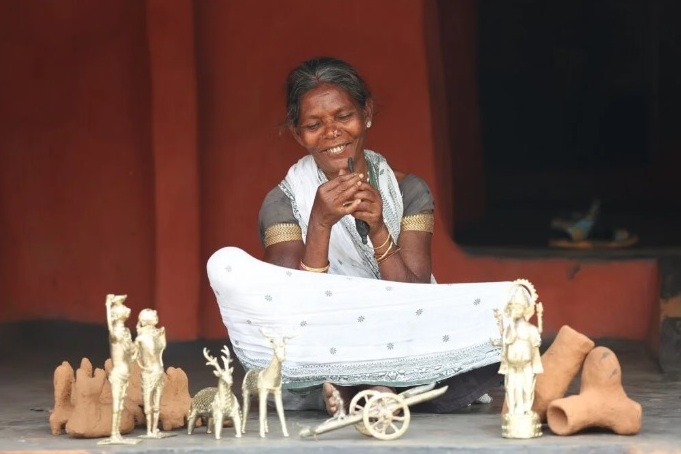 A key highlight of
the initiative is its focus on women-led livelihoods. Hundreds of women
artisans have achieved financial independence through skill development
programmes in handloom, silk, terracotta, and jute-based crafts. Dedicated
centres such as the Sampriti Maku Handloom Centre in Assam and the FACOR Kala
Kendra in Odisha are playing a pivotal role in strengthening grassroots
cultural ecosystems.
A key highlight of
the initiative is its focus on women-led livelihoods. Hundreds of women
artisans have achieved financial independence through skill development
programmes in handloom, silk, terracotta, and jute-based crafts. Dedicated
centres such as the Sampriti Maku Handloom Centre in Assam and the FACOR Kala
Kendra in Odisha are playing a pivotal role in strengthening grassroots
cultural ecosystems.
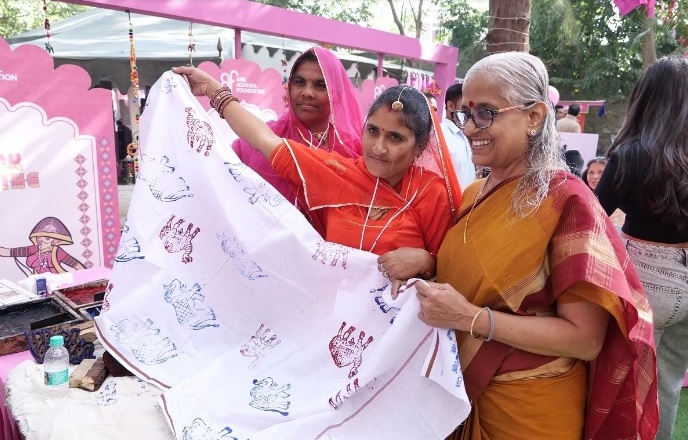 Sharing her
experience, artisan beneficiary Usha Bai said that the training programme helped
her understand the intricacies of weaving, particularly the difference between
cotton and kosa silk. “What once felt difficult now feels achievable. Within a
month, I have learned to weave plain dupattas and am confident of independently
producing high-quality kosa dupattas and sarees in the coming weeks,” she said.
Sharing her
experience, artisan beneficiary Usha Bai said that the training programme helped
her understand the intricacies of weaving, particularly the difference between
cotton and kosa silk. “What once felt difficult now feels achievable. Within a
month, I have learned to weave plain dupattas and am confident of independently
producing high-quality kosa dupattas and sarees in the coming weeks,” she said.
Beyond livelihoods,
Vedanta is also investing in cultural infrastructure and large-scale heritage
conservation. Community spaces — including temples, halls, and Kirtan Mandaps —
are being revitalised as vibrant cultural hubs. In Rajasthan, a ₹85 crore heritage corridor project
is further advancing restoration, tourism, and community-led development.
Extending its cultural footprint globally, Vedanta supports international platforms such as the Ngoma and Kwacha Music Awards, celebrating artistic expression beyond borders.
As India navigates rapid economic growth, Vedanta’s scalable, community-driven initiatives demonstrate how cultural heritage can be preserved while serving as a powerful catalyst for inclusive and sustainable development — ensuring that traditional art forms not only endure but thrive.