THEBUSINESSBYTES
BUREAU
NEW
DELHI, APRIL 18, 2026
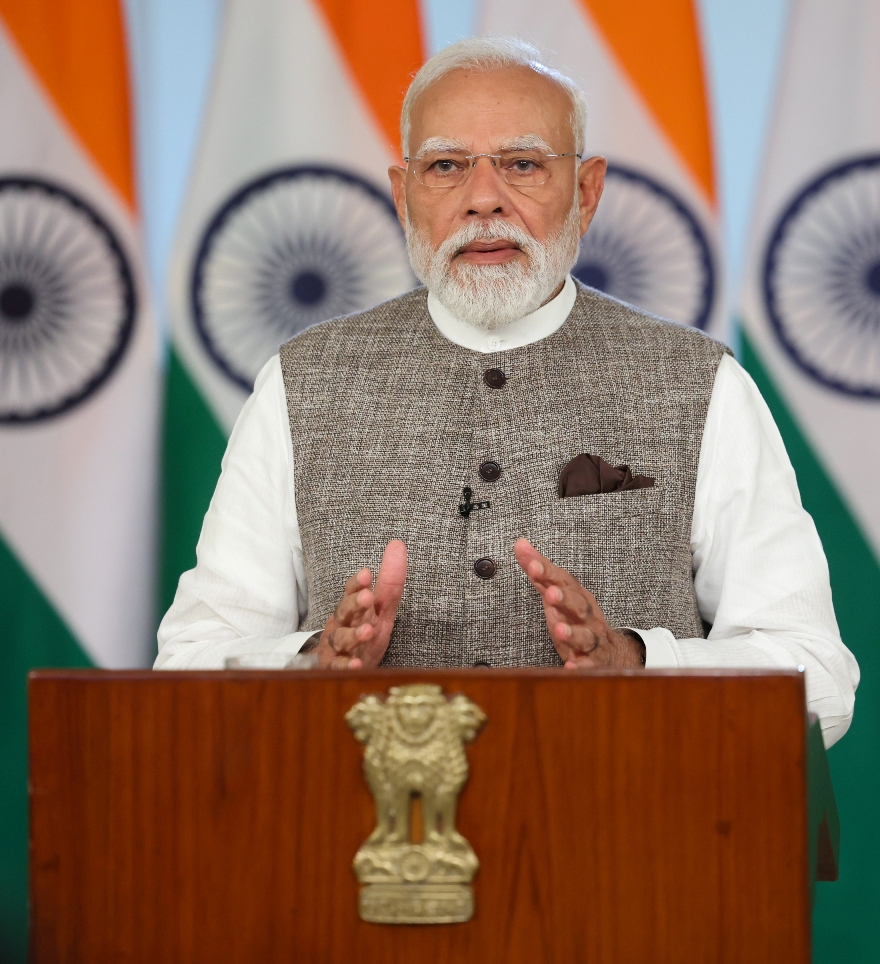
In an emotionally
charged address to the nation on Saturday, Prime Minister Narendra Modi
expressed deep regret over the failure to secure the required support for the
Women’s Reservation Bill amendment in the Lok Sabha, calling it a moment of
“profound disappointment” for the country’s women.
“I have come to speak especially to the mothers,
sisters and daughters of the nation. Today, every citizen has seen how the
flight of India’s women power has been halted and their dreams ruthlessly
crushed. Despite our best efforts, we could not succeed in passing the
amendment. For this, I seek forgiveness from every woman,” the Prime Minister
said.
The proposed
amendment to the Nari Shakti Vandan Adhinyam aimed to ensure greater
representation of women in Parliament and state assemblies starting from the
2029 general elections. The Bill, however, failed to garner the required
two-thirds majority in the Lok Sabha on Friday.
 Launching a sharp
attack on opposition parties, the Prime Minister alleged that political
interests had been placed above national interest. He named parties such as the
Congress, DMK, TMC, and Samajwadi Party, accusing them of indulging in
“self-serving politics” that came at the cost of women’s empowerment.
Launching a sharp
attack on opposition parties, the Prime Minister alleged that political
interests had been placed above national interest. He named parties such as the
Congress, DMK, TMC, and Samajwadi Party, accusing them of indulging in
“self-serving politics” that came at the cost of women’s empowerment.
“Yesterday, crores of women were watching
Parliament. It was deeply painful to see some parties celebrating and
applauding when a proposal meant for women’s welfare was defeated. That
applause was not just on tables — it was a blow to the dignity and self-respect
of women,” he said.
The Prime Minister
warned that women across the country would remember the conduct of those who opposed
the Bill. “The women of 21st century India are aware, alert, and capable of
judging intentions. Those who opposed this will face consequences,” he
asserted.
Explaining the intent
behind the amendment, Modi said it was not meant to take anything away from
anyone but to expand opportunities. “This was about granting long-pending
rights to women and enabling their participation in shaping India’s future. It
was a sincere and honest effort to empower half the population,” he said.
He described the amendment
as a “historic opportunity” to strengthen democratic representation across all
states — big or small — by increasing seats proportionately while ensuring
greater participation of women. Rejecting claims related to delimitation
concerns, he clarified that no state’s representation would have been reduced.
“The government has been clear from day one — no
state would lose representation; instead, all states would gain
proportionately. Yet, misinformation was spread to mislead the nation,” he
added.
The Prime Minister
also accused the opposition of historically obstructing women’s reservation
efforts. “For decades, attempts to bring women’s reservation have been stalled
through excuses and technical hurdles. This pattern of delay, diversion, and
obstruction is well understood by the country,” he said.
Highlighting the
achievements of women in local governance, Modi said lakhs of women have
already proven their leadership capabilities in panchayat and local bodies.
“When these women aspire to move to assemblies and Parliament, certain
family-driven parties feel threatened. They fear losing control if women rise
beyond political dynasties,” he remarked.
He further accused
the Congress of consistently opposing major reforms, citing examples such as
GST, digital payments, the abrogation of Article 370, and the Uniform Civil
Code. “The Congress has a history of opposing every reform necessary for a
developed India. Negativity and obstruction have been its political culture,”
he said.
The Prime Minister
argued that such an approach had historically slowed India’s progress. “At the
time of independence, many nations started their journey alongside India, yet
they moved ahead faster because reforms were not blocked there,” he said.
Rejecting criticism
that the Bill’s failure reflected a government setback, Modi clarified that the
issue was never about political credit. “I had said in Parliament that I would
gladly give credit to the opposition if women got their rights. But those with
regressive thinking remained adamant,” he noted.
Ending on a resolute
note, the Prime Minister assured the nation that the fight for women’s
reservation would continue. “Today we may not have secured the required
numbers, but we have the blessings of 100 per cent of the country’s women. Our
resolve is firm, our courage unshaken, and our commitment unwavering. We will
remove every obstacle in the path of women’s reservation,” he declared.
He emphasized that
the setback was temporary and vowed that future opportunities would be seized
to fulfil the aspirations of “half the population” and secure a stronger, more
inclusive democracy.