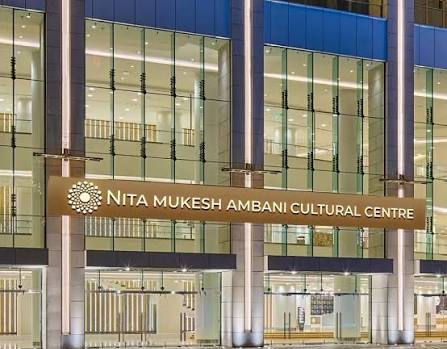
On
a guided tour of the Nita Mukesh Ambani Cultural Centre in Mumbai, art,
technology, theatre and Indian craftsmanship come together in a spectacular cultural
experience, writes Priyabrat
Biswal
There are places one
visits, and then there are places that seem to unfold around you. A guided
visit to the Nita Mukesh Ambani Cultural Centre (NMACC) in Mumbai on August 25
felt very much like the latter.
Located within the
sprawling Jio World Centre in Mumbai's Bandra Kurla Complex, NMACC is more than
a conventional cultural venue. Conceived as a platform that could bring India's
artistic traditions into dialogue with contemporary and global forms of
creativity, the centre seeks to make art, performance and culture accessible to
wider audiences while giving Indian creative expression a stage of
international scale.
That idea is evident
almost from the moment one enters. The scale is striking, but it is the details
— art, architecture, technology and Indian motifs woven into the experience —
that repeatedly draw attention.
The cultural centre
describes its vision as binding communities through the common thread of the
arts while celebrating India's traditions, heritage and creative legacy. After
walking through its different spaces, that ambition becomes easier to
understand.
The experience begins
even before entering the cultural spaces.
At Dhirubhai Ambani
Square, the lotus-inspired Fountain of Joy is among NMACC's
most spectacular attractions. Designed by the renowned American water-feature
design firm WET Design, it combines water, light and music in an elaborate
choreographed display, with 392 water jets, eight fire shooters, 664 LED lights
and 200 mist emitters. The jets can soar up to 45 feet, creating a dramatic
interplay of water, colour and sound. But it is the choreography that makes the
spectacle memorable — jets rising and falling to music as changing colours
transform the space.
Unfortunately, the
fountain could not be experienced during the August 25 visit, as it remains
closed during the monsoon months from June to September.
Inside, art is not
confined to a single room or exhibition.
The building features
an impressive collection of public art installations. Kamal Kunj, a 56-foot-tall Pichwai painting, brings seasonal
festivities to life on a monumental scale. Nearby, Clouds, Yayoi Kusama's 90-piece stainless-steel mirror installation,
creates a distinctly contemporary counterpoint.
There are works by
artists including N. S. Harsha, Reena Kallat, Jagannath Panda, Tanya Goel,
Vibha Galhotra and the artist duo Thukral & Tagra.
One installation that
particularly catches the eye is Jagannath Panda's Earth's Whisper, built around the idea that "Contribution is
Growth". Another, City Obscure
by Vibha Galhotra, presents Mumbai as a cityscape made using ghungroos — the
small ankle bells so deeply associated with Indian culture.
It is this
juxtaposition that makes NMACC interesting: traditional visual language and
contemporary art constantly appear to be in conversation.
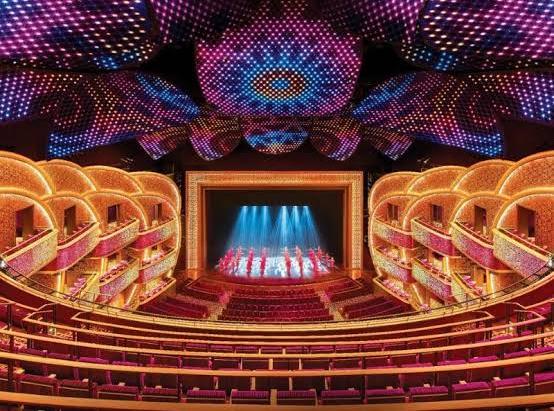 The
Grand Theatre is perhaps where the centre's
ambition becomes most apparent. Modelled on Hollywood's iconic Dolby Theatre,
the 2,000-seat auditorium has been designed so that the audience wraps around
the stage, creating a sense of intimacy despite the sheer scale of the venue.
The
Grand Theatre is perhaps where the centre's
ambition becomes most apparent. Modelled on Hollywood's iconic Dolby Theatre,
the 2,000-seat auditorium has been designed so that the audience wraps around
the stage, creating a sense of intimacy despite the sheer scale of the venue.
Then there is the
ceiling.
Seventeen lotus-petal
panels are embedded with 8,400 Swarovski crystals, each containing programmable
LEDs. Looking upwards, it is difficult not to pause and take in the sheer
theatricality of the design.
Behind the scenes,
the technology is equally formidable. A 69-batten fly system enables rapid
stage changes, while the orchestra pit can accommodate up to 100 musicians.
Dolby Atmos surround sound and a virtual acoustic environment are designed to
ensure that the experience reaches every seat.
Another subtle but
significant feature is the use of specially designed absorbent wood, intended
to reduce reflections and allow the stage to become the centrepiece not only
for the eyes, but also for the ears.
The smaller Studio Theatre, with 198 seats, offers
a more intimate environment, while the 80-seat Cube is designed for emerging
and experimental theatre, spoken word and music.
With movable seating
and stage arrangements, the Cube
feels deliberately flexible — a space where newer forms of performance can find
room to experiment.
Together, the three
venues suggest that NMACC's theatrical vision is not limited to large-scale
productions. It also makes space for intimate performances, experimentation and
emerging voices.
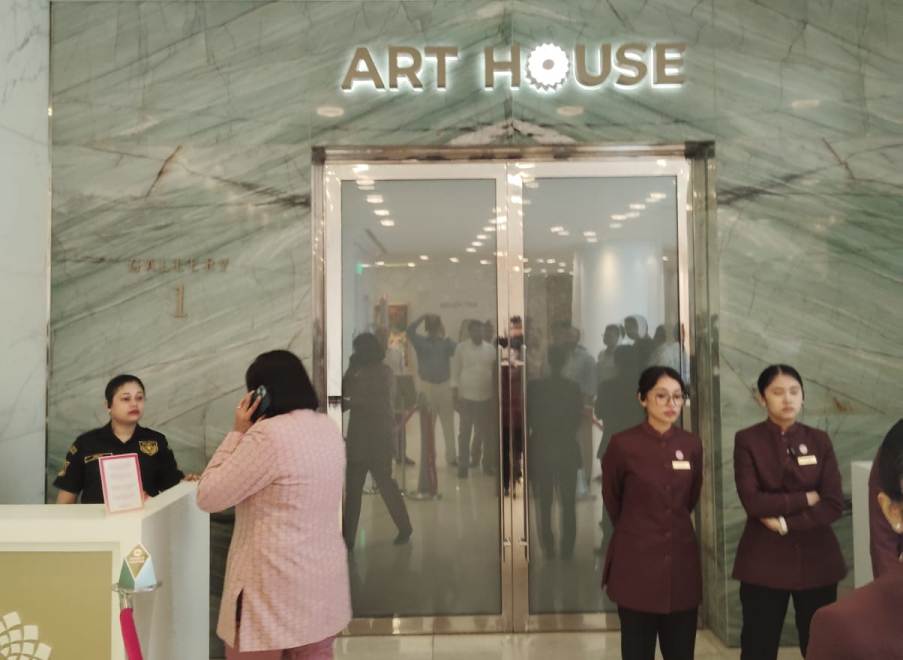 The
Art House changes the rhythm again.
The
Art House changes the rhythm again.
Spread across four
floors, this dedicated art space is designed to bring Indian and international
art into the everyday cultural conversation. During the August 25 visit, its
biggest draw was Second Nature, presented by Superblue in partnership with
NMACC.
The exhibition brings
together nine immersive installations by artists and studios including Random
International, teamLab, A.A. Murakami, Simon Heijdens and Es Devlin.
Walking through the
exhibition feels less like moving from one gallery to another and more like
entering a sequence of environments. Technology becomes part of the artwork
itself, prompting questions about how the digital world is increasingly
becoming something instinctive — almost a second nature.
The experience also
reflects one of the larger ideas behind NMACC: that culture need not be divided
neatly between the traditional and the contemporary, the physical and the
digital, or the Indian and the international.
Instead, the centre
attempts to create a space where these different forms can meet.
If Art House looks outward to the evolving
relationship between art and technology, Swadesh
turns the gaze firmly towards India's craft traditions. The exposition
celebrates regional artistry through live demonstrations and conversations with
master artisans. Pichwai painting, Sozni embroidery and Blue Pottery are among
the crafts whose traditions are being showcased and nurtured.
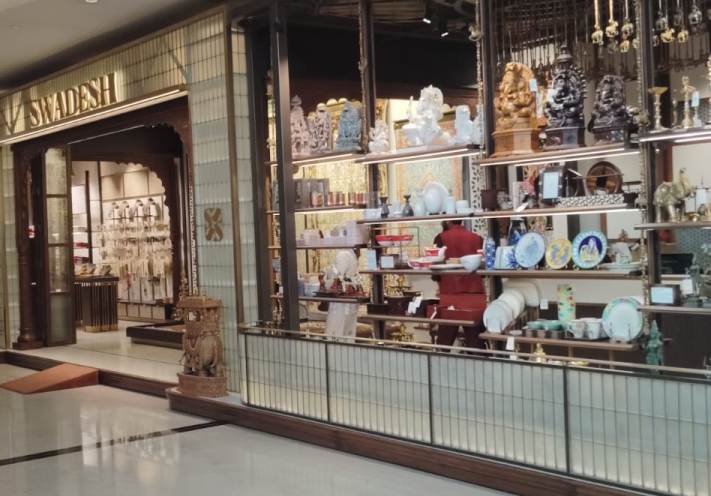 What makes Swadesh engaging is its sense of
participation. These are not simply objects displayed behind glass; the
artisans and their stories remain central to the experience.
What makes Swadesh engaging is its sense of
participation. These are not simply objects displayed behind glass; the
artisans and their stories remain central to the experience.
That distinction is
important. NMACC's conception is not only about presenting India's cultural
heritage as something to be admired. It is also about creating opportunities
for traditional knowledge and craftsmanship to remain visible, relevant and
connected to contemporary audiences. In that sense, Swadesh complements the experimental energy of Art House and the
technological sophistication of the performance spaces.
By the time the
guided tour comes to an end, what stays with the visitor is the number of
different experiences NMACC manages to hold within one destination.
There is the
spectacle of the Fountain of Joy, the
scale of the Grand Theatre, the intimacy of the Studio Theatre and Cube, the
constantly changing world of Art House, the immersive experience of Second Nature, and the living traditions
celebrated through Swadesh.
And then there is the
NMACC Arts Cafe, where the cultural
outing can continue over Asian, European and Indian flavours in art-deco
surroundings, with alfresco seating and a private dining option.
NMACC is part of the
larger Jio World Centre, itself a vast mixed-use destination incorporating the
Jio World Convention Centre and Jio World Plaza. The surrounding development
also includes Jio World Drive, a 17.5-acre open-air retail and lifestyle
precinct.
The Jio World Centre
is also continuing to evolve, with further developments planned within the
larger destination. Upcoming projects include Jio World Residences and The
Clubhouse, which will add a residential and lifestyle dimension to the
complex. An upcoming office complex is also expected to house more than 300
corporate offices, further strengthening the centre's role as a destination
where culture, business, hospitality, retail and everyday urban life converge.
Taken together, these
developments point to an expanding vision for the Jio World Centre — not simply
as a collection of individual venues, but as an integrated urban destination
where people can work, live, shop, dine and engage with art and culture. Within
that larger ecosystem, NMACC gives the development a distinctive cultural
identity.
Yet the cultural
centre's significance lies less in the size of the surrounding complex than in
the idea behind its creation.
NMACC was conceived
at a time when India's cultural landscape was increasingly engaging with global
audiences, new technologies and changing forms of artistic expression. Its
premise is, in many ways, to bring those worlds together — to celebrate India's
cultural inheritance while providing space for contemporary artists,
international collaborations, experimental performance and immersive
technology.
That makes the centre
an interesting proposition for Mumbai, a city whose identity has always been
shaped by movement, migration, commerce, cinema, theatre, design and the arts.
Walking out after the
tour, the impression is therefore, less about having visited a single museum,
theatre or exhibition space and more about having moved through several
dimensions of culture within one destination.
For the City of
Dreams, as Mumbai is often known, that may be NMACC’s most intriguing
achievement: creating a place where one can pause, look around and experience
India through art, performance, craft and technology — while also seeing how
these traditions might evolve for the future.
The Jio World Centre is also continuing to evolve, with further developments planned within the larger destination. Upcoming projects include Jio World Residences and The Clubhouse, which will add a residential and lifestyle dimension to the complex. An upcoming office complex is also expected to house more than 300 corporate offices, further strengthening the centre's role as a destination where culture, business, hospitality, retail and everyday urban life converge.
Taken together, these developments point to an expanding vision for the Jio World Centre — not simply as a collection of individual venues, but as an integrated urban destination where people can work, live, shop, dine and engage with art and culture. Within that larger ecosystem, NMACC gives the development a distinctive cultural identity.