State's next phase of industrial growth will
be judged not by the scale of its mineral reserves or the value of investment
proposals on paper, but by the factories it puts into operation, the value it
adds to its resources and the jobs it creates for its people
THEBUSINESSBYTES BUREAU
BHUBANESWAR, NOVEMBER 4, 2026
Odisha has long enjoyed a strategic advantage in eastern India's
industrial landscape, underpinned by abundant mineral resources, an established
aluminium and steel ecosystem, and a substantial pipeline of proposed
investments. Yet, as neighbouring States step up efforts to attract large-scale
industrial projects, the challenge before Odisha is no longer merely to attract
investors, but to translate its considerable economic potential into
operational industries, sustainable livelihoods and broad-based prosperity.
The emerging investment competition across eastern and southern India has made the need for timely execution all the more pressing. For Odisha, the imperative is to build on its existing industrial strengths, accelerate projects caught in implementation bottlenecks and ensure that its mineral wealth creates greater economic opportunities for the people of the State.
In its policy paper, Odisha's
Industrial Advantage Faces a New Test, the Think Change Forum (TCF),
under its Eastern India Economic Council, draws attention to the urgency of
accelerating mineral-led industrialisation and converting investment
commitments into tangible economic outcomes.
The paper points to reports that major investors in the region, including
Vedanta, are exploring investments of ₹70,000–80,000 crore in
West Bengal, with the potential to generate around 10,000 jobs. At the same
time, Andhra Pradesh is advancing AM/NS India's proposed ₹1.36 lakh-crore steel
project at Anakapalli. These developments underline the growing scale of industrial ambitions in the region and
signal that competition for capital, manufacturing capacity and employment
opportunities is intensifying. For Odisha, they also serve as a reminder that
its established advantages cannot be taken for granted.
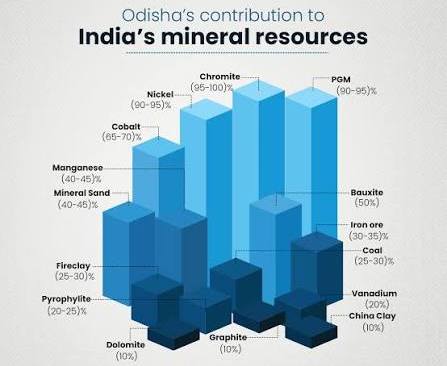
The State's mineral endowment, particularly its bauxite reserves, offers
considerable scope for further industrial expansion. Odisha accounts for 41 per
cent of India's identified bauxite resources and 72.5 per cent of the country's
bauxite production. With an established aluminium ecosystem and supporting
industrial infrastructure, the State is well placed to attract investments
across the value chain, including alumina refining, aluminium smelting and
downstream manufacturing. Timely decisions on pending proposals could therefore
unlock fresh capital, strengthen industrial linkages and generate substantial
employment opportunities.
Ranganath Tannir, Secretary General, Think Change Forum, observed:
"Eastern India is witnessing a positive resurgence in industrial growth,
creating significant new economic opportunities across the region. Our report
highlights this as a wake-up call for Odisha to capitalise on its exceptional
mineral wealth, established industrial ecosystem and substantial investor
commitments. The opportunity is to accelerate pending projects, unlock
mineral-led industrial expansion and create thousands of jobs, particularly in
economically disadvantaged districts. Ease of doing business must now translate
into ease of project execution through timely approvals and resolution of
bottlenecks. With the right urgency, Odisha can transform its natural
advantages into greater manufacturing capacity, local livelihoods and lasting
economic prosperity.”
However, the report underlines that the principal challenge lies in the
gap between investment announcements and actual implementation. According to
disclosures made in the Odisha Assembly in March 2026, as many as 1,073
industrial projects involving proposed investments of ₹24.28 lakh crore had received approval since 2016. Yet,
only 118 projects had fully or partially commenced operations. As many as 914
projects remained under implementation, while 41 had been withdrawn or dropped.
The figures point to a critical implementation challenge. Although the
scale of proposed investments reflects considerable investor interest in
Odisha, the relatively small number of projects that have moved into operations
highlights the need for stronger institutional coordination, faster
decision-making and effective monitoring. Investment approvals, by themselves,
cannot deliver the desired economic transformation unless they are followed by
timely execution, commissioning and employment generation.
To sustain industrial momentum, the State must prioritise the unlocking
of its mineral wealth by expediting pending statutory decisions while firmly
upholding environmental norms and community safeguards. Responsible resource
development must remain central to the industrialisation strategy, ensuring
that economic expansion does not come at the cost of ecological sustainability
or the interests of local communities.
Equally important is the need to address project-level bottlenecks
through clear lines of accountability and high-level monitoring. Long-pending investments
require coordinated intervention by the departments and agencies concerned,
supported by transparent, predictable and time-bound approval processes.
Reducing procedural delays and providing greater certainty to investors will be
essential to moving projects from the planning stage to actual implementation.
The next priority should be to accelerate value addition within the
State. Rather than allowing mineral development to remain concentrated on
extraction and the movement of raw materials, Odisha must strengthen the links
between mining, processing, refining, smelting and downstream manufacturing. A
more integrated industrial ecosystem would not only enhance the economic value
generated from the State's natural resources but also expand opportunities for
ancillary industries, small businesses, skilled workers and local
entrepreneurs.
Employment generation must remain a central measure of industrial
success. The benefits of large investments should extend beyond industrial
centres and reach economically disadvantaged and mineral-bearing districts,
where the need for sustainable livelihoods is particularly acute. Strengthening
local supply chains, encouraging ancillary units, developing relevant skills
and improving access to employment opportunities can help ensure that
industrial expansion translates into tangible gains for communities.
Ultimately, the policy paper argues that the success of Odisha's
industrial strategy must be assessed through execution rather than
announcements. The emphasis should shift towards operational projects,
investments actually realised, additional manufacturing capacity created and,
most importantly, jobs generated. A credible system of project monitoring and
outcome-based accountability would help the State identify delays, address
implementation gaps and maintain investor confidence.
The paper also emphasises that faster industrialisation must go hand in
hand with responsible development and adherence to statutory safeguards.
Environmental protection, community participation and equitable distribution of
economic benefits must remain integral to the development process. Industrial
growth will be sustainable only when it creates lasting economic value while
strengthening the social and economic foundations of the regions in which
projects are located.
With its substantial mineral resources, established industrial
infrastructure and existing investor commitments, Odisha has the ingredients to
emerge as one of India's leading manufacturing destinations. Its competitive
advantage, however, will increasingly depend on its ability to convert these
strengths into functioning industries and meaningful employment.
As neighbouring states move decisively to secure major industrial
investments, Odisha faces a defining moment. The task ahead is not simply to
announce more projects or attract fresh commitments, but to deliver on the
opportunities already within reach. The State's next phase of industrial growth
will be judged not by the scale of its mineral reserves or the value of
investment proposals on paper, but by the factories it puts into operation, the
value it adds to its resources and the jobs it creates for its people.