THEBUSINESSBYTES BUREAU
SAMBALPUR, FEBRUARY 12, 2026
“Artificial Intelligence is not here to
replace journalists; it is here to strengthen their efficiency, accuracy and
ethical decision-making in the digital ecosystem,” advised Dr. Manish Kumar
Jaisal while delivering a special lecture on “Use of Artificial Intelligence in
Media Industry” at Odisha State Open University (OSOU), Sambalpur. He urged
students to embrace AI as a collaborative tool that enhances professional
capabilities rather than viewing it as a threat to journalism careers.
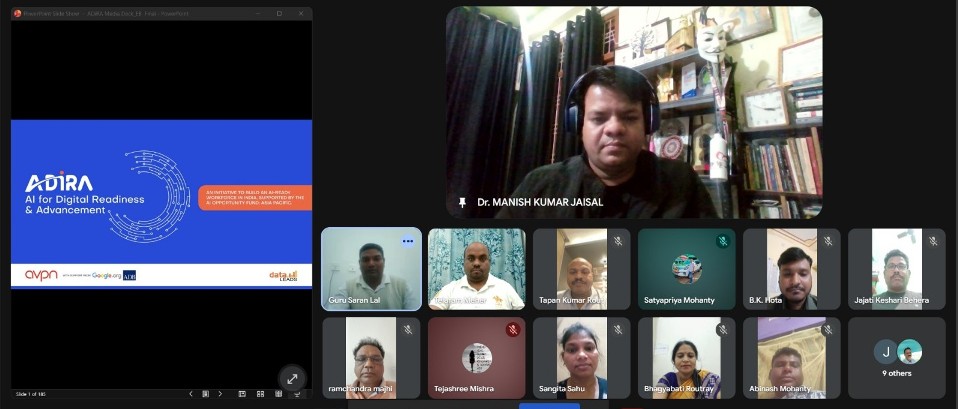
The online
lecture was organized by the Department of Journalism and Mass Communication of
OSOU under the visionary leadership of Vice-Chancellor Prof. Shyam Sundar
Pattnaik, who has been consistently steering the University towards becoming a
Digital University. Prof. Pattnaik continues to inspire both students and
faculty members to achieve digital empowerment by adopting emerging
technologies such as Augmented Reality (AR), Virtual Reality (VR), Digital
Twins, Artificial Intelligence, and by cultivating essential soft skills to
remain future-ready in a rapidly evolving technological landscape.
Dr. Manish
Kumar Jaisal, Head of the Department of Journalism and Mass Communication at
ITM University, Gwalior, and a Google Certified Trainer, served as the resource
person for the session. The lecture aimed at familiarizing learners with the
transformative impact of Artificial Intelligence on contemporary media practices
and the expanding professional opportunities emerging in the AI-driven
communication ecosystem.
 Elaborating
on the subject, Dr. Jaisal explained how AI is revolutionizing journalism
through automated news production, data-driven investigative reporting,
audience behavior analytics, personalized content delivery, AI-powered video
editing tools, and advanced fact-checking technologies. He highlighted that
AI-assisted tools are enabling media professionals to process large datasets,
verify information swiftly, and produce multimedia content with greater
precision and efficiency. At the same time, he emphasized the critical
importance of ethical AI usage, transparency, and responsible automation in
maintaining credibility and public trust in media institutions.
Elaborating
on the subject, Dr. Jaisal explained how AI is revolutionizing journalism
through automated news production, data-driven investigative reporting,
audience behavior analytics, personalized content delivery, AI-powered video
editing tools, and advanced fact-checking technologies. He highlighted that
AI-assisted tools are enabling media professionals to process large datasets,
verify information swiftly, and produce multimedia content with greater
precision and efficiency. At the same time, he emphasized the critical
importance of ethical AI usage, transparency, and responsible automation in
maintaining credibility and public trust in media institutions.
A key
highlight of the lecture was the discussion on ADiRA – AI for Digital Readiness
& Advancement, an initiative spearheaded by Data LEADS. Dr. Jaisal informed
participants that ADiRA offers practical AI training programmes for healthcare
practitioners and media professionals across India. The initiative focuses on
enhancing technological adoption, operational efficiency, and future
preparedness through hands-on exposure to AI tools, automation strategies,
digital storytelling techniques, data literacy, and ethical AI practices. He
encouraged students to actively explore such platforms to remain competitive in
the evolving job market.
The
programme was coordinated by Dr. Guru Saran Lal, who underlined the growing
significance of Artificial Intelligence in journalism education and
professional media practice. He stressed that AI literacy has become an
essential competency for aspiring journalists in today’s digital-first
environment.
Dr. Telaram
Meher, Head of the Department of Journalism and Mass Communication at OSOU,
delivered the welcome address and emphasized the urgent need to integrate
Artificial Intelligence into media curricula, research initiatives, and skill
development programmes. He noted that equipping students with technological
expertise would enhance their employability and enable them to adapt
confidently to the digital transformation of the media industry.
The session witnessed enthusiastic participation from students, who engaged actively in the interactive discussion. Participants raised thoughtful questions regarding emerging career opportunities in AI-driven journalism, the scope of automation in newsrooms, and the ethical challenges associated with algorithmic content generation and misinformation management.
The programme concluded with a vote of thanks proposed by Sheetal Purnima, who expressed sincere appreciation to the resource person, university authorities, faculty members, and students for their valuable participation and cooperation in making the special lecture both insightful and impactful.