
THEBUSINESSBYTES
BUREAU
BHUBANESWAR,
JUNE 13, 2026
As power distribution
companies increasingly highlight their commitment to digital transformation,
transparency, and consumer-centric service delivery, even seemingly minor
discrepancies in electricity bills can raise significant questions about
accuracy, accountability, and consumer trust.
A recent electricity
bill issued by a Discom in Odisha has brought such
concerns into focus. The bill contains date and billing-period details that
appear inconsistent on the face of the document, prompting questions about the
integrity of the billing process and the effectiveness of grievance redressal
mechanisms.
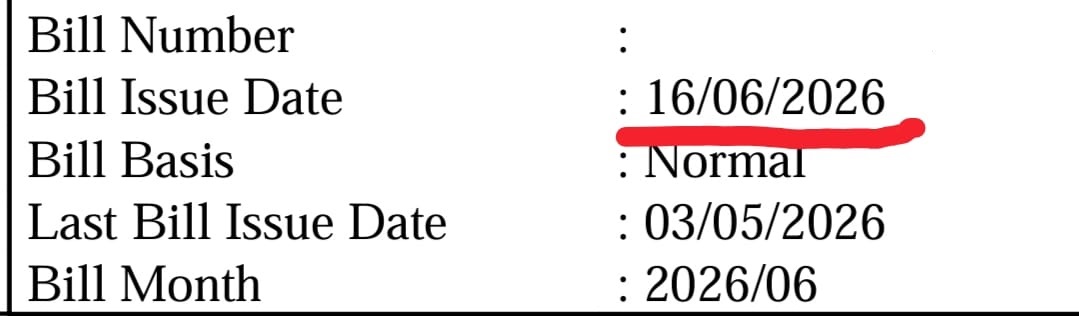 The first anomaly
relates to the "Bill Issue Date." The bill clearly mentions the issue
date as June 16, 2026. However, according to the consumer, the bill was
actually delivered electronically by the distribution company on June 11, 2026 —
five days before the date officially recorded as the bill's issuance date.
The first anomaly
relates to the "Bill Issue Date." The bill clearly mentions the issue
date as June 16, 2026. However, according to the consumer, the bill was
actually delivered electronically by the distribution company on June 11, 2026 —
five days before the date officially recorded as the bill's issuance date.
The discrepancy
raises a straightforward but important question: How could a bill be sent to a
consumer before it was officially issued?
If the date reflected
on the bill is accurate, then the bill could not have been dispatched earlier.
Conversely, if the bill was indeed sent on June 11, the issue date appearing on
the document may be incorrect. Either scenario points to a possible flaw in the
billing system, data entry process, or software configuration.
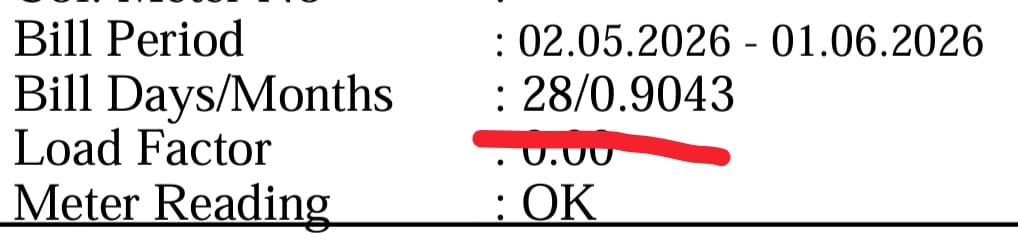 The second
inconsistency concerns the billing period. The bill specifies that consumption
was calculated for the period from May 2, 2026, to June 1, 2026. Yet the
document records the total billing duration as 28 days.
The second
inconsistency concerns the billing period. The bill specifies that consumption
was calculated for the period from May 2, 2026, to June 1, 2026. Yet the
document records the total billing duration as 28 days.
A simple calendar
calculation appears to tell a different story. The period from May 2 to June 1
spans 31 days when counted inclusively. Even under alternative counting
methods, the duration does not readily reconcile with the 28 days shown on the
bill. The unexplained three-day gap raises concerns about how billing durations
are being computed and whether consumers are being provided with accurate
information regarding their consumption cycles.
While the monetary
impact of such discrepancies may vary from case to case, experts point out that
billing accuracy is fundamental to consumer confidence. Electricity bills are
legal and financial documents used for payments, audits, subsidy calculations,
dispute resolution, and regulatory compliance. Any inconsistency in dates or
billing periods can undermine confidence in the system and create avoidable
confusion among consumers.
What makes the issue
more concerning is the reported lack of response from the utility despite the
matter being brought to its notice. In an era when power utilities routinely
promote digital governance and customer responsiveness, consumers expect timely
clarification on billing-related queries, particularly when discrepancies are
visible in official records.
The timing is
noteworthy. the same Discom recently celebrated its sixth anniversary, highlighting six
years of transformative growth, technological innovation, operational
excellence, and enhanced customer service. The company
has frequently showcased achievements in smart metering, digitisation, and consumer
outreach as indicators of its evolving service standards.
However, consumer
advocates argue that the true measure of service excellence lies not merely in
technological advancements or corporate milestones, but in the accuracy of
everyday transactions and the responsiveness of grievance-handling systems. For
consumers, a correctly generated bill and a prompt explanation to legitimate
queries are often more meaningful indicators of service quality than
celebratory claims of transformation.
Until the utility provides a clarification, the discrepancies remain unanswered. Whether they stem from a technical glitch, a billing software issue, or a procedural oversight, the case underscores a broader principle: transparency and accountability are best demonstrated not through slogans and anniversary celebrations, but through the precision of the services delivered to consumers every month.