
THEBUSINESSBYTES
BUREAU
BHUBANESWAR, AUGUST 7, 2026
Reaffirming its commitment to a people-centric and
humanity-first approach to global cooperation, India on Friday steered the
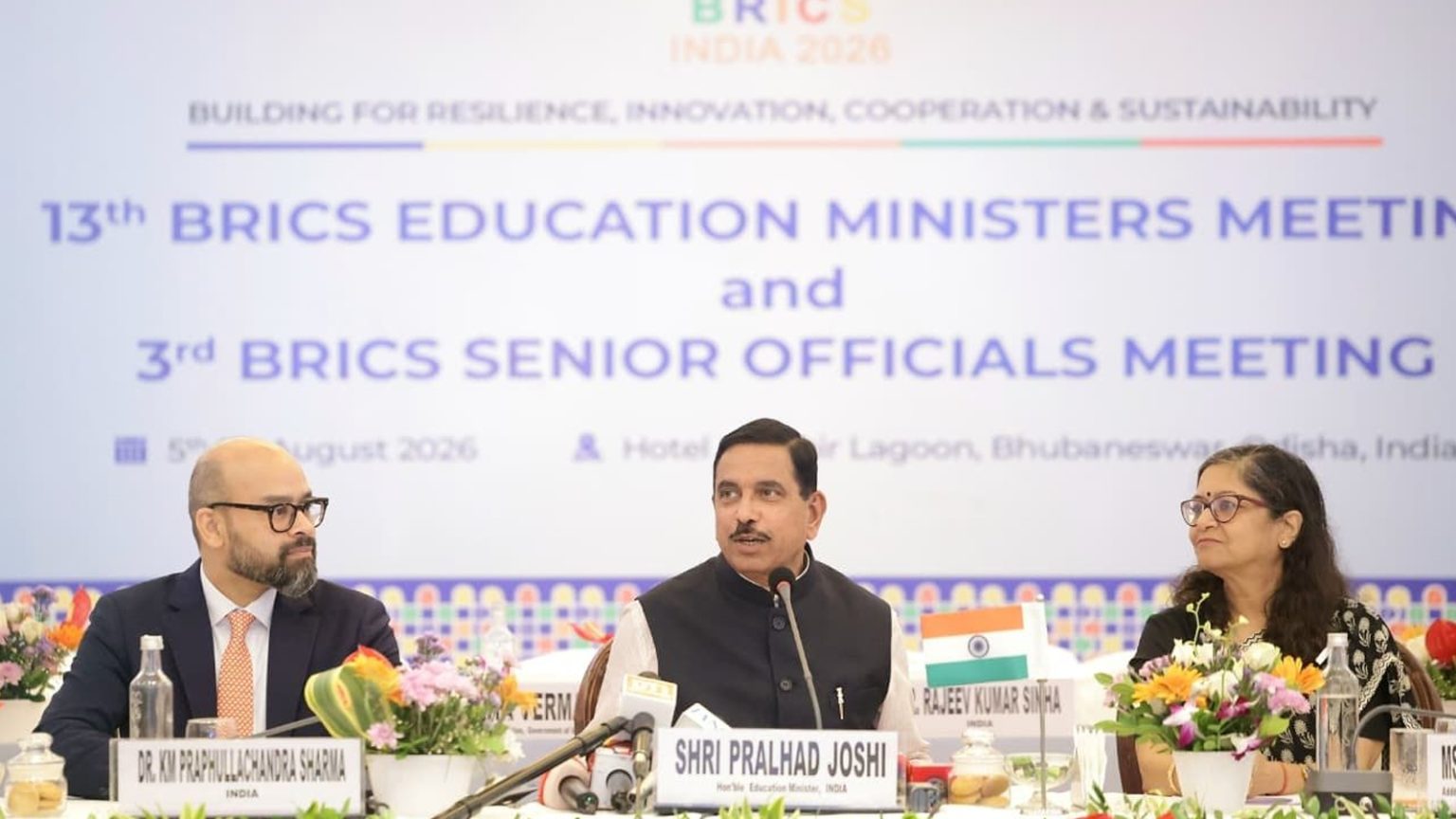
adoption of a joint declaration at the 13th BRICS Education Ministers’ Meeting
in Bhubaneswar, charting a roadmap for deeper collaboration in education,
skills, research and innovation among member countries.
Chairing the meeting, Union Education Minister Pralhad Joshi
said education must remain the cornerstone of inclusive growth and shared
prosperity while equipping young people to seize emerging opportunities through
innovation, cooperation and sustainability.
Referring to the theme of India’s BRICS Chairship 2026,
“Building for Resilience, Innovation, Cooperation and Sustainability”, Joshi
said education systems must continuously evolve to meet the aspirations of
future generations while remaining anchored in human values.
He stressed that learners, teachers, researchers and youth
should remain at the centre of policymaking and international cooperation,
reaffirming India’s commitment to working closely with all BRICS partners in
advancing quality education and knowledge exchange.
Highlighting the importance of preserving traditional and
indigenous knowledge systems, Joshi said innovation and heritage complement
each other and noted that the rich civilisational traditions of BRICS nations
provide a unique opportunity to preserve, study and transmit such knowledge to
future generations.
The minister also underscored Odisha’s historical legacy as a
renowned centre of learning and referred to India’s civilisational ideals of
Atithi Devo Bhava and Vasudhaiva Kutumbakam, saying that despite differences in
traditions and experiences, the progress of nations remains interconnected.
The meeting was attended by education ministers, senior
officials and delegates from Brazil, Russia, China, South Africa, Indonesia,
Iran, Ethiopia and the United Arab Emirates.
The 13th BRICS Education Ministers’ Declaration identified
five priority areas for future cooperation, including expanding access to
quality early childhood care and education and strengthening foundational
literacy and numeracy; enhancing collaboration in technical and vocational
education and training (TVET); promoting joint research, innovation, start-up
ecosystems and the ethical use of artificial intelligence in education;
advancing mutual recognition of academic qualifications to facilitate student
mobility; and strengthening academic leadership, faculty exchanges, scholarship
programmes and institutional development.
The declaration also endorsed India’s proposal on guiding principles for strengthening academic collaboration on traditional and indigenous knowledge systems and suggested that the BRICS Network University consider including the subject as an additional international thematic area for cooperation.
Earlier this week, the Ministry of Education hosted the 3rd BRICS Senior Officials’ Meeting in Bhubaneswar, where member countries reaffirmed their commitment to building inclusive, resilient and future-ready education systems through enhanced cooperation, innovation and knowledge sharing.