
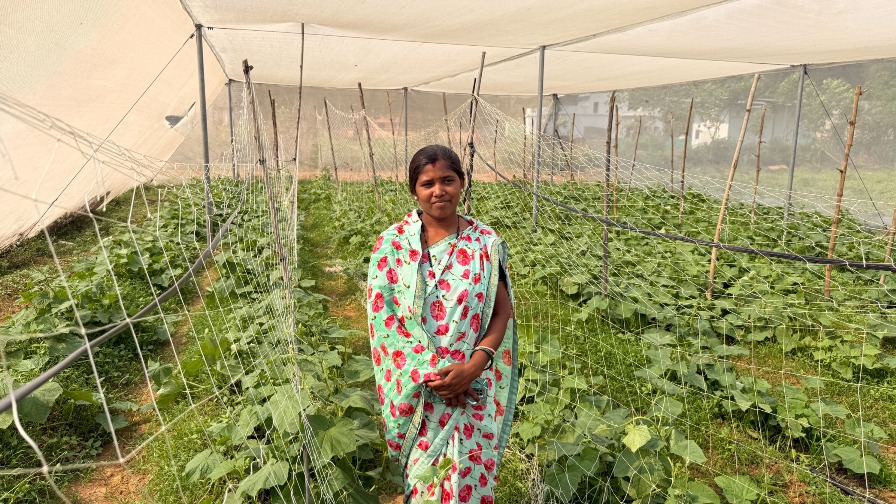
Award-winning
farmer-entrepreneur Sarita Bara’s inspiring journey reflects how women-led
agricultural enterprises are creating sustainable livelihoods, boosting farm
productivity and strengthening rural communities across western Odisha.
THEBUSINESSBYTES
BUREAU
SAMBALPUR,
JULY 1, 2026
Every season,
hundreds of vegetable seedlings leave Sarita Bara’s soilless nursery in Domposh
village of Sundargarh district and find their way to farms across the region.
Behind every healthy sapling lies the remarkable story of a tribal woman who
transformed farming from a means of subsistence into a flourishing enterprise,
while inspiring countless others to follow the same path.
Today, Sarita is
recognised as one of Sundargarh’s leading women agri-entrepreneurs. Earlier
this year, she received the prestigious Samman
Award as the Best Woman Horticulture Farmer of the district from the Minister,
Ministry of Tribal Affairs, and the district administration, in recognition of
her entrepreneurial spirit and significant contribution to sustainable
agriculture.
Agriculture remains
the backbone of western Odisha’s rural economy. However, many farmers continue
to struggle with limited access to quality planting material, technical
expertise and timely agricultural support. To address these challenges, TP
Western Odisha Distribution Limited (TPWODL), through Anokha Dhaaga, its flagship Corporate Social Responsibility (CSR)
programme, launched ‘Project Sakshama’ — a livelihood initiative designed to
identify, train and nurture Women Agri-Entrepreneurs who can deliver essential
agricultural services while building sustainable livelihoods for themselves.
Sarita was among the
women selected under the programme.
Equipped with
training in nursery management, entrepreneurship and market linkages, she
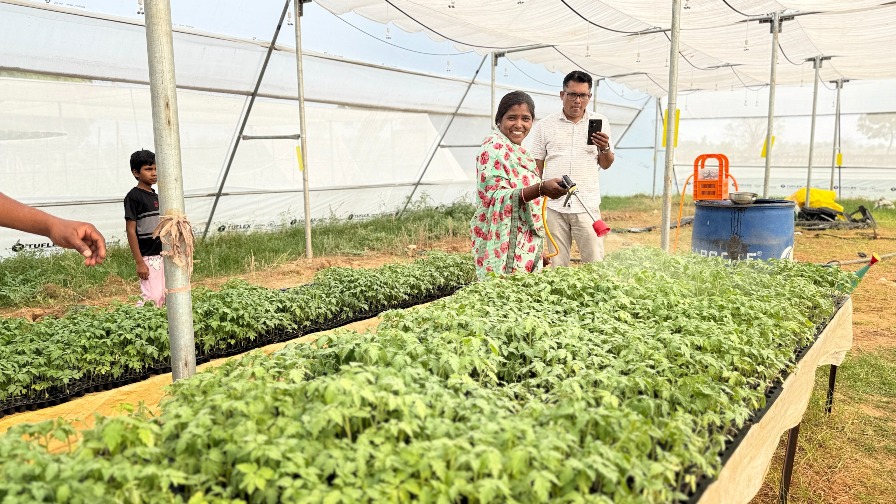
established a modern soilless nursery that supplies high-quality vegetable
saplings to local farmers. By replacing conventional soil with cocopeat and
vermicompost, the nursery produces healthier seedlings with stronger root
systems and higher survival rates, enabling farmers to improve crop
productivity and profitability.
 The enterprise has
transformed Sarita’s own livelihood as well. By ensuring the timely
availability of quality seedlings, she has created an additional annual income
of nearly ₹60,000.
At the same time, she has encouraged farmers to diversify beyond traditional
mono-cropping and embrace higher-value vegetable cultivation. The scientific
nursery management practices promoted through the initiative have also
contributed to a 10–12 per cent increase in crop productivity.
The enterprise has
transformed Sarita’s own livelihood as well. By ensuring the timely
availability of quality seedlings, she has created an additional annual income
of nearly ₹60,000.
At the same time, she has encouraged farmers to diversify beyond traditional
mono-cropping and embrace higher-value vegetable cultivation. The scientific
nursery management practices promoted through the initiative have also
contributed to a 10–12 per cent increase in crop productivity.
“Earlier, farming was mainly a means of
supporting our family. Through the nursery enterprise, I realised that agriculture
can also create opportunities for growth and financial independence. Today, I
take pride in helping fellow farmers access quality seedlings and improve their
yields. Seeing other women gain confidence and adopt improved farming practices
gives me immense satisfaction,” says Sarita.
Her success story is
part of a broader rural transformation being driven through ‘Project Sakshama’.
The initiative has enabled nine women entrepreneurs to establish agriculture
and allied enterprises, including four soilless nurseries and five Mother Chick
Units, creating a decentralised agricultural support network across Sundargarh
district.
The programme’s
impact has been substantial. Nearly 4,100 women farmers have benefited through
improved access to quality planting material, technical guidance and
climate-smart agricultural practices. Backyard poultry interventions have
enhanced household incomes as well as nutritional security, while the women
entrepreneurs supported under ‘Project Sakshama’ collectively generated more
than ₹3.56 lakh in income during the last
financial year. Their achievements underscore the transformative role of
women-led enterprises in driving inclusive economic growth and social progress
at the grassroots.
Commenting on the
initiative, TPWODL CEO Parveen Verma said, “Through Anokha Dhaaga, TPWODL is committed to creating sustainable
livelihood opportunities by empowering communities to become self-reliant.
‘Project Sakshama’ demonstrates how investing in women entrepreneurs can strengthen
local agricultural ecosystems while creating lasting socio-economic impact.
Sarita’s journey is an inspiring example of how knowledge, enterprise and
community support can transform lives.”
Today, Sarita’s
nursery produces far more than healthy vegetable seedlings. It nurtures
confidence, entrepreneurship and hope, demonstrating how the right
opportunities can transform individual lives while creating lasting change for
farming communities. Through Anokha Dhaaga and initiatives such as ‘Project
Sakshama’, TPWODL continues to empower women, strengthen rural livelihoods and
build resilient communities across western Odisha.