THEBUSINESSBYTES BUREAU
BHUBANESWAR, FEBRUARY 10, 2026
In early 2026, the United Nations issued a stark warning that vast
regions of the world are edging towards “water bankruptcy” — a condition in
which water demand consistently outstrips the capacity of ecosystems and
institutions to replenish, regulate and manage it. Unlike drought, which is
episodic and often reversible, water bankruptcy signals deep, long-term
ecological depletion compounded by systemic failures in governance.
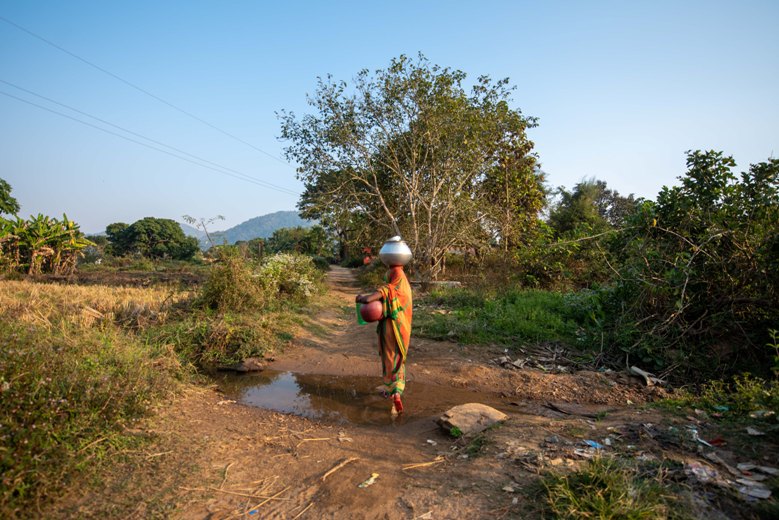
For rural India, this is no longer a distant or abstract threat. Across
Odisha’s hilly and forested districts, the signs are already unmistakable.
Springs that once flowed year-round are drying up, rainfall patterns have
become erratic, piped water systems are increasingly unreliable, and
agricultural productivity is declining. With nearly 70 per cent of rural
households dependent on rain-fed farming, climate stress is translating
directly into livelihood insecurity and heightened risks to food systems.
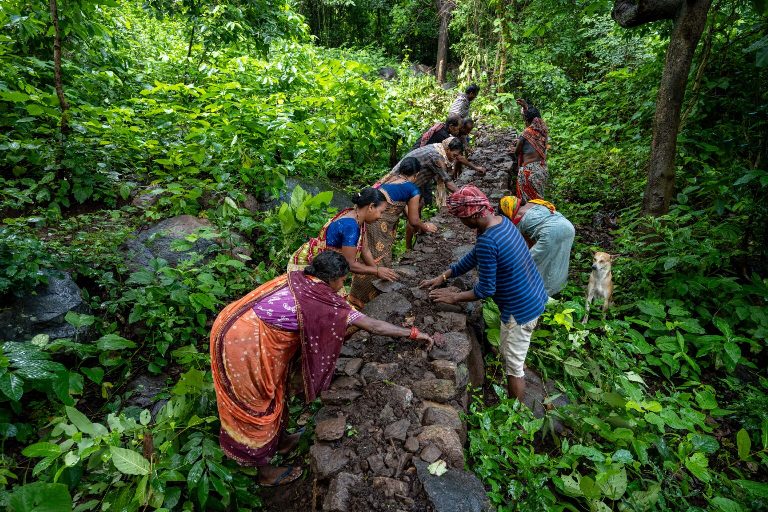
 Confronting this unfolding crisis, Gram Vikas has launched the Water
Secure Gram Panchayat (WSGP) programme, signalling a decisive shift from
infrastructure-centric interventions to governance-led water security. Drawing
on more than five decades of grassroots experience, WSGP reframes water not
merely as a service to be delivered, but as a shared resource to be governed
collectively. The programme rests on four interlinked pillars — Sustainability,
Safety, Prosperity, and Equity & Resilience — that together address both
ecological and social dimensions of water security.
Confronting this unfolding crisis, Gram Vikas has launched the Water
Secure Gram Panchayat (WSGP) programme, signalling a decisive shift from
infrastructure-centric interventions to governance-led water security. Drawing
on more than five decades of grassroots experience, WSGP reframes water not
merely as a service to be delivered, but as a shared resource to be governed
collectively. The programme rests on four interlinked pillars — Sustainability,
Safety, Prosperity, and Equity & Resilience — that together address both
ecological and social dimensions of water security.
At the heart of the initiative is a fundamental change in scale and
agency. Rather than focusing solely on pipes, pumps and schemes, WSGP places
the Gram Panchayat at the centre of action. Local governments are empowered to
plan, regulate and monitor water resources within their jurisdictions. Through
integrated measures such as springshed development, aquifer mapping, forest
regeneration and land-use planning, communities work to revive natural recharge
processes, reducing dependence on deeper and increasingly unsustainable
extraction.
Water safety is reinforced through systematic source protection and
community-based monitoring of water quality, ensuring that access is not only
reliable but also safe. Prosperity is addressed by supporting farmers to adopt
climate-resilient agricultural practices and optimise water use, directly
linking water reliability with income stability. Equity and resilience are
embedded into the governance framework by ensuring meaningful participation of
women, youth and marginalised households in decision-making processes, so that
the benefits of water security are shared fairly and sustainably.
The early outcomes of the WSGP programme are encouraging. Communities
have collectively treated 5,065 hectares of degraded land and reforested 697
hectares, restoring critical ecosystems. Water availability at vulnerable
sources has increased by 15 per cent, resulting in the recharge of nearly two
million cubic metres of water. More than 1.3 lakh people now enjoy access to
household tap water, while close to 10,000 farming families report improved
incomes, with winter agricultural earnings rising by an impressive 33 per cent.
As climate risks intensify and water stress deepens, Odisha’s experience
offers a compelling lesson: water security cannot be sustained through
infrastructure alone. It must be governed with local knowledge, democratic
participation and ecological sensitivity. Empowered Gram Panchayats, as
demonstrated through the WSGP model, are emerging as the cornerstone of
long-term, climate-resilient water stewardship — not only for Odisha, but for
rural India at large.