
The Weight of a Diary
Priyabrat
Biswal
The phone rang last week with a familiarity that felt almost forgotten. I
saw Jnana’s name glow on the screen — my schoolmate, my quiet constant, the one
person who never asked questions when answers hurt. Time and distance had
thinned many friendships in my life, but not this one.
“Hello,” I said.
“Where are you?” he asked, skipping pleasantries the way only old friends
can.
“At home,” I replied. Home had
become my whole geography since December 31, 2025 — the day I quit my job and,
with it, a part of my identity.
“Can you come downstairs? I’m
waiting.”
I asked him to come up. He refused, said he was in a hurry, insisted I
come down. There was something in his voice — urgent but gentle — that made me
obey.
It had been nearly forty days since I had seen him. Forty days of silence
not just from him, but from almost everyone. After leaving my job, I had
withdrawn deliberately, bruised by compromises that kept knocking at my
self-respect. Solitude felt safer than explanations.
Jnana stood near his scooter, smiling, but not quite. When I asked why he
wouldn’t come up, he lifted his trouser leg slightly. A bandage wrapped his
calf like an unfinished sentence.
“I fell from the roof,” he said,
casually, as if describing a missed step rather than weeks of pain. “Couldn’t
move for days. Today I felt a little better… so I came.”
The simplicity of that “so I came” struck me harder than any dramatic
confession could have. He had come despite the pain, despite the inconvenience,
despite my silence.
 Before I could say more, he bent down and opened the scooter’s boot. From
it, he took out a neatly wrapped packet and placed it in my hands. It was
light, but the moment carried weight.
Before I could say more, he bent down and opened the scooter’s boot. From
it, he took out a neatly wrapped packet and placed it in my hands. It was
light, but the moment carried weight.
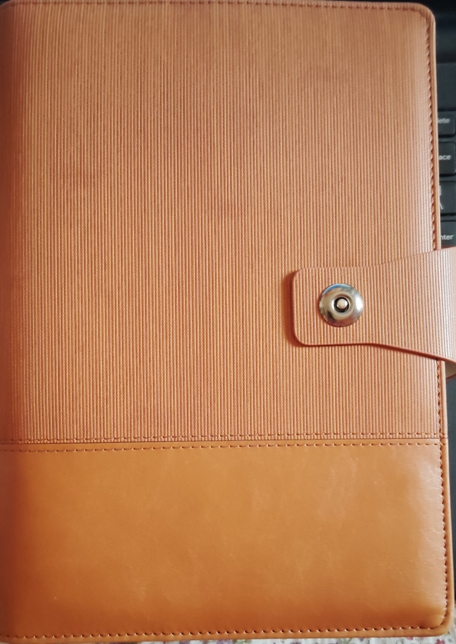
Inside was a beautiful executive diary and a pen — elegant, understated,
chosen with care.
For a second, the years collapsed into one another. I was back in school,
filling margins with thoughts I didn’t yet have words for. I was the boy who
loved paper more than prizes, ink more than applause. Diaries and pens had
always been my quiet indulgence, my harmless obsession. People knew it. Some
had even used it — gifts given not out of affection, but convenience.
As a journalist, and later as Deputy Resident Editor of an English daily,
diaries and pens arrived every New Year like clockwork. Couriers, smiles, greetings.
I accepted them gratefully, believing — foolishly — that they were meant for
me. It took leaving the job to understand a bitter truth: most of those gifts
were meant for the chair I occupied, not the person who warmed it.
Jnana watched me silently, reading the storm behind my eyes the way he
always had.
“I bought it during New Year,” he
said. “I know no one will give you diaries or pens now. Not after you left the
job. So I thought… this year, it should come from a friend.”
I tried to refuse. I told him I was done with journalism, done with
diaries and pens, done with old habits. I said I had moved on.
But friendship has a way of seeing through rehearsed denials.
He pressed the packet back into my hand, firmly, almost angrily. Then,
before emotions could trap us both, he kick-started the scooter.
“I’ll come again after I recover
fully,” he said, already turning away.
I stood there as the sound of the engine faded, tears blurring the world.
They weren’t loud tears. They didn’t demand attention. They simply arrived,
honest and unstoppable.
In that moment, I understood something vital.
When titles fall away, when visiting cards lose relevance, when doors
once open begin to close — what remains is not status, but sincerity. Not
designation, but devotion. Not the applause of many, but the presence of one.
Jnana hadn’t brought me a diary and a pen.
He brought me proof that friendship doesn’t check your résumé before showing
up. That dignity matters more than convenience. That some people love you not
for who you appear to be, but for who you are when no one is watching.
That diary still lies on my table. Its pages are blank. Not because I
have nothing to write — but because I am waiting for words worthy of the gift.
And perhaps that is the social truth we forget too easily: in a world
obsessed with positions and power, the purest relationships are those that
remain when you have neither.
***