THEBUSINESSBYTES
BUREAU
NEW
DELHI, SEPTEMBER 17, 2026
India has called for
secure, affordable and reliable energy to support economic development,
particularly in developing economies, while advocating greater international
cooperation on critical minerals, regulatory efficiency and clean cooking at
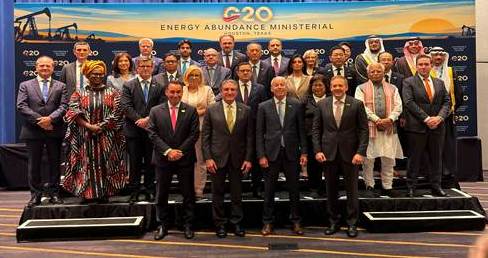
the G20 Energy Abundance Ministerial Meeting in Houston, USA.
Union Power and
Housing & Urban Affairs Minister Manohar Lal led the Indian delegation at
the meeting, held from September 14 to 16 under the US G20 Presidency. The
discussions focused on three key areas — energy security and affordable
baseload, permitting and regulatory efficiency, and critical minerals and
resilient supply chains.
Addressing the ministerial
discussions, Lal stressed that secure, affordable and reliable energy remains
essential for development and called for countries to leverage their
complementarities for the common good while respecting their diverse national
circumstances and development priorities.
The minister
highlighted India's efforts to build a resilient and future-ready energy system
that is increasingly digital, decentralised and consumer-centric. He said
India's installed electricity generation capacity has reached 552 GW, with more
than half coming from non-fossil fuel sources.
Lal also highlighted
India's early achievement of key Nationally Determined Contribution (NDC)
targets and reiterated the country's long-term goal of achieving net-zero
emissions by 2070.
On regulatory
reforms, the minister showcased initiatives including the National Single
Window System, PARIVESH and PM Gati Shakti, saying these measures have helped
improve predictability and streamline approvals for infrastructure development.
He emphasised that
greater regulatory efficiency, competition and wider participation and
investment would be important as countries expand energy infrastructure to meet
rising demand.
Critical minerals
also figured prominently in India's intervention, with Lal stressing the need
for secure, resilient and diversified supply chains. He called for greater
focus on circularity, recycling, recovery and downstream value creation in
developing countries.
The minister
highlighted India's National Critical Mineral Mission, which covers the value
chain from exploration to recycling, and urged G20 countries to deepen
cooperation in recycling, recovery and diversification of critical mineral
supply chains.
The three-day meeting
also produced several outcomes across the key areas under discussion. On clean
cooking, the G20 Statement on Advancing Clean Cooking Access underscored the
goal of universal access to clean cooking while advocating a technology-neutral
and nationally appropriate approach, recognising that no single solution can
meet the diverse requirements of all countries.
The statement
identified liquefied petroleum gas (LPG) as an important clean-cooking pathway,
particularly for developing countries, and called for equitable access to
financing for all clean-cooking solutions, including projects using LPG.
On permitting and
regulatory efficiency, the G20 Permitting and Regulatory Efficiency Symposium
recognised the importance of streamlined and efficient approval processes in
facilitating energy infrastructure development. It encouraged voluntary
information exchange, capacity building and the use of digital and artificial
intelligence-enabled tools.
The G20 Water Reuse
Initiative was also advanced as a voluntary framework aimed at promoting
science- and evidence-based, cost-effective and fit-for-purpose water reuse in
line with national policies. The initiative encouraged countries to share best
practices and strengthen water security and resilience while recognising that
approaches need to reflect national circumstances.
On critical minerals,
the G20 Critical Minerals Meeting Communiqué recognised their growing
importance for energy security, digital infrastructure, emerging technologies
and economic development.
The communiqué
emphasised collaborative and voluntary cooperation while respecting national
sovereignty and diverse domestic pathways. It also promoted innovation,
circularity, investment and international cooperation to support
diversification, value addition and resilient supply chains.
On the sidelines of the ministerial meeting, Lal held bilateral discussions with US Secretary of Energy Chris Wright, US Secretary of the Interior Doug Burgum and Canada's Parliamentary Secretary to the Minister of Energy and Natural Resources Corey Hogan.
The meetings covered areas of mutual interest, including resilient energy infrastructure and supply chains, transformation of the power sector and India's plans to meet the rapidly growing energy requirements of its digital economy.