THEBUSINESSBYTES BUREAU
NEW DELHI, AUGUST 15, 2026
India must shed its identity as merely a defence market and
emerge as a global supplier of next-generation defence technologies, Prime
Minister Narendra Modi said on Saturday, making a strong pitch for
self-reliance in the sector and asserting that the country must lead in areas
such as drones, counter-drone systems and hypersonic defence.
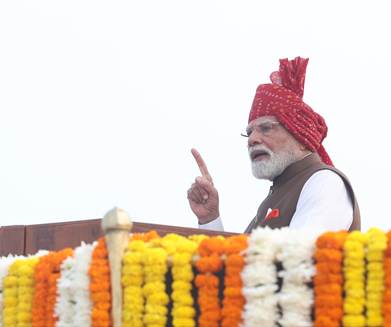
Addressing the nation from the ramparts of the Red Fort on
the 80th Independence Day, Modi identified ‘Raksha Shakti’ as one of the seven
streams of power essential to building a Viksit Bharat by 2047 and underlined
the need for a robust indigenous defence ecosystem capable of meeting emerging
threats and serving global requirements.
“There is no
alternative to being self-reliant in defence. When countries around the world
are increasingly thinking about their own interests, Bharat cannot simply
remain a market for the world. We must develop drones and counter-drone
systems, and take leadership in hypersonic defence technologies,” he said.
Reiterating the government's resolve to realise the vision of
Aatmanirbhar Bharat, Modi said India could no longer afford to depend on other
countries for critical capabilities merely because imported products were
cheaper or more readily available.
“There may be many
things available in the world that are cheaper and can be obtained more
quickly. But relying on them does not build our own capabilities, nor does it
test the strength of our capabilities. Therefore, we must strengthen our own
capacities and protect our own interests ourselves,” he said.
The Prime Minister said this resolve was reflected in
initiatives such as Make in India, Swadeshi and Vocal for Local, which, he
added, were increasingly resonating with the people.
He also identified cybersecurity as a critical new frontier
of national defence, stressing that India's young population could play a major
role in developing capabilities that would serve both the country and the wider
world.
Emphasising the changing character of warfare, Modi called
for greater focus on indigenous defence equipment while continuously enhancing
the preparedness and capabilities of the armed forces.
“The nature of warfare
is changing today; there is no longer a guarantee that conflict will be
confined to the borders,” he said, pointing out that modern conflicts could
target refineries, banking systems, data centres, infrastructure and factories.
He said India had already embarked on a new approach to
protecting itself against such threats, with work on ‘Mission Sudarshan Chakra’
progressing rapidly.
Highlighting the transformation of the defence sector over
the past 12 years, Modi said defence production had increased nearly fourfold,
while defence exports had surged almost 50 times, with Indian weapons now
reaching around 100 countries.
“Whether the challenge
is within or beyond the borders, India is prepared for any situation… India’s
reputation is gradually increasing on the global stage,” he said.
The Prime Minister also called for a comprehensive overhaul
of the country's civil defence preparedness, saying systems designed in
response to the wars of the previous century were no longer adequate for the
nature of threats emerging today.
“Civil defence systems
that have developed in our country in accordance with the wars of the last
century have become outdated. In the coming days, we will create a vibrant
network of civil defence,” he said, adding that citizens would be familiarised
with modern systems and a large voluntary civil defence force would be created
to respond to contemporary challenges.
Modi further underlined the growing contribution of ‘Nari Shakti’ to nation-building, including in the armed forces, and praised women officers for demonstrating their ability to take on leadership roles in India's military.
“Our daughters graduating from the NDA are demonstrating the capability to lead the nation’s military with great confidence and authority,” he said.