THEBUSINESSBYTES
BUREAU
NEW
DELHI, OCTOBER 27, 2026
India’s rich genetic
diversity and growing scientific capabilities could position the country as a
major global destination for gene research in the coming years, Union Minister
Jitendra Singh said on Tuesday, emphasising the need to strengthen indigenous
biotechnology capabilities and accelerate the translation of scientific
discoveries into practical applications.
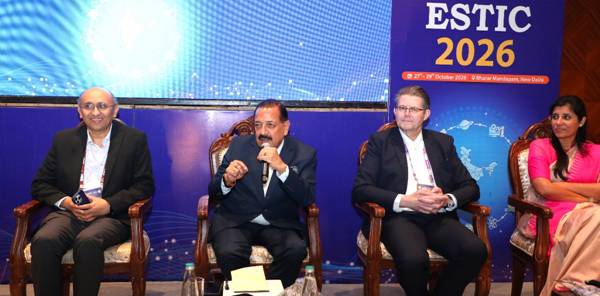
Addressing a session
on System and Synthetic Biology at the Emerging Science, Technology and
Innovation Conclave (ESTIC) 2026 at Bharat Mandapam here, Singh said India’s
unique genetic and phenotypic diversity offered immense opportunities for
scientific research, particularly in understanding variations in disease
patterns and exploring new possibilities in healthcare.
He expressed
confidence that as India expands its research infrastructure and technological
capabilities, its genetic resources could become increasingly valuable to the
global scientific community.
The minister
underlined the need to develop indigenous capabilities in gene synthesis,
noting that dependence on overseas suppliers for specialised research
requirements could create challenges for Indian scientists in terms of access,
timelines and continuity of research.
Building domestic
expertise and infrastructure in this critical area would enable researchers to
pursue their work more efficiently while strengthening India’s biotechnology
ecosystem, he said.
Singh said India
possessed considerable scientific talent and that the government had accorded
high priority to research and innovation. However, he stressed that scientific
excellence needed to be backed by stronger support systems, increased industry
participation and adequate funding to help promising research advance towards
tangible outcomes.
Highlighting the
growing convergence of scientific disciplines, the minister said collaboration
among biology, engineering, mathematics and other fields was becoming
increasingly important as research moved towards more complex applications and
emerging technological pathways.
He emphasised that an
interdisciplinary approach would be crucial to harnessing the full potential of
modern biotechnology and developing solutions to address emerging scientific
and societal challenges.
Referring to advances
in nuclear medicine, Singh also called for greater awareness of emerging
research opportunities and wider participation in the sector.
He pointed to
provisions under the recently enacted SHANTI Act that open nuclear medicine
research to private-sector participation, saying such initiatives could
encourage further scientific exploration, attract industry engagement and
expand the scope of research and innovation.
The minister also
stressed the importance of strengthening the pathway from scientific discovery
to technology development and commercial application.
Closer collaboration
among research institutions, industry and entrepreneurs would help promising
scientific breakthroughs evolve into products and solutions with practical
benefits for society, he said.
The session was
attended by Department of Biotechnology Secretary Rajesh S Gokhale and brought
together scientists and experts to deliberate on the potential of system and
synthetic biology and the development of emerging biotechnology capabilities in
the country.
ESTIC 2026 brings
together scientists, policymakers, industry leaders, start-ups and young
researchers to strengthen the linkages between scientific research,
technological innovation and national development.
The conclave provides
a platform for exploring emerging technologies, fostering collaboration across
sectors and accelerating the translation of scientific knowledge into practical
applications, with the broader objective of strengthening India’s research and
innovation ecosystem.