THEBUSINESSBYTES
BUREAU
NEW
DELHI, SEPTEMBER 29, 2026
The government is
preparing an ambitious new National Steel Policy aimed at more than doubling
India’s steelmaking capacity to around 600 million tonnes by 2047, while
strengthening the industry’s global competitiveness, promoting value-added
production and tackling the challenge of low-cost imports.
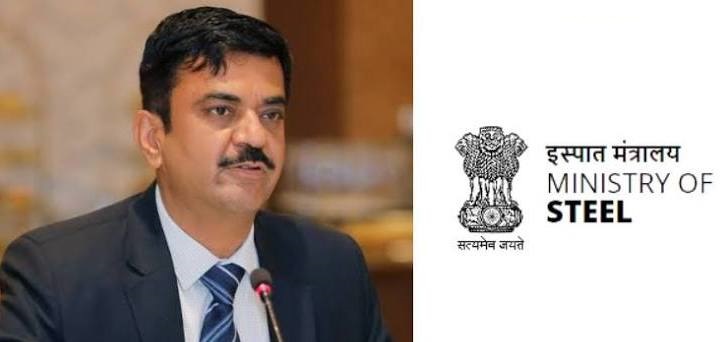
Steel Secretary
Sandeep Poundrik said on Tuesday that the proposed National Steel Policy (NSP)
2047 will be released in the public domain within about a week to invite
comments and suggestions from industry stakeholders. The policy is expected to
provide a long-term roadmap for the sector, with the government targeting steel
capacity of 604 million tonnes by 2047.
Speaking at the
Manufacturing Confluence 2026 organised by the Confederation of Indian Industry
(CII), Poundrik said the new policy will focus not only on expanding capacity
but also on increasing the share of value-added and special steel in India’s
production mix. The strategy is aimed at making the domestic industry more
competitive in terms of technology, costs and product quality.
The proposed policy
also comes with a sharper focus on import management. The government intends to
address the impact of cheap and substandard steel imports through instruments
such as safeguard duties and anti-dumping measures, while simultaneously
improving the competitiveness of smaller domestic producers.
The new roadmap marks
a significant expansion from the objectives of the National Steel Policy
introduced in 2017, which had envisaged building 300 million tonnes of
steelmaking capacity by 2030. According to Poundrik, changing market conditions
and emerging priorities have made a fresh policy framework necessary.
“Since 2017, emerging priorities like
artificial intelligence, machine learning and technical upgrades require
greater focus,” the secretary said, pointing to the rapid expansion of India’s
steel consumption and production capacity over the past decade.
India’s steel
industry is also confronting the twin challenges of sustaining rapid growth and
reducing its carbon footprint. The new policy is therefore expected to place
greater emphasis on decarbonisation, sustainability, technological
modernisation and the adoption of cleaner energy.
A key proposal is the
Viksit Bharat Ispat scheme, which is being designed specifically for small
steel producers. With a proposed outlay of ₹5,000 crore, the scheme would provide production-linked
incentives based on reductions in carbon emissions.
According to
Poundrik, smaller steelmakers can achieve emissions reductions through the
adoption of more efficient technologies, improved raw materials and greater use
of renewable energy. The scheme is expected to receive approval from the
competent authority in the near future.
For larger steel
producers, the government is moving ahead with the Carbon Credit Trading Scheme
(CCTS), which is expected to provide a framework for reducing industrial
emissions through market-based mechanisms.
The government is
also closely examining the impact of trade measures imposed by overseas
markets. On quotas announced by the European Union, Poundrik said the Steel
Ministry is currently assessing their impact on Indian producers.
He also indicated that existing domestic measures to address imports were, for the moment, having the intended effect. India already has a duty in place for three years, and the secretary said he did not currently see a significant price differential affecting the domestic market.
The new National Steel Policy is thus being positioned as a long-term transformation blueprint for an industry that is expected to play a central role in India’s infrastructure and manufacturing ambitions.