
THEBUSINESSBYTES
BUREAU
VISAKHAPATNAM,
APRIL 3, 2026
In a significant
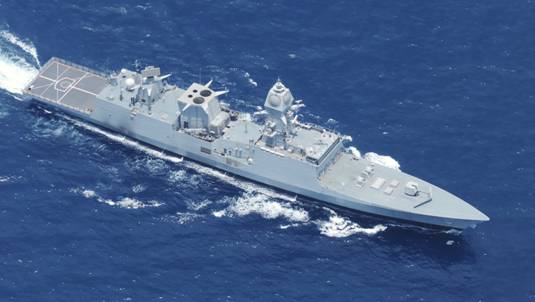
boost to India’s maritime strength and indigenous defence capabilities, the
latest stealth frigate INS Taragiri was formally commissioned into the Indian
Navy at Visakhapatnam on Friday, in the presence of Defence Minister Rajnath
Singh. The fourth warship under the advanced Project 17A class, INS Taragiri
marks a new benchmark in modern naval engineering, combining cutting-edge
stealth technology, indigenous design expertise, and robust multi-role combat
capability.
Designed by the
Warship Design Bureau and constructed by Mazagon Dock Shipbuilders Limited, the
6,670-tonne frigate reflects India’s growing mastery in complex warship
construction. With more than 75 percent indigenous content and contributions
from over 200 MSMEs, the vessel stands as a powerful example of the country’s
push towards self-reliance under the Aatmanirbhar Bharat vision. Equipped with
sophisticated radar, sonar, and supersonic missile systems including the
formidable BrahMos, the ship is capable of executing high-intensity combat
operations, maritime surveillance, anti-piracy missions, coastal security, and
humanitarian assistance.
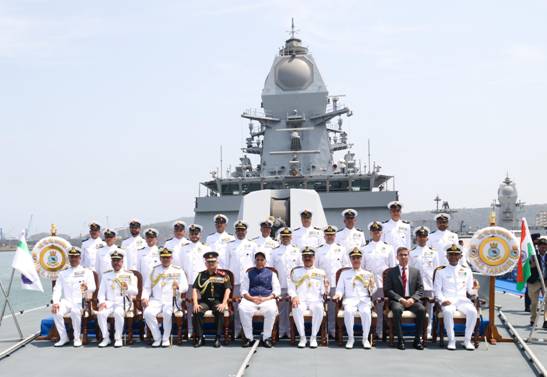 Addressing the
commissioning ceremony, Rajnath Singh described INS Taragiri as far more than a
warship, calling it a symbol of India’s technological confidence and strategic
preparedness in a rapidly evolving global security environment. Emphasising the
importance of maritime strength for a nation with over 11,000 kilometres of
coastline and heavy dependence on sea-based trade routes, he noted that nearly
95 percent of India’s trade moves through maritime channels, making naval
capability crucial for safeguarding economic interests and energy security.
Addressing the
commissioning ceremony, Rajnath Singh described INS Taragiri as far more than a
warship, calling it a symbol of India’s technological confidence and strategic
preparedness in a rapidly evolving global security environment. Emphasising the
importance of maritime strength for a nation with over 11,000 kilometres of
coastline and heavy dependence on sea-based trade routes, he noted that nearly
95 percent of India’s trade moves through maritime channels, making naval
capability crucial for safeguarding economic interests and energy security.
The Defence Minister
highlighted the Indian Navy’s constant operational presence across the Indian
Ocean Region, ensuring secure sea lanes and protecting commercial shipping and
oil tankers amid global uncertainties. He stressed that maritime security today
extends beyond conventional boundaries, encompassing protection of critical sea
lanes, chokepoints, and undersea digital infrastructure that carry the majority
of global internet traffic. According to him, the induction of advanced vessels
like INS Taragiri reinforces regional stability and underscores India’s role as
a responsible maritime power committed to peace and prosperity.
Chief of the Naval
Staff Admiral Dinesh K Tripathi recalled the legacy of the earlier
Leander-class frigate bearing the same name, commissioned in 1980, which played
a pivotal role in enhancing India’s anti-submarine warfare capabilities. He
noted that the commissioning of the new INS Taragiri reflects the Navy’s
determination to remain a combat-ready, future-focused force capable of
addressing emerging maritime challenges in the Indo-Pacific region.
Featuring a Combined
Diesel or Gas propulsion system and an advanced Integrated Platform Management
System, the stealth frigate offers enhanced endurance, high-speed mobility, and
operational flexibility. Its significantly reduced radar cross-section enables
superior survivability in contested waters, giving the Indian Navy a decisive
tactical advantage.
The ceremony
witnessed the traditional breaking of the Commissioning Pennant and the
hoisting of the National Flag onboard, attended by senior military leadership
including Chief of Defence Staff Anil Chauhan and senior naval commanders. As
INS Taragiri joins the Eastern Fleet, the vessel sends a strong geopolitical
message about India’s emergence as a premier builder of sophisticated warships
and its commitment to strengthening maritime security architecture in the
Indo-Pacific.
The commissioning of
INS Taragiri reflects a decisive step in India’s defence modernisation journey,
demonstrating that the nation is increasingly capable of designing, developing,
and deploying world-class naval platforms indigenously. With this addition to
its fleet, India reinforces its resolve to protect national interests, secure
global trade routes, and contribute meaningfully to regional stability in an
era of evolving geopolitical dynamics.