
THEBUSINESSBYTES
BUREAU
NEW
DELHI, APRIL 3, 2026
India’s fisheries
sector is fast emerging as a cornerstone of the nation’s blue economy, powering
food security, employment generation, export earnings and sustainable
livelihoods, supported by a record government investment of ₹39,272 crore since 2015. The sector
today supports nearly 30 million fishers and fish farmers
at the primary level, with almost twice as many engaged across the broader
value chain, reflecting its growing socio-economic significance.
Ranked as the world’s
second-largest aquaculture producer, India contributes nearly 8 percent of
global fish production. Over the past decade, the sector has undergone a
remarkable transformation from traditional practices to a modern, commercially
dynamic industry, while continuing to promote inclusive growth among
small-scale fishers. This progress is evident in production trends, with output
rising from 141.64 lakh tonnes in 2019-20 to 197.75 lakh tonnes in 2024-25,
representing an average annual growth of about 7 percent.
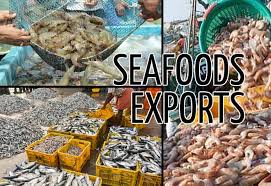
India’s seafood
exports have also demonstrated strong momentum, recording an average annual
growth of 7 percent over the last eleven years. Marine product exports have
more than doubled from ₹30,213
crore in 2013-14 to ₹62,408 crore in 2024-25, driven predominantly by shrimp
exports valued at ₹43,334 crore. The country exports more than
350 varieties of seafood products to nearly 130 international markets. The
United States continues to be the largest destination, accounting for 36.42
percent of export value in 2024-25, followed by China, the European Union,
Southeast Asia, Japan and the Middle East. Frozen shrimp remains India’s
flagship product, complemented by frozen fish, squid, dried items, cuttlefish,
surimi-based products and live and chilled seafood. Notably, the share of
value-added products in the export basket has expanded significantly from 2.5
percent to 11 percent, reaching USD 742 million in export value.
 To reduce dependence
on limited commodities and strengthen India’s global presence, the government
is actively promoting diversification of the export basket under the Pradhan
Mantri Matsya Sampada Yojana (PMMSY). The initiative supports interventions
across the fisheries value chain, including quality fish seed production,
expansion of brackish-water aquaculture, promotion of export-oriented species,
adoption of advanced technologies, disease management, traceability systems and
capacity building. Parallel investments in post-harvest infrastructure, modern
fishing harbours, fish landing centres and seamless cold-chain networks are
enhancing operational efficiency and product quality. Diversified aquaculture
is being promoted for high-value species such as tuna, seabass, cobia, pompano,
mud crab, GIFT tilapia, grouper, tiger shrimp, scampi and seaweed, enabling
India to tap premium international markets.
To reduce dependence
on limited commodities and strengthen India’s global presence, the government
is actively promoting diversification of the export basket under the Pradhan
Mantri Matsya Sampada Yojana (PMMSY). The initiative supports interventions
across the fisheries value chain, including quality fish seed production,
expansion of brackish-water aquaculture, promotion of export-oriented species,
adoption of advanced technologies, disease management, traceability systems and
capacity building. Parallel investments in post-harvest infrastructure, modern
fishing harbours, fish landing centres and seamless cold-chain networks are
enhancing operational efficiency and product quality. Diversified aquaculture
is being promoted for high-value species such as tuna, seabass, cobia, pompano,
mud crab, GIFT tilapia, grouper, tiger shrimp, scampi and seaweed, enabling
India to tap premium international markets.
India has also
strengthened its compliance with international sustainability standards to
safeguard market access. In a major milestone, the country secured a
comparability finding from U.S. authorities in 2025 under the Marine Mammal
Protection Act (MMPA), ensuring uninterrupted seafood exports beyond the
December 2025 deadline. Efforts are also underway to address restrictions on
wild-caught shrimp exports through the installation of Turtle Excluder Devices
(TEDs) across shrimp trawlers in coastal states. The government has introduced
a national digital traceability framework to ensure end-to-end monitoring, food
safety assurance and global compliance, alongside new rules promoting
sustainable fishing in India’s Exclusive Economic Zone.
Ease of doing business reforms have further enhanced investor confidence in the sector. The Sanitary Import Permit (SIP) system has been fully digitised and integrated with the National Single Window System, reducing approval timelines from 30 days to just 72 hours. Key relaxations in SIP requirements for SPF shrimp broodstock, fish oil, R&D samples and wild-caught fish imports intended for value addition and re-export have simplified trade procedures. Recent legal reforms have also eased compliance requirements for aquaculture units, reinforcing the sector’s investment appeal.
Looking ahead, India aims to strengthen its global seafood strategy by focusing on higher-value exports, wider market diversification and enhanced quality assurance mechanisms. The government plans to increase the share of value-added products through expanded processing capacity, workforce skill development and improved certification frameworks. Greater thrust will be placed on expanding exports to the UK, EU, ASEAN and West Asia, alongside developing inland export hubs and freshwater supply chains. Supported by strengthened cold-chain infrastructure, digital traceability and sustainability-driven compliance frameworks, India is positioning itself as a reliable, responsible and premium seafood exporter in the global market.