THEBUSINESSBYTES BUREAU
NEW DELHI, AUGUST 16, 2026
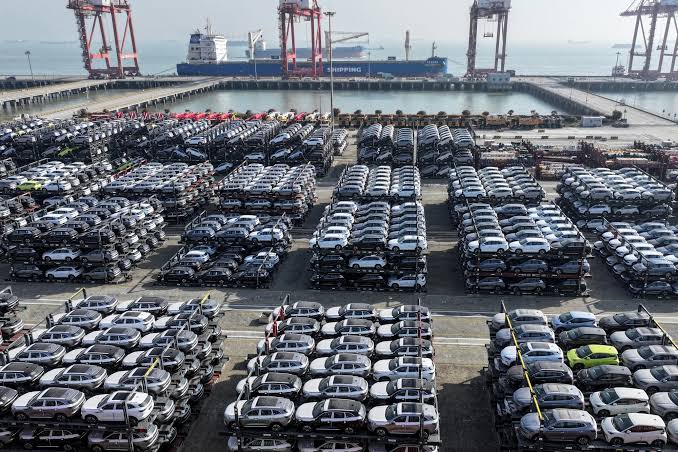
India’s electric vehicle export story is gathering
unprecedented momentum, with European markets emerging as the new engine of
growth and signalling a sharp rise in global confidence in Indian-made electric
cars. In a significant shift for the country’s clean-mobility industry, exports
of electric motor cars surged more than sixteen-fold in value during the first
quarter of 2026-27, while shipment volumes also registered a dramatic increase,
according to commerce ministry data.
India’s export earnings from electric motor cars climbed to
USD 369 million in the April-June quarter of 2026-27, compared with just USD
22.2 million in the corresponding period a year earlier. In volume terms,
shipments jumped to 10,802 vehicles from 1,309 units, underscoring the rapidly
expanding international footprint of India’s electric mobility manufacturing
sector.
The sharp rise in exports reflects the growing acceptance of
India-manufactured electric vehicles (EVs) in overseas markets and reinforces
the country’s emergence as an important production hub for sustainable mobility
solutions, an official said.
Europe emerged as the principal destination for Indian
electric cars, led by Spain, which became the single-largest market during the
quarter. Exports to Spain surged to USD 146.4 million, accounting for nearly 40
per cent of India’s total electric motor car exports. A total of 4,007 electric
vehicles were shipped to the country, making Spain the largest destination for
Indian electric cars by both value and volume.
The United Kingdom followed as the second-largest market,
with imports from India worth USD 78.7 million, compared with almost negligible
shipments in the corresponding quarter of the previous year.
“Export volumes
climbed from just one vehicle to 2,646 vehicles, indicating growing penetration
of Indian-made electric cars into one of Europe’s most developed EV markets,”
it said.
The momentum was not confined to Spain and the UK. Several
other major European economies recorded a substantial rise in imports of Indian
electric vehicles, highlighting the widening acceptance of India as a source of
competitively priced EVs. Exports to Germany stood at USD 25.1 million, while
Norway and Denmark imported electric cars worth USD 21.1 million and USD 21
million, respectively.
India’s electric vehicle exports also expanded across Belgium
at USD 12.9 million, the Netherlands at USD 12 million, Greece at USD 3.8
million, Italy at USD 2.7 million, Sweden at USD 2.1 million and Poland at USD
1.6 million.
“The broad European
footprint reflects the growing relevance of Indian manufacturers in global EV
supply chains and the increasing demand for affordable electric mobility
solutions,” the official said.
The export surge extended beyond Europe, with Indian electric
carmakers also making inroads into technologically advanced Asia-Pacific
markets. Japan imported electric cars worth USD 13.4 million, while shipments
were recorded to Israel at USD 2.8 million, Australia at USD 2.7 million,
Singapore at USD 1.7 million, Taiwan at USD 1.3 million and South Korea.
Exports to these markets point to improving quality, safety
standards and global competitiveness of Indian electric vehicle manufacturing,
while also indicating that India’s EV industry is increasingly capable of
meeting the requirements of sophisticated international markets.
Traditional neighbouring markets remained relevant as well,
with Nepal importing electric cars worth USD 8.1 million. However, the growing
share of exports headed towards advanced European economies marks a notable
transformation in India’s electric vehicle export profile and suggests a move
towards greater geographical diversification.
Fresh opportunities are also opening up in Latin America.
During the quarter, India exported electric cars worth USD 2.4 million to
Brazil, USD 1 million to Colombia, USD 0.4 million to Chile and USD 0.5 million
to Costa Rica.
The sharp acceleration in overseas shipments comes at a time
when the global automotive industry is undergoing a major transition towards
electrification. India’s expanding export footprint therefore offers domestic
manufacturers an opportunity to move beyond traditional markets and establish
themselves as competitive players in the rapidly evolving global EV supply chain.
With Europe accounting for a dominant share of India’s
electric car exports and demand spreading across Asia-Pacific and Latin
America, the latest trade data signals a potentially significant new phase for
India’s automobile industry — one in which the country is not only a major
vehicle manufacturing base but also an increasingly important exporter of
electric mobility solutions.