THEBUSINESSBYTES BUREAU
BHUBANESWAR, AUGUST 12, 2026
Naveen Jindal-led Jindal Steel’s pioneering use of coal
gasification for steelmaking has emerged as a powerful business case for
India’s broader push to turn its abundant domestic coal reserves into a
strategic industrial advantage, as global experts, policymakers and industry
leaders converged in Bhubaneswar to deliberate on technologies that could
reduce import dependence and strengthen the country’s march towards Atmanirbhar Bharat.
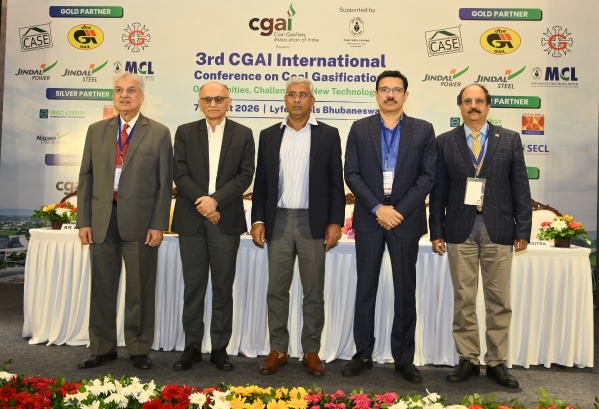
The spotlight on Jindal Steel came as the Coal Gasifiers
Association of India (CGAI) brought together some of the biggest names in
India’s energy, coal, gas and steel sectors for an international conference on
“Challenges, Opportunities and New Technologies
in Coal Gasification”. The conference underscored that coal gasification,
backed by technological advances and government support through the Viability
Gap Funding (VGF) scheme, could evolve from a niche technology into a
commercially significant pillar of India’s industrial strategy.
The high-level gathering in Bhubaneswar saw participation
from industry majors including Coal India, Mahanadi Coalfields, South Eastern
Coalfields, GAIL, NTPC and Jindal Steel, besides international delegations from
Sri Lanka and technical experts from Canada. More than 25 specialists presented
technical papers covering the challenges of gasifying India’s high-ash coal,
new technological solutions and opportunities to establish domestic
manufacturing capabilities for strategic chemicals currently dependent on
imports.
 For Jindal Steel, the discussions had a particularly strong
industrial resonance. The company’s flagship facility at Angul has become an
important demonstration of how coal gasification can be integrated into a
large-scale steelmaking ecosystem. The plant houses India’s first coal
gasification-based Direct Reduced Iron (CGP-DRI) facility for steelmaking,
providing a working example of how domestic coal can be converted into a useful
gaseous feedstock for steel production.
For Jindal Steel, the discussions had a particularly strong
industrial resonance. The company’s flagship facility at Angul has become an
important demonstration of how coal gasification can be integrated into a
large-scale steelmaking ecosystem. The plant houses India’s first coal
gasification-based Direct Reduced Iron (CGP-DRI) facility for steelmaking,
providing a working example of how domestic coal can be converted into a useful
gaseous feedstock for steel production.
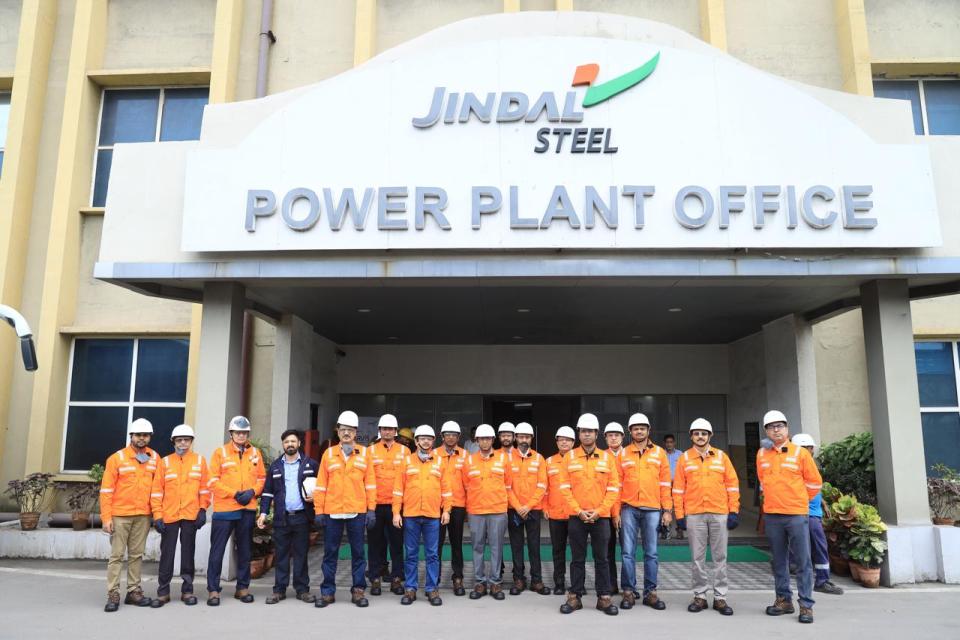
The CGAI conference subsequently took delegates beyond the
conference hall, with an official field visit to Jindal Steel’s Angul plant.
The visit provided industry representatives and international experts with a
first-hand look at the company’s coal-gasification-based DRI operations,
advanced production systems and the technological capabilities being deployed
as part of its continuing expansion.
The Angul facility, regarded as one of India’s most modern
steelmaking complexes, also houses the country’s largest blast furnace, adding
another dimension to its scale and technological profile. Delegates examined
the plant’s operations and gained insights into advanced technologies and
global best practices being adopted to enhance efficiency, productivity and
sustainability.
The significance of the Angul model goes beyond steel
production. At a time when India is seeking to reduce its exposure to imported
energy and industrial raw materials, coal gasification offers a pathway to
extract greater economic value from the country’s high-ash domestic coal
resources. The technology can convert coal into synthesis gas, which can
subsequently serve as a feedstock for applications ranging from direct reduced
iron and chemicals to other industrial products.
This potential was a central theme of the conference, with
industry leaders stressing the need to move towards commercially viable
projects that can unlock domestic resources while reducing dependence on
overseas supplies. The VGF framework announced by the Ministry of Coal was seen
as an important catalyst in addressing the initial capital and commercial
challenges associated with large-scale coal gasification projects.
The conference also highlighted the importance of developing
technologies specifically suited to Indian coal. With high ash content
presenting a technical challenge, experts discussed modern gasification
technologies and process solutions that could improve efficiency and expand the
commercial viability of projects based on indigenous coal.
The participation of major public-sector and private-sector
players reflected the widening industry interest in the technology. Coal
producers such as Coal India and its subsidiaries bring the critical domestic
resource base, while energy and infrastructure companies such as NTPC and GAIL
can provide capabilities across power, gas and energy systems. Steelmakers such
as Jindal Steel, meanwhile, offer an industrial pathway for converting
gasification technology into large-scale value creation.
The event also strengthened the case for developing an
integrated domestic ecosystem around coal gasification rather than treating it
solely as a coal-utilisation technology. Such an ecosystem could potentially
support the production of chemicals, fuels and industrial feedstocks, opening
new avenues for import substitution while creating opportunities for Indian
technology providers, engineering companies and equipment manufacturers.
Sanjay Singh, Advisor to Jindal Steel and President of the
Coal Gasifiers Association of India, was prominently associated with the
proceedings, along with Dr A.K. Balyan, General Secretary of CGAI, and Kapil
Dhagat, Vice-President and coal gasification expert. R.K. Singhal, Director,
Business Development, GAIL, also participated in the discussions.
The conference was attended by Asit Tripathy, former Chief
Secretary of Odisha, as the Chief Guest, adding a significant state-level
perspective to deliberations on technology, industrial investment and the
economic potential of coal-based value addition in Odisha.
The proceedings ultimately placed coal gasification at the intersection of three of India’s major economic priorities — energy security, import substitution and industrial self-reliance. With domestic coal availability, government-backed financial support and emerging technological solutions converging, the industry sees an opportunity to create a new business ecosystem around a resource India possesses in abundance.
Jindal Steel’s Angul facility, with its pioneering CGP-DRI operations, provided the conference with a tangible example of that opportunity. As India accelerates its efforts to build resilient domestic supply chains, the experience at Angul could offer valuable lessons for scaling coal gasification across steel, chemicals, energy and other strategic industries.