
PRIYABRAT
BISWAL
BHUBANESWAR,
AUGUST 25, 2026
As Reliance Jio prepares to complete 10 years
of operations next month, the company is entering its second decade with an
ambition that extends far beyond mobile connectivity. From making high-speed
data affordable in 2016, Jio is now building an ecosystem spanning 5G, fixed
broadband, devices, cloud computing, enterprise networks, artificial
intelligence and next-generation technologies.
When Jio entered the Indian market,
average monthly mobile-data consumption was below 0.2 GB per user and a
gigabyte of data cost around ₹228.
Today, the price is about ₹7.9 per GB, while average monthly consumption on
Jio’s network has climbed to 42.3 GB. The number of 4G and 5G users in India
has grown from fewer than 10 million 4G consumers in 2016 to more than 938
million by December 2025.
Jio now serves 524.4 million customers
and has 361.6 million monthly active users across its digital services. Its
standalone 5G customer base rose from 253 million at the end of December 2025
to 268.5 million by March 31, 2026, making it the largest 5G customer base
outside China.
The impact of cheaper connectivity has
spread across the wider economy. Digital-wallet users increased to 556 million
by FY2026, while streaming and OTT audiences expanded to about 601 million.
Payments, online education, entertainment, commerce and small-business activity
have increasingly been built on affordable internet access.
The next phase of Jio’s strategy is to
own and develop more of the technology underneath its network. The company has
built a proprietary technology stack covering cloud-native radio access
networks, a 5G core, operating and business-support systems, fixed-wireless
solutions, AI-driven network automation and digital-service platforms. It has
filed 6,817 patent applications covering 4G, 5G, 6G, AI and cloud technologies.
For India, the scale of this
investment marks a significant shift in the country’s technology journey.
Rather than simply adopting the next generation of technologies developed
elsewhere, India is increasingly building the capabilities, intellectual
property and technological platforms needed to help shape those technologies
itself.
Jio has 11,303 employees engaged in
research, digital products and technology development, accounting for around 40
per cent of its workforce. Its innovation efforts have also resulted in 6,817
patent applications spanning technologies such as 4G, 5G, 6G, artificial
intelligence and cloud computing. The company’s objective is increasingly to
develop technology in India rather than simply deploy technologies created
elsewhere.
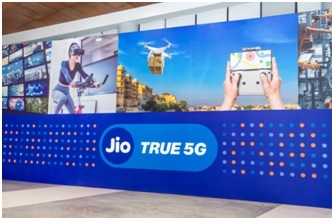
Its 5G rollout illustrates the scale
of that effort. Jio completed nationwide 5G coverage in about 15 months and
reached around 268 million 5G customers within 42 months. The standalone
architecture also provides a foundation for network slicing, private 5G and
machine-to-machine applications.
Jio’s expansion is also reshaping the
home-broadband market. Its home broadband customer base crossed 27 million by
March 31, 2026, making it India’s largest home-broadband provider.
Fixed-wireless technology is allowing Jio to reach locations where laying fibre
is slower or more expensive.
The company’s proposition goes beyond
providing an internet connection. JioTV+, cloud storage, gaming, connected
appliances, security devices and cloud computing can all operate over the same
broadband infrastructure. JioCloud PC, for instance, points towards a model in
which computing and applications reside in the cloud while the television or
another affordable device becomes the user interface. JioSpaceFiber is intended
to complement fibre, mobile and fixed-wireless networks with satellite
connectivity for hard-to-reach areas.
Even with extensive network coverage,
affordability remains an issue for consumers using legacy phones. JioBharat,
priced at ₹799, is designed to bring digital
services to this segment through an affordable feature phone offering UPI
payments, live television, HD voice, camera capabilities and support for 23
languages.
The device strategy sits alongside
JioBook, JioOS, the Jio set-top box, MyJio and cloud computing, giving the
company multiple points of entry into the digital lives of consumers.
Jio is simultaneously taking its
technology deeper into enterprises. Its network is used by more than 90 per
cent of state electricity distribution companies and more than 80 per cent of
operational airports, while its enterprise services are used by 10 of India’s
top 12 public-sector banks and 20 of the top 21 private banks, according to the
company’s source material.
Private 5G networks could further
change that market by connecting industrial machinery, cameras, sensors and
automated systems. Jio’s “5G-in-a-box” proposition is designed to simplify such
deployments, while JioThings, cloud services, cybersecurity and managed
connectivity add further layers to its enterprise offering.
Artificial intelligence is now
emerging as the intelligence layer across this ecosystem. JioBrain is being
developed for predictive insights, anomaly detection and network automation,
with the longer-term objective of making networks increasingly capable of
identifying congestion and problems before customers experience them.
Reliance Intelligence is being
positioned as a new growth engine covering AI infrastructure, platforms and
services for consumers, enterprises and governments.
The company has announced a sovereign
AI infrastructure initiative in Jamnagar, with the first 120 MW phase expected
by the end of 2026 and powered by clean energy. It is also developing AI
services in 22 Indian languages, including JioBharatIQ, AI Vyapar, JioHealthIQ,
JioLearnIQ and JioKrishiIQ, targeting consumers, small businesses, healthcare,
education and agriculture.
Jio’s vision also extends to making AI
available through affordable devices and the Jio network. The company wants to
make AI more affordable by the end of the decade, while AI-enabled network
management, multilingual content creation and applications across Reliance
businesses are already being developed.
Jio Platforms reported FY2026 revenue
from operations of ₹1,46,885 crore and EBITDA of ₹76,255
crore. Its network operating expenses also declined as a share of total income,
while net leverage fell to 0.36x.
The company’s original mission was to
remove the scarcity of connectivity. Its next mission is broader: to make
technology itself more accessible while developing more of that technology in
India.
At the time of Jio’s launch, Reliance
Industries Chairman Mukesh D Ambani said broadband and digital services should
no longer be a luxury or a scarce commodity “rationed amongst the privileged
few.” As Jio enters its second decade, that philosophy is being extended into
healthcare, education, agriculture, environment, enterprise technology and AI.
The larger bet is now clear: connect
India, build for India and increasingly take Indian technology to the world.
Jio’s next decade will determine whether the company can turn the scale that
made India one of the world’s largest digital markets into technological
capabilities that make the country a significant technology developer and
exporter.