
THEBUSINESSBYTES BUREAU
NEW DELHI, OCTOBER 7, 2026
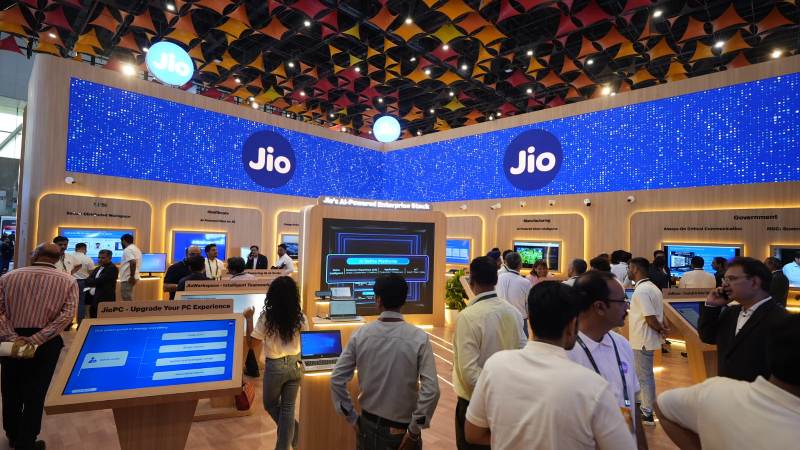
Reliance Jio on
Wednesday showcased an India-built, artificial intelligence-led technology
portfolio at India Mobile Congress 2026, underlining its ambition to take
solutions developed and scaled in the country to global markets.
The company presented
a range of technologies spanning satellite connectivity, autonomous telecom
networks, education, enterprise solutions, AI-powered wearables and smart
homes, positioning them as examples of how India’s scale and diversity can
drive innovations for the world.
At the centre of
Jio’s showcase is its vision of moving India from being primarily a consumer of
technology to becoming a creator, innovator and exporter of technology.
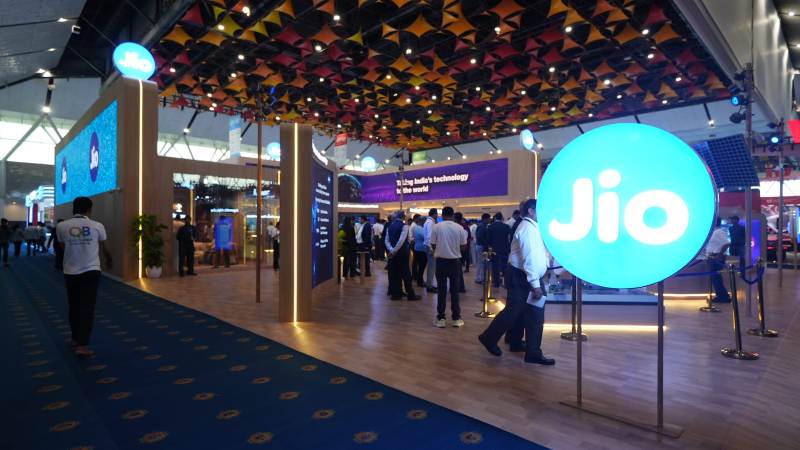
“Built in India. Scaled in India. Taking to
the World” is the overarching theme of Jio’s showcase, which highlights
technologies that are sovereign, AI-first and developed and proven on Indian
networks and at Indian scale.
Jio is showcasing its
sovereign Low Earth Orbit (LEO) satellite constellation as a means of extending
digital infrastructure beyond the reach of terrestrial networks. The
constellation is envisioned to provide secure, low-latency, carrier-grade
broadband across land, sea and air, potentially opening a new avenue for India
to emerge as a provider of resilient and cost-effective space connectivity to
telecom operators, governments, enterprises and consumers worldwide.
The company is also
highlighting its growing role in shaping global telecom standards, moving
beyond the adoption of international standards to contributing to their
evolution through participation in organisations such as 3GPP and TM Forum.
 According to Jio, its
domestic research and development is translating into patents, Standard
Essential Patents, Open APIs, AI-native network frameworks and next-generation
telecom technologies.
According to Jio, its
domestic research and development is translating into patents, Standard
Essential Patents, Open APIs, AI-native network frameworks and next-generation
telecom technologies.
The company said its
end-to-end telecom stack, developed and battle-tested on Indian networks, is
now being positioned for global deployment. Such technologies could provide
operators and enterprises, particularly in emerging markets, with alternatives
to established global vendors while creating new export opportunities for
Indian telecom equipment and software.
Jio is also
showcasing AI-native autonomous networks capable of predicting problems,
optimising network performance and self-healing before users experience
disruptions. The company said its AI-native network stack can be deployed as a
turnkey solution by global operators seeking to simplify operations and lower
operating expenditure, drawing on operational experience from one of the
world's largest telecom networks.
Beyond connectivity,
Jio is presenting its Jio Education Stack as an AI-powered ecosystem connecting
students, teachers, parents and school administrators. The platform is designed
to enable schools to become “smart schools” using existing devices, with
personalised AI-powered learning, digital content, intelligent administration
and real-time analytics.
Jio's AI-powered
wearables are another part of the showcase, with applications ranging from
scan-and-pay payments and healthcare to workplace safety and connected
communities. The devices are being designed with India's population scale and
everyday use cases in mind.
For businesses, Jio
is pitching an AI-powered Enterprise Stack that brings connectivity, cloud,
artificial intelligence and digital capabilities together on a single
integrated platform. The stack is intended to support both horizontal business
applications and sector-specific solutions across retail, banking, financial
services and insurance, manufacturing, energy, healthcare and government.
The company's JioAIHome offering extends the AI push into consumer households, with an emphasis on making connected living more intuitive. The platform is designed to understand, adapt and respond to users, with AI operating in the background to create more personalised, seamless and connected home experiences.
The broad portfolio reflects Jio's strategy of leveraging the scale and complexity of the Indian market as a testing ground for technologies that can subsequently be deployed internationally.