
THEBUSINESSBYTES BUREAU
BHUBANESWAR, FEBRUARY 11, 2026
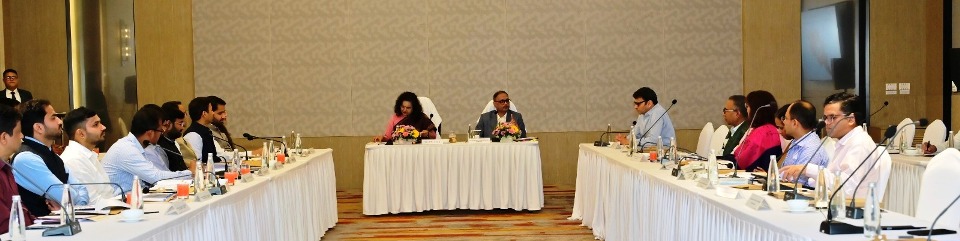
“Mining-affected regions must be placed at the
centre of Odisha’s development trajectory,” Chief Secretary Anu Garg asserted
while chairing a State-level Consultation Workshop on the CM-SAMPADA initiative
in Bhubaneswar on Wednesday.
Reaffirming the State
government’s commitment to inclusive and equitable growth, Garg emphasised that
CM-SAMPADA would require seamless coordination between mining districts and
line departments to achieve a shared vision of prosperity, wellness and social
justice. Stressing equity as a core priority, she called for accelerated
development in mining-affected villages to bridge long-standing gaps in health,
nutrition, education and essential infrastructure. She underscored the need for
accountable and result-oriented implementation to ensure that the benefits of
development reach the last mile.
 Organised by the Planning &
Convergence Department, the workshop aimed at gathering insights and guidance
for the accelerated development of mining-affected regions through optimal
utilisation of District Mineral Foundation (DMF) funds. CM-SAMPADA is a
flagship initiative of the department designed to saturate priority
interventions and ensure comprehensive coverage of essential services across
mining districts.
Organised by the Planning &
Convergence Department, the workshop aimed at gathering insights and guidance
for the accelerated development of mining-affected regions through optimal
utilisation of District Mineral Foundation (DMF) funds. CM-SAMPADA is a
flagship initiative of the department designed to saturate priority
interventions and ensure comprehensive coverage of essential services across
mining districts.
The consultation was attended
by Development Commissioner Deoranjan Kumar Singh, representatives from 12 line
departments and Collectors from 11 DMF districts. It served as a structured
platform to deliberate on the proposed framework and chart a clear roadmap for
operationalising the initiative.
Highlighting the economic
significance of mining, Singh described the sector as the backbone of Odisha’s
economy and underlined the State’s responsibility towards communities impacted
by mining activities. He stressed that sustainability must be built into the
initiative through skilling and entrepreneurship, enabling DMF resources to
translate into lasting improvements in quality of life.
During the workshop, districts
and departments engaged in substantive discussions on developing a time-bound
strategy for saturation of government benefits in mining-affected villages. The
focus remained on aligning DMF resources with priority entitlements and
services at the grassroots level to ensure holistic and inclusive development.
Participants also deliberated on district-specific contexts, challenges and unique mining-related conditions to assess the feasibility and potential impact of proposed interventions.
The insights and recommendations emerging from the consultation will be used to refine the CM-SAMPADA framework, strengthen district-department coordination and adopt an outcome-oriented approach to advance the vision of a Viksit Odisha.