THEBUSINESSBYTES BUREAU
BHUBANESWAR, FEBRUARY 11, 2026
“NIPUN Odisha will play a pivotal role in
strengthening foundational literacy and numeracy across the state in alignment
with the vision of NEP 2020, and we must work in close coordination to ensure
that no child is left behind,” said Dr. N. Tirumala Naik, Secretary, School and
Mass Education (S&ME) Department, while addressing a State-Level Review and
Orientation Workshop in Bhubaneswar on Wednesday.
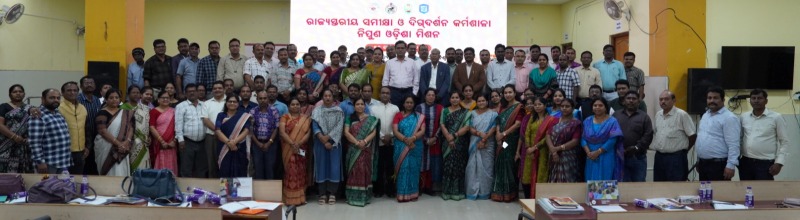
The one-day workshop on the
NIPUN Odisha Mission was held at the Government Boys’ High School, Unit–I
campus and brought together key education stakeholders from across the state.
Organized by the School and Mass Education Department, the programme aimed at
strengthening grassroots-level implementation of the mission and reinforcing
efforts to enhance foundational literacy and numeracy among primary school
students.
In his address as Chief Guest,
Dr. Naik emphasized the importance of strong institutional coordination among
DEOs, ADEOs and DIETs to ensure effective execution of the mission. He
underscored the need to clearly define responsibilities at every level of
administration so that implementation remains focused and outcome-driven.
Stressing the core objective of NIPUN Odisha, he reiterated that foundational
literacy and numeracy form the bedrock of a child’s academic journey and must
receive the highest priority in the early years of schooling.
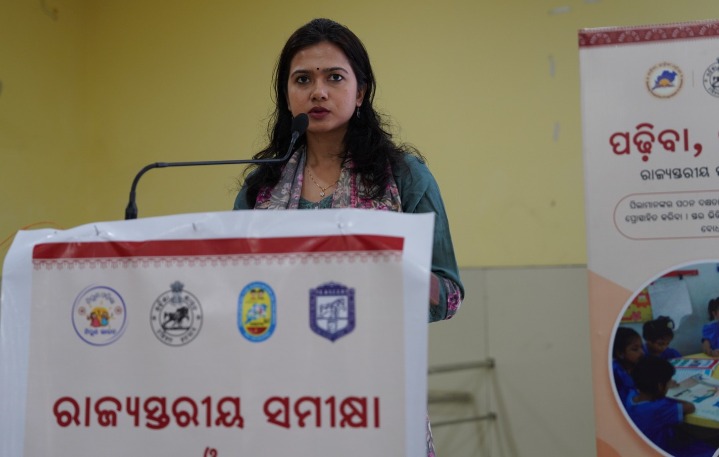
 Ananya Das, State Project
Director (SPD), OSEPA, also attended the workshop and highlighted the
importance of delivering quality education through structured and sustained
interventions. She called for effective implementation of the state’s reading
promotion campaign, “Padhiba, Gadhiba Odisha,” and strengthening of NIPUN
Vidyalayas as model institutions for foundational learning. She further
stressed the optimal use of learning ladders to track student progress and the
need to reinforce assessment mechanisms to ensure measurable improvements in
learning outcomes.
Ananya Das, State Project
Director (SPD), OSEPA, also attended the workshop and highlighted the
importance of delivering quality education through structured and sustained
interventions. She called for effective implementation of the state’s reading
promotion campaign, “Padhiba, Gadhiba Odisha,” and strengthening of NIPUN
Vidyalayas as model institutions for foundational learning. She further
stressed the optimal use of learning ladders to track student progress and the
need to reinforce assessment mechanisms to ensure measurable improvements in
learning outcomes.
District Education Officers
(DEOs), Additional District Education Officers (ADEOs), Principals of District
Institutes of Education and Training (DIETs), and academic coordinators from
all districts participated in the deliberations. The workshop served as a
platform to review progress, address implementation challenges, and provide
clarity on roles and responsibilities at the district and block levels.
The workshop featured detailed
presentations by district representatives, who shared innovative practices and
success stories from their respective regions. These included localized
strategies to improve reading skills, teacher mentoring initiatives, and
community engagement models aimed at promoting a culture of learning beyond the
classroom.
Deliberations also focused on
leveraging various assessment tools to enhance classroom teaching and monitor
student progress. Participants discussed the effective utilization of Grade V
and Grade VIII assessments, the PARAKH National Survey, State-Level Achievement
Surveys, Foundational Learning Surveys, and Annual Foundational Learning Assessments.
Officials emphasized that data-driven insights from these assessments should
guide instructional strategies and targeted interventions to bridge learning
gaps.
A special session was devoted
to the Reading Promotion Campaign, with participants underscoring the urgent
need to cultivate a strong reading culture in every school. Speakers
highlighted that consistent reading habits not only strengthen language skills
but also contribute significantly to overall cognitive development and
confidence among young learners.
The role of District Project
Management Units (DPMUs), district and block-level review meetings, and
District NIPUN Cells was discussed extensively. Officials stressed that regular
monitoring, timely feedback, and collaborative planning at these levels are
essential to sustaining momentum and ensuring accountability in implementation.
Department authorities informed that similar review and orientation workshops will be organized in the coming months to further build the capacity of district-level officers and ensure uniformity in execution across the state. The initiative reflects the government’s continued commitment to achieving universal foundational literacy and numeracy as envisioned under the National Education Policy 2020.
The programme was conducted under the supervision of Amita Pattnaik, Additional Director, OSEPA, and witnessed the participation of several senior officials from the School and Mass Education Department, marking a renewed push toward transforming early-grade education in Odisha.