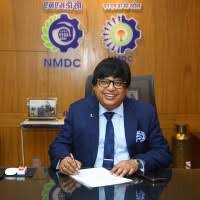
THEBUSINESSBYTES BUREAU
NEW DELHI, AUGUST 20, 2026
India’s mining sector could be heading for a more predictable
and investment-friendly era as the MMDR Amendment Act, 2026 moves to dismantle
one of the industry’s most persistent challenges — an uneven and uncertain levy
regime across states. The landmark reform is expected to provide greater
clarity to mining companies, improve the investment climate and strengthen the
competitiveness of domestic mineral production, according to NMDC Chairman and
Managing Director Amitava Mukherjee.
Mukherjee, who also chairs the FICCI Mining Committee, said
the legislation addresses long-standing operational bottlenecks by curbing
non-uniform state taxes and unexpected cesses that have raised the cost of
mineral extraction and created uncertainty for the industry.
The Lok Sabha passed the Mines and Minerals (Development and
Regulation) Amendment Bill, 2026, on August 12. The legislation seeks to
streamline the regulatory framework governing mines and minerals, including
restricting states from imposing additional taxes on mineral rights.
According to Mukherjee, the introduction of Section 9D, which
empowers the Centre to streamline levies on mineral-bearing lands, marks a
significant step towards establishing a transparent and predictable framework
for companies operating across state boundaries.
“Empowering the Centre
to streamline levies on mineral-bearing lands under Section 9D ensures a fair,
transparent playing field across states,” Mukherjee said.
The move is expected to have wider implications for the
investment cycle in mining. Greater certainty over taxation and levies could
improve the confidence of investors, encourage fresh capital deployment and
accelerate exploration and development of India’s mineral resources — an
increasingly important priority as the country seeks to strengthen domestic
supply chains for critical and strategic minerals.
Mukherjee said the reform could help unlock capital
investments, speed up mineral exploration and make Indian mineral production
more globally competitive. A more consistent policy environment, he added,
would allow mining companies to make longer-term investment decisions with
greater confidence.
Welcoming the government’s broader structural reform agenda for the mining sector, Mukherjee said a predictable policy regime would provide the industry with the stability needed to expand operations, mobilise investment and contribute more effectively to India’s economic growth.
Mukherjee thanked the Union Government for championing what he described as a “transformative reform”, signalling strong industry support for measures aimed at creating greater regulatory consistency and strengthening the foundations of India’s mineral economy.