THEBUSINESSBYTES BUREAU
BHUBANESWAR, AUGUST 18, 2026
In a significant step towards turning industrial waste into
strategic resources, state-run National Aluminium Company Limited (NALCO) has
joined hands with leading research institutions to develop indigenous
technologies for the commercial recovery of valuable materials and critical
minerals from industrial residues. The Navratna PSU’s latest initiative marks a
decisive shift from waste management to resource valorisation, with a new pilot
plant in Bhubaneswar set to explore the recovery of alumina, quartz, calcium
silicate and rare earth elements, including scandium, from coal fly ash.
NALCO Chairman & Managing Director Brijendra Pratap Singh
on Tuesday inaugurated the first-of-its-kind indigenous pilot plant at the
NALCO Research & Technology Centre (NRTC), Bhubaneswar, for processing
bituminous coal fly ash and recovering multiple value-added products. The
facility, developed through a strategic collaboration involving NALCO,
CSIR-IMMT and KIIT, is aimed at translating laboratory-scale innovation into
scalable and commercially viable industrial solutions.
Jagdish Arora, Director (Projects & Technical), Dr. Tapas
Kumar Pattanayak, Director (HR), Anil Kumar Singh, Director (Commercial),
NALCO, Dr. Ramanuj Narayan, Director, CSIR-IMMT, and Prof. Jnyana Ranjan
Mohanty, Registrar, KIIT, besides senior officials from NALCO, CSIR-IMMT and
KIIT, were present at the inauguration.
With a processing capacity of 50 kg per day, the pilot plant
has been designed and established by CSIR-IMMT and KIIT with support from
NALCO, CSIR and the Ministry of Mines, Government of India. The facility is
based on a jointly patented process developed by CSIR-IMMT and NALCO for the
holistic utilisation of coal fly ash.
The technology is designed to unlock multiple streams of
value from fly ash, enabling the recovery of alumina, calcium silicate for
ceramic applications, quartz residue with potential applications in
glassmaking, and an iron hydroxide residue enriched in rare earth elements
(REE), including scandium.
The development assumes particular significance as India
seeks to strengthen domestic supply chains for critical minerals that underpin
some of the country’s most strategically important industries. Rare earth
elements are essential inputs for permanent magnets, electric mobility,
renewable energy, electronics and defence, while alumina remains the principal
feedstock for aluminium production and a major industrial raw material.
By tapping secondary resources such as fly ash and other
industrial residues, the initiative could help improve resource efficiency,
supplement primary mineral sources and create new economic value from materials
traditionally treated largely as waste.
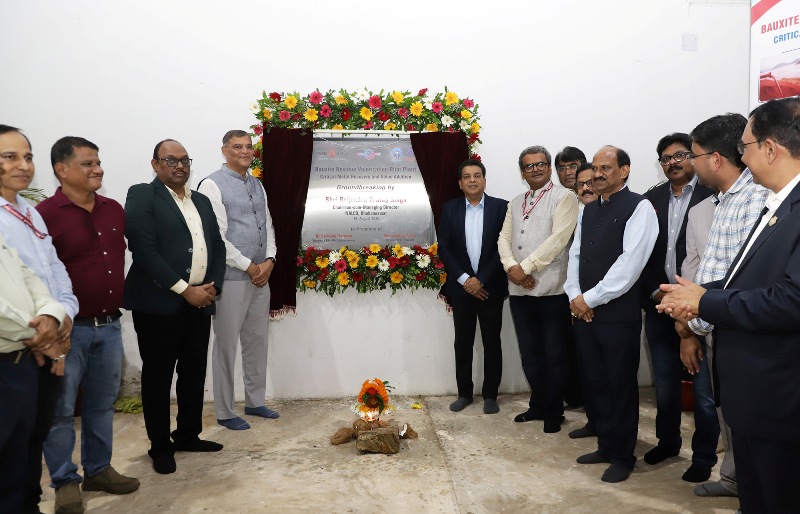
NALCO has also taken another step towards residue
valorisation, with a ground-breaking ceremony held for setting up a pilot plant
dedicated to the productive utilisation of bauxite residue, commonly known as
red mud. The proposed facility will focus on recovering ferro-titanium alloy,
metallic iron and rare earth elements from red mud, potentially opening another
domestic pathway for extracting strategic materials from industrial
by-products.
The fly ash facility is also expected to generate sufficient
quantities of REE concentrate to support further research and development into
mixed REE recovery and separation. The work is expected to aid the development
of downstream value-added products and contribute to the creation of integrated
recovery pathways for critical minerals.
Speaking on the occasion, NALCO CMD Brijendra Pratap Singh said that the Company is committed to leveraging research, innovation and strategic partnerships to convert industrial residues into valuable resources. He emphasised that pilot-scale validation of indigenous technologies is an important step towards developing commercially viable solutions that can strengthen resource efficiency, critical mineral security and the circular economy.
The latest initiatives underline NALCO’s broader push towards technology-led and sustainable industrial development. By combining its industrial capabilities with the research expertise of premier national institutions, the company is seeking to move beyond conventional residue management and build integrated resource-recovery models aligned with India’s priorities on critical mineral security, circular economy and sustainable growth.