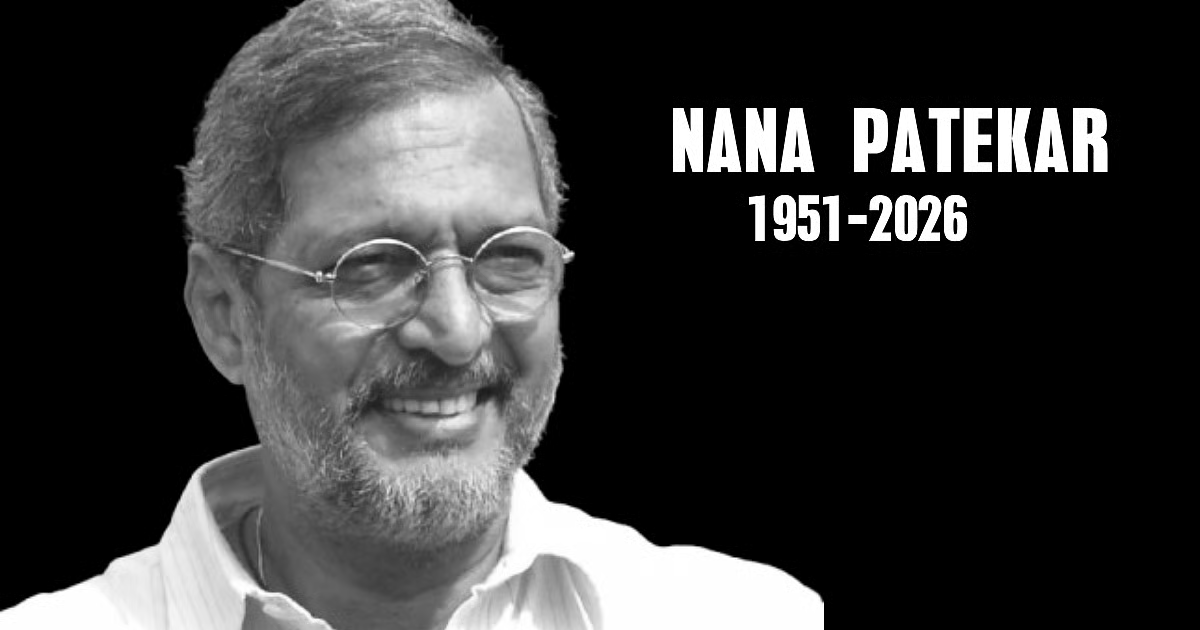
Veteran
performer dies of cardiac arrest in Goa; five decades of Hindi and Marathi
cinema marked by memorable roles and a distinctive voice
THEBUSINESSBYTES
BUREAU
PANAJI,
OCTOBER 8, 2026
Veteran actor Nana
Patekar, whose forceful screen presence, unmistakable voice and intense
portrayals made him one of the most distinctive performers of Indian cinema,
died in Goa on Thursday morning. He was 75.
Patekar was found
unconscious at his residence in Dona Paula, near Panaji, in the early hours and
was rushed to a private hospital. Dr. Shekhar Salkar of Manipal Hospital said
the actor could not be revived despite about 45 minutes of continuous
cardiopulmonary resuscitation (CPR). He was declared dead at around 5.20 a.m.
Reports said the
actor had suffered a cardiac arrest.
The death brings to a
close a career spanning nearly five decades in Hindi and Marathi cinema.
Patekar, born Vishwanath Patekar on January 1, 1951, began his journey in
Marathi theatre before moving into films and gradually establishing himself as
an actor capable of inhabiting characters of strikingly different shades.
His early work
included films such as Gaman, while
his breakthrough came with Mira Nair's Salaam
Bombay!, in which he played a menacing drug dealer. He subsequently
delivered acclaimed performances in films including Parinda, Krantiveer, Agni Sakshi, Khamoshi: The Musical, Ab Tak
Chhappan, Apaharan and Welcome.
In Parinda, his portrayal of a ruthless
underworld figure demonstrated his ability to create menace without theatrical
excess. In Krantiveer, he played a
disillusioned man transformed into a crusader against corruption, earning the
National Film Award for Best Actor. His performances in both serious drama and
mainstream cinema established him as an actor who could command a scene without
relying on conventional star mannerisms.
Patekar's acting was
often characterised by economy and intensity. A stare, a pause or a few sharply
delivered words could become as memorable as an extended performance. His
dialogue delivery, particularly, became part of his cinematic identity.
He was also a
director and writer, and worked across Marathi and Hindi cinema. His
contribution to the arts was recognised with the Padma Shri in 2013. He was
also a recipient of three National Film Awards during his career.
His final public
appearance in Goa, only days before his death, has acquired a poignant
resonance. Addressing an event in Dona Paula, he reflected on the uncertainty
of life, telling the gathering: “I am here today. Who knows about tomorrow.”
The actor's death was
met with tributes from colleagues and admirers across the film industry. Actor
Akshay Kumar described Patekar as an unusually authentic performer whose voice,
intensity and honesty made him impossible to ignore.
Patekar's
contribution to Indian cinema lay not merely in the number of films he made,
but in the individuality he brought to them. At a time when commercial Hindi
cinema increasingly prized conventional heroism, he carved out a space for
characters that were flawed, volatile, wounded, comic, threatening or morally
conflicted.
For generations of viewers, Nana Patekar's cinema was inseparable from his voice — gravelly, measured and capable of sudden force. His performances often lingered long after the film had ended.
With his death, Indian cinema loses an actor who refused to be easily categorised and whose presence on screen was, in the truest sense, unmistakably his own.