THEBUSINESSBYTES
BUREAU
BHUBANESWAR,
OCTOBER 24, 2026
Odisha aims to raise
its urbanisation level to 40 per cent and build a $500-billion economy by 2036,
when the state will complete 100 years as a separate entity, Chief Minister
Mohan Charan Majhi said on Saturday, outlining an ambitious roadmap centred on
planned cities, modern infrastructure and sustainable economic growth.
Addressing the
National Urban Conclave-2026 here, Majhi said Odisha's urbanisation level
currently stands at 17 per cent, and the government is working to develop
ultra-modern infrastructure, modern institutions and well-planned urban centres
to accelerate economic expansion.
Inspired by Prime
Minister Narendra Modi's vision of 'Viksit Bharat 2047' and the 'Purvodaya'
policy, Odisha is emerging as a major growth engine of the country, the chief
minister said, emphasising the need to make cities inclusive, technology-driven
and equipped with modern civic amenities.
With India's urban
population projected to surpass its rural population by 2047, planned
urbanisation will be critical to sustaining economic development, he said.
Highlighting the
state's investment potential, Majhi said Odisha had received investment
proposals worth Rs 23 lakh crore, of which investments worth Rs 3.5 lakh crore
had been grounded, involving more than 200 industrial units.
The state is also
developing the Bhubaneswar-Cuttack-Puri-Paradip Economic Region (BKPPER) under
the guidance of the Centre and NITI Aayog, while expansion of Bhubaneswar and
Cuttack through new satellite townships is underway, he said.
To strengthen urban
governance and expand civic infrastructure, the government has created 28 new
Notified Area Councils, seven municipalities and one municipal corporation.
On affordable
housing, Majhi said 1.53 lakh houses had been constructed under the Pradhan
Mantri Awas Yojana-Urban (PMAY-U). Under PMAY 2.0, Rs 1,615 crore has been
sanctioned for the 'PMAY Urban Bandhu' programme for the next five years,
offering economically weaker section beneficiaries a 90 per cent concession on
stamp duty and registration fees.
The state is spending
Rs 6,000 crore on urban infrastructure and implementing the Rs 1,600-crore
'Swachh Odisha Yojana'. The 24x7 'Drink from Tap' initiative is operational in
11 cities, he said.
Under the 'Garima'
scheme, sanitation workers, including Swachh Sathis, are being provided modern
equipment, protective gear, life insurance and social security benefits to
safeguard their welfare and dignity.
Focusing on the
conclave's theme, 'The Right to Walk', Majhi stressed the importance of safe
footpaths, pedestrian crossings and well-designed public spaces as essential
components of urban transport planning.
The Capital Region
Urban Transport (CRUT) network, which began operations with 200 buses in 2018,
now operates 770 buses across 138 routes in seven cities, carrying around 3.5
lakh passengers daily, he said.
Majhi flagged off 26
electric buses under the PM e-Bus Sewa initiative at the conclave. The state
plans to add another 400 electric buses, 100 midi buses and 50 mini buses under
the programme, he said.
With the additional
fleet, electric bus services will be extended to nine more cities — Baripada,
Angul, Jharsuguda, Baleswar, Jajpur, Rayagada, Jeypore, Bhadrak and Bolangir —
taking the network beyond the existing seven cities.
More than nine lakh
bus journeys have been completed through digital ticketing on the 'Odisha Yatiri
App', while drivers have received Rs 12 crore in fares without commission
deductions, Majhi said.
He also launched the
'Ankur Handbook' and the 'Town Planning Handbook' and inaugurated the state's
new urban development policy.
Chief Secretary Anu
Garg highlighted the importance of ensuring basic civic amenities for citizens,
saying the 'Drink from Tap' initiative, which began in Puri, had expanded to 11
cities. Piped drinking water was being supplied to households across 114 urban
areas in the state, she said.
To strengthen the
initiative, 'Jal Sathis' will be engaged, while collaboration with the Indian
Institute of Technology (IIT) has been initiated for regular water-quality
testing and research, Garg added.
NITI Aayog CEO Anurag
Jain said 50 per cent of India's population would live in urban areas by 2047
and contribute around 75 per cent of the country's total gross domestic product
(GDP).
Urbanisation must be
organised and planned, as well-designed cities accelerate economic growth,
while unplanned urban expansion creates serious challenges, Jain said.
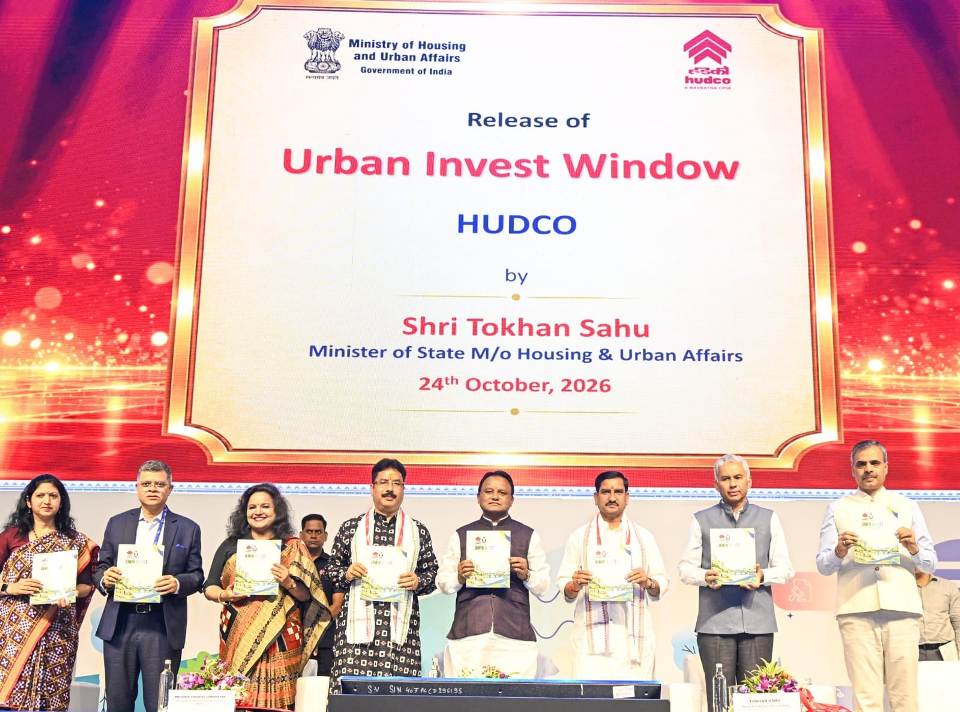
Satendra Pal Singh, Secretary of the Union Ministry of Housing and Urban Affairs, delivered the welcome address.
Union Minister of State for Housing and Urban Affairs Tokhan Sahu, Odisha Housing and Urban Development Minister Krushna Chandra Mahapatra, Additional Chief Secretary of the Housing and Urban Development Department Usha Padhee, senior officials from the Centre and the state, experts and media representatives attended the conclave.