THEBUSINESSBYTES BUREAU
BHUBANESWAR, JUNE 24, 2026
In a significant step toward fostering inclusive and
equitable agricultural development, the Department of Agriculture &
Farmers’ Empowerment (DA&FE), Government of Odisha, in collaboration with
the International Food Policy Research Institute (IFPRI), organized a two-day
Capacity Partnership Workshop under the Gender Responsive Cell (GRC) aimed at
strengthening gender-responsive agricultural policymaking across the state.
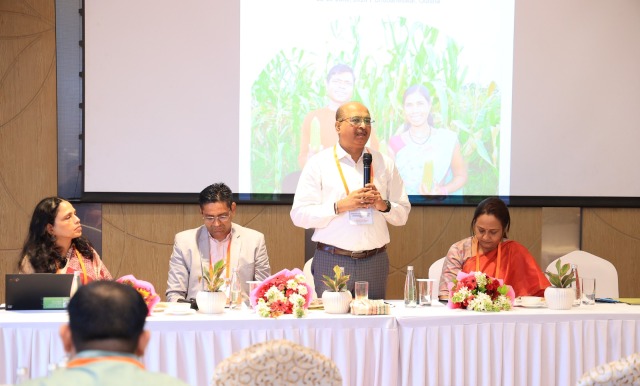
Inaugurating the workshop, Commissioner-cum-Secretary,
DA&FE, Sachin Ramchandra Jadhav, said, "The challenge is not merely
cultural, it requires a paradigm shift in policymaking and
administration," stressing the need for robust data systems and gender-responsive
governance to ensure that women’s contributions are adequately recognized and
reflected in agricultural policies.
The workshop brought together senior officials from
DA&FE, the Departments of Women & Child Development, Mission Shakti,
Fisheries & Animal Resources Development (ARD), ICAR-CIWA, and other key
stakeholders. The sessions focused on critical areas such as gender analysis of
agricultural schemes, gender budgeting, digital and financial inclusion, and
practical training on the use of gender-disaggregated data through the ASUSE
2023–24 framework.
Additional Secretary Shubhranshu Mishra underscored the importance of data-driven and inclusive policy interventions to enhance women’s participation and leadership in the agricultural sector. Technical sessions were facilitated by experts from IRRI, NIPFP, NCAER, and IFPRI, who shared insights on addressing gender gaps, strengthening gender budgeting mechanisms, and promoting evidence-based policymaking.
The workshop marks a crucial milestone in operationalizing the Gender Responsive Cell as a platform for institutional learning, knowledge sharing, and policy innovation. The initiative further reinforces Odisha’s commitment to building a more equitable agricultural ecosystem and positions the state as a frontrunner in gender-responsive and inclusive agricultural transformation.