THEBUSINESSBYTES
BUREAU
BHUBANESWAR,
FEBRUARY 5, 2026
In a significant step
to preserve Odisha’s linguistic integrity and cultural heritage, the state
government has initiated a process to revise the English names of seven
districts and 24 places, aiming to bring them closer to their authentic Odia
pronunciations and spellings. The proposal seeks to correct long-standing
distortions and misspellings that crept into official usage over decades, often
diluting the phonetic and historical essence of the original Odia names.
According to a public
notice issued by the Revenue and Disaster Management Department, the proposed
revisions focus on restoring accurate English transliterations based on
original Odia nomenclature. The exercise covers seven districts and multiple
towns, blocks, and administrative units spread across 11 districts, with the
corrected spellings detailed in an official annexure accompanying the
notification.
Among the key
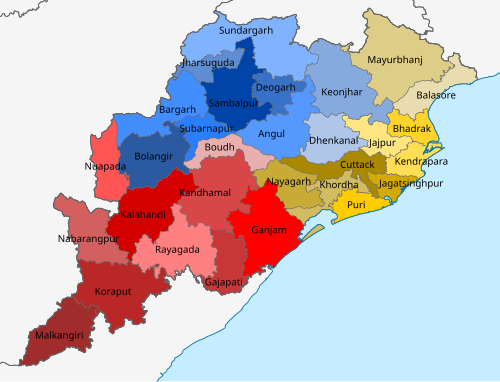
district-level changes proposed are Deogarh becoming Debagarh, Balasore
reverting to Baleshwar, Kendrapara to Kendrapada, Keonjhar to Kendujhar,
Nayagarh to Nayagada, and Khordha — also historically spelled as Khurda — being
corrected to Khoradha. Kandhamal, which has seen several corrupted spellings
over time, will retain its original and accurate form under the proposal.
The initiative also extends to several prominent towns and local administrative units. Podia in Malkangiri block is proposed to be corrected to Padia, Reamal to Riamal, Bolagarh to Bolagada, Banpur to Banapur, and Jatni to Jatani. Other notable changes include Angul becoming Anugol, Athagarh to Athagad, Salipur to Salepur, Baramba to Badamba, Nilgiri to Nilagiri, and Aul to Ali. Coastal and mineral-rich regions are also covered, with Makalapara proposed as Mahakalapada, Barbil as Badbil, Keonjhargarh as Kendujhargarh, and Rairakhol as Redhakhol. Daspalla is proposed to be corrected to Dashapalla, among several other place names listed in the notification.
Officials said the move is not merely administrative but cultural in intent, reflecting Odisha’s commitment to safeguarding its linguistic identity. The proposal echoes the spirit of the landmark 2011 decision when “Orissa” was officially renamed “Odisha” and “Oriya” became “Odia,” a shift that was widely seen as a correction of colonial-era phonetic inaccuracies.