THEBUSINESSBYTES BUREAU
BHUBANESWAR, AUGUST 11, 2026
In a major push to take Odisha’s celebrated handloom and
handicraft traditions beyond the state’s borders, the Odisha Rural Development
and Marketing Society (ORMAS) has for the first time opened a dedicated pop-up
store in New Delhi, creating a new national marketplace for the state’s
weavers, artisans and rural producer organisations.
The month-long initiative, which brings more than 30
traditional products sourced from 14 districts of Odisha to the national
capital, is aimed at connecting rural producers directly with consumers in one
of the country’s largest and most influential urban markets.
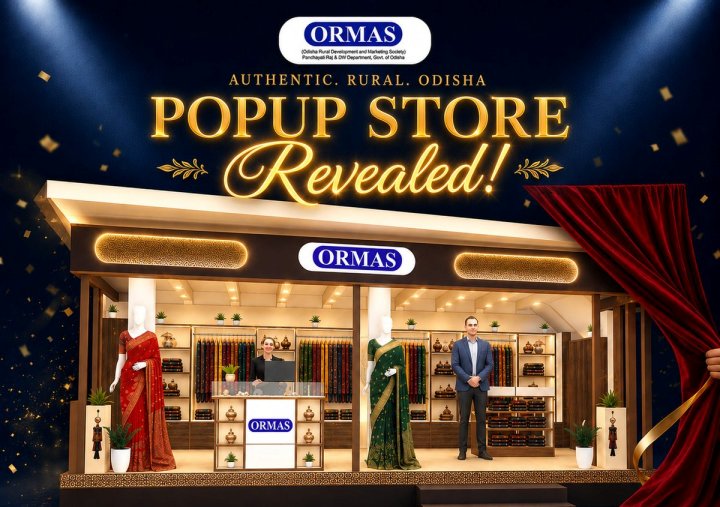
Set up at DLF Avenue, Saket, the ORMAS Pop-up Store will
remain operational from August 11 to September 10, offering consumers in Delhi
an opportunity to experience and purchase a wide range of Odisha’s distinctive
handloom and handicraft products under one roof.
The store was inaugurated on Tuesday by Odisha Panchayati Raj
and Drinking Water Minister Rabi Narayan Naik in the presence of Girish S N, Commissioner-cum-Secretary
of the Panchayati Raj and Drinking Water Department, Dr Monica Priyadarshini,
CEO, ORMAS, senior government officials and other distinguished guests.
The initiative assumes significance as Odisha seeks to
strengthen market access for its traditional producers by taking their products
directly to major consumption centres. The New Delhi outlet is expected to
provide greater visibility to the state’s rural enterprises while opening up
fresh opportunities for artisans and weavers to expand their customer base and
businesses.
The pop-up store features an extensive collection of Odisha’s
renowned handloom products, including Sambalpuri Ikat sarees, Sambalpuri silk
sarees, Kotpad sarees, Pattachitra sarees, Habaspuri sarees, Habaspuri silk
sarees, Tussar sarees, Tussar silk sarees and Khandua Pata sarees.
The collection also includes traditional Sambalpuri
jewellery, Dhokra jewellery and several other handicraft products, reflecting
the rich and varied craftsmanship of different regions of Odisha.
With products representing 14 districts, the initiative seeks
to present the diversity of Odisha’s handloom and handicraft ecosystem to a
wider national audience. Beyond retail sales, the pop-up store is designed to
create direct market linkages between weavers, artisans, Community-Based
Organisations (CBOs) and consumers, thereby reducing market barriers and
improving opportunities for rural producers.
For Odisha’s artisans and weavers, access to large urban
markets can play a crucial role in improving product visibility, strengthening
demand and building sustainable enterprises. The Delhi initiative is therefore
expected to provide not only an immediate sales platform but also an
opportunity to understand consumer preferences in a major metropolitan market
and potentially develop longer-term market connections.
The establishment of the ORMAS Pop-up Store in New Delhi
marks a significant step in the state’s efforts to transform traditional
craftsmanship into stronger market-led livelihood opportunities. By positioning
Odisha’s handloom and handicraft products in a prominent national marketplace,
ORMAS is seeking to bridge the gap between rural producers and urban consumers
while giving greater visibility to the state's distinctive cultural and
creative heritage.
The initiative also underscores the growing importance of
organised market interventions in sustaining traditional livelihoods. Odisha’s
handloom and handicraft sectors are deeply rooted in the state’s cultural
identity, with generations of weavers and artisans preserving specialised
techniques, designs and craftsmanship.
Through initiatives such as the New Delhi pop-up store,
ORMAS, functioning under the Panchayati Raj and Drinking Water Department of
the Odisha government, is working to provide these traditional producers with
wider market exposure and more sustainable commercial opportunities.
The initiative is expected to strengthen the branding of Odisha’s indigenous products, expand their market reach and contribute to enhanced income and livelihood opportunities for the rural communities associated with the sector.