THEBUSINESSBYTES
BUREAU
BHUBANESWAR,
JUNE 11, 2026
Odisha has charted an
ambitious course to emerge as eastern India’s leading hub for deep-sea fishing
and shrimp exports, unveiling two flagship initiatives aimed at unlocking the
vast potential of the state’s marine and aquaculture sectors.
The Odisha Government
on Thursday launched a comprehensive roadmap under the Odisha Deep Sea Fishing
Mission and the Odisha Shrimp Mission, with a focus on boosting fish
production, generating employment, enhancing export earnings, and strengthening
livelihood opportunities for coastal communities.
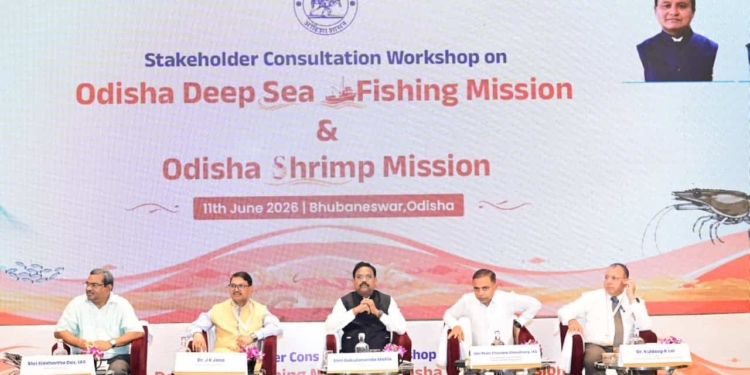
Inaugurating a
state-level Stakeholder Consultation Workshop, Fisheries and Animal Resources
Development Minister Gokulananda Mallik said the twin missions would position
Odisha as a major driver of India’s Blue Economy growth.
“Odisha will be developed as the hub of marine
fish production and shrimp exports in eastern India. The state government is
fully committed to making these two missions a resounding success,” the
minister said.
The Odisha Deep Sea
Fishing Mission seeks to tap the largely unexplored marine resources of the
deeper waters of the Bay of Bengal. The initiative aims to add two lakh metric
tonnes of marine fish production annually, create more than 50,000 direct and indirect
jobs, and significantly enhance the incomes of fisherfolk. The government has
also set a target of raising annual marine export revenues to ₹5,000 crore by 2036.
To support this
transformation, the state plans to build 150 new deep-sea fishing vessels and
modernise 500 mechanised boats. Major fishing harbours at Paradip, Dhamra,
Chandipur and Astaranga will be upgraded to world-class standards, while
infrastructure at 103 fish landing centres will be strengthened to improve
post-harvest handling and market access.
Complementing the
marine fisheries initiative, the Odisha Shrimp Mission aims to position the
state among the country’s foremost shrimp-producing and exporting regions. The
mission will promote super-intensive shrimp farming through advanced and
environmentally responsible aquaculture practices, targeting annual production
levels of 30 to 40 metric tonnes per hectare.
The programme also
envisages the establishment of modern shrimp hatcheries, feed mills and
associated infrastructure to create an integrated aquaculture ecosystem capable
of supporting large-scale production and exports.
Mallik said the two
missions would not only drive economic growth but also ensure sustainable
resource utilisation, improved livelihood security and enhanced employment
opportunities across coastal districts.
In a significant step
towards sustainable aquaculture development, the Fisheries Department signed a
Memorandum of Understanding with the ICAR-Central Institute of Brackishwater
Aquaculture (CIBA) for Responsible Aquaculture Zone Planning and Geospatial
Mapping. The collaboration is expected to provide a scientific framework for
long-term aquaculture expansion while safeguarding environmental
sustainability.
Fisheries Secretary
Premchandra Choudhury outlined the strategic vision and implementation
framework of the two missions during the workshop. Fisheries Director Siddharth
Das delivered the welcome address, while Additional Director (Technical) Subrat
Das proposed the vote of thanks.
The consultation witnessed participation from senior officials of the Union Ministry of Fisheries, leading ICAR institutions, the National Fisheries Development Board, industry experts and stakeholders from across the country. Five technical sessions were held during the event, generating recommendations aimed at ensuring the successful execution of Odisha’s ambitious Blue Economy agenda.
With substantial investments in marine infrastructure, modern fishing fleets and sustainable aquaculture, Odisha is positioning itself to become a key contributor to India’s seafood production and export growth over the next decade.