Odisha’s
mineral wealth can support another phase of industrial growth — but the next
chapter should be built around assured raw-material supply, responsible mining
and a decisive shift from alumina to high-value aluminium products, says PRIYABRAT BISWAL
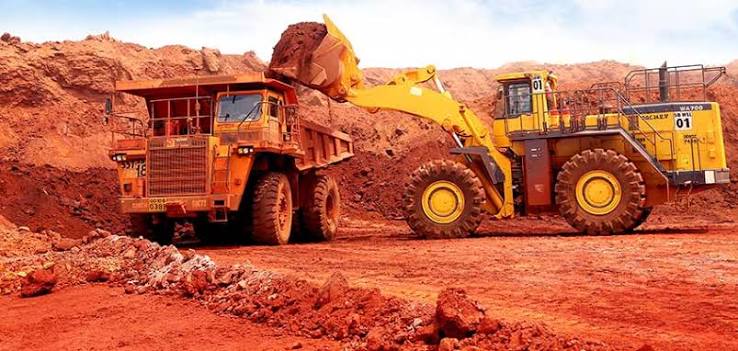
For Odisha, bauxite
is far more than another entry in the mineral inventory. It is the foundation
of an industrial ecosystem stretching from the hills of Koraput, Rayagada and
Kalahandi to refineries, smelters, engineering industries, transport networks
and thousands of downstream applications.
The question,
therefore, is not simply whether more bauxite mines should be opened. It is how
Odisha can manage its resources so that existing investments remain secure,
mining remains environmentally responsible, communities benefit meaningfully
and a larger share of mineral value is retained within the state.
The scale of the
opportunity is substantial. According to the Odisha Economic Survey 2025–26,
the state had **2,787.346 million tonnes** of reported bauxite resources, while
production during 2024–25 was about 17.934 million tonnes — roughly 0.6 per cent
of the reported resource base in that year. Deposits are identified across Sundargarh,
Keonjhar, Koraput, Rayagada, Kalahandi, Malkangiri, Kandhamal and the
Balangir-Bargarh belt.
However, a geological
“resource” does not mean that the entire quantity can or should be mined.
Economic viability, ore grade, land use, forests, ecological sensitivity,
statutory clearances, infrastructure and social considerations determine what
can ultimately become a mineable reserve.
The Indian Bureau of
Mines, using National Mineral Inventory data as of April 1, 2020, placed
India’s total bauxite resources at about 4,958 million tonnes, with Odisha
accounting for 41 per cent of the national resource base.
The challenge,
therefore, is not geological scarcity but converting this potential into
secure, sustainable and higher-value industrial activity.
Secure Existing Industrial
Capacity
Odisha has spent
decades building an aluminium ecosystem around NALCO, Hindalco Industries Ltd.
and Vedanta Aluminium. The first priority should be to secure the plants and
investments already operating in the state.
NALCO’s integrated
mines-to-metal chain is a clear example. Its Panchpatmali bauxite min* supplies
the Damanjodi alumina refinery through a dedicated conveyor system, while
alumina is subsequently used for aluminium production at Anugola and other
requirements. NALCO currently reports refinery capacity of 2.1 million tonnes
per annum.
The Aditya Birla
Group’s Hindalco has a major footprint through Utkal Alumina in Rayagada,
integrated with the Baphlimali bauxite mine, which the company reports has annual
production capacity of 8.5 million tonnes and total reserves of about 196.98
million tonnes. Hindalco has also entered into a long-term raw-material linkage
arrangement with the Odisha Mining Corporation for its proposed Kansariguda
alumina refinery.
Vedanta operates the Lanjigarh
alumina refinery in Kalahandi, whose capacity has been expanded to 5 million
tonnes per annum. The refinery supplies alumina to the company’s aluminium
operations in Jharsuguda and elsewhere.
These are established
industrial assets involving large sunk investments, extensive supply chains,
employees, contractors and surrounding economies. A mine and refinery should
therefore not be treated as independent projects.
Whenever new mineral
blocks or long-term linkages are considered, Odisha could adopt a sequencing
principle: secure existing productive capacity first, then allocate surplus
resources for additional expansion.
A transparent,
rules-based mechanism could consider existing refining and smelting capacity;
historical and committed investment; approved expansion plans; captive mines
and available resources; long-term bauxite requirements; employment and local
economic contribution; downstream manufacturing commitments; environmental
carrying capacity; and rehabilitation and community-development plans.
The question should
shift from “Who gets the mine?” to “How does each allocation strengthen
Odisha’s overall aluminium value chain?”
Mining Responsibly
Kalahandi is central
to this discussion. Lanjigarh has demonstrated how a large industrial project
can become an economic anchor in a remote region. But bauxite development also
takes place amid forests, farms, villages and communities with legitimate
livelihood and cultural interests.
The Sijimali deposit
illustrates the potential scale. According to Vedanta’s current corporate
disclosure, the company won the Sijimali bauxite mine through competitive
bidding in 2023. The deposit is stated to have an estimated total reserve of
311 million tonnes, with a proposed rated capacity of 9 million tonnes per
annum. The company says the bauxite is intended to feed its alumina operations.
The Odisha State
Pollution Control Board’s public-hearing records identify a proposed Sijimali
project covering about 1,549 hectares in Kalahandi and Rayagada, with proposed
bauxite production capacity of 9 million tonnes per annum.
Such projects show
that Odisha’s next bauxite cycle could be substantial. But scale cannot be the
sole measure of success. Mining more does not automatically mean developing
more. The objective should be to create sustainable economic value from every
tonne extracted.
A credible strategy
must balance mineral production with watershed protection, biodiversity, soil
management, rehabilitation, forest considerations, air and water quality,
traffic management and local livelihoods. Environmental clearances, mine plans,
progressive mine closure and reclamation already form part of the regulatory
framework; implementation is equally important.
For communities,
benefits should be visible through measurable improvements in drinking water,
roads, healthcare, schools, skill development, local enterprises, livelihoods
and household incomes.
District Mineral
Foundation (DMF) funds and other statutory contributions can support this
development architecture, but transparency is essential. A publicly accessible
district-level mining dashboard could show, project by project, mineral
extracted; royalty and other government receipts; DMF collections and
expenditure; local employment; local procurement; rehabilitation progress;
plantation and ecological restoration; water-management measures; and
mine-closure obligations.
Move beyond Primary Aluminium
The resource is
finite. The value chain does not have to be.
Odisha’s industrial
strategy has benefited from its ability to mine bauxite, refine alumina and
produce primary aluminium. But primary metal is only the beginning of the value
chain.
Aluminium can be
converted into billets, rolled products, foils, extrusions, conductors,
automotive components, battery-related applications, packaging products,
defence components, aerospace materials, railway products, renewable-energy
equipment and specialised alloys.
Hindalco describes a
downstream portfolio spanning flat-rolled products, extrusions, foil and other
value-added aluminium products, while its Odisha operations include the Hirakud
smelter and Hirakud FRP facility.
Vedanta has likewise
been expanding its value-added aluminium portfolio, with a stated strategy of
increasing the share of value-added products and developing a more integrated
mine-to-metal chain.
This is where
Odisha’s next industrial opportunity could become much larger than mining.
Instead of measuring success mainly through tonnes of bauxite, alumina or
primary aluminium, the state could increasingly measure progress through the
value of finished and semi-finished products manufactured in Odisha.
Every successive
stage — casting, alloying, rolling, extrusion, machining, fabrication and
component manufacturing — can generate additional investment, specialised
employment, technology adoption and supplier ecosystems. Downstream
manufacturing can also support fabricators, toolmakers, technicians, designers,
electrical specialists, automation professionals, quality engineers, packaging
companies and logistics providers, including employment across MSMEs.
The emerging
industrial compact could therefore be: mine responsibly, refine efficiently,
smelt competitively, manufacture locally and sell globally.
Smarter Industrial Planning
Odisha has
successfully positioned itself as an investment destination, and new proposals
will continue to emerge. But mineral-intensive investments are different from
ordinary industrial projects because they depend on finite natural resources.
Before signing
commitments that create additional large bauxite requirements, the state could
assess whether adequate resources are available to meet simultaneously the
long-term requirements of existing operating refineries, committed expansions,
the ecological and social carrying capacity of proposed mining areas, and genuinely
new industrial projects.
Such a system would
give greater certainty to existing and prospective investors and reduce the
risk of multiple industrial commitments being made while the underlying
raw-material base becomes the bottleneck.
The next generation of
mining should be smarter, not simply larger. Odisha’s 2,787.346 million tonnes
of reported bauxite resources and 17.934 million tonnes of production in
2024–25 illustrate the scale of the geological inventory, but the ratio should
not be interpreted as meaning that all reported resources are economically or
environmentally available for mining.
The appropriate
approach is selective development. Suitable deposits can be considered where
infrastructure, environmental and social parameters are acceptable and
statutory processes are satisfied, while sensitive areas may require greater
caution or exclusion. Mining plans should incorporate progressive restoration
rather than treating rehabilitation as an obligation only after closure.
Technology can
further support precision drilling, ore sorting, water monitoring, remote
sensing, dust control, energy efficiency and progressive land reclamation.
The objective should
be to extract more value from less disturbance, rather than simply extracting
more tonnes.
The Larger Opportunity
Odisha’s aluminium
opportunity is bigger than bauxite. The opening of another mine should not be
viewed as the final step in unlocking mineral wealth; it is only the beginning.
The true opportunity
lies in connecting the entire chain: resource, mine, refinery, smelter,
downstream industry, MSME ecosystem, exports, employment, public revenue and
regional development.
Existing companies —
including NALCO, Hindalco and Vedanta — represent significant industrial
investments in Odisha. Their long-term raw-material security can coexist with
carefully evaluated new investments if mineral allocation is based on
transparent resource planning rather than isolated project-by-project
decisions.
New investment could
increasingly be linked to downstream commitments, encouraging investors to
demonstrate how projects will create additional value through manufacturing,
technology, local procurement, skills and exports rather than concentrating
solely on alumina production.
Odisha does not face
a simple choice between mining and no mining. The more consequential choices
concern how mining is undertaken, how quickly it proceeds, who receives assured
access to resources, what happens to communities around mines, and how much
value is ultimately retained within the state.
The numbers show that
the resource base is significant. Existing industrial investments show that the
ecosystem already exists. The downstream opportunity indicates where the next
phase of growth could come from.
The policy challenge
is to bring all three together.
Existing
plants need dependable raw-material security. New projects need credible
resource availability. Mining regions need durable social and environmental
safeguards. And Odisha needs a much larger downstream manufacturing base.
If these objectives are aligned, bauxite can become the starting point of a broader industrial story — one in which Odisha moves from simply extracting and processing raw material to designing, manufacturing and supplying aluminium products supporting India’s next generation of infrastructure, mobility, energy, defence and technology.
The measure of success should ultimately not be how much bauxite Odisha removes from the ground, but how much lasting economic and social value Odisha creates from the resource it chooses to extract.