THEBUSINESSBYTES
BUREAU
BHUBANESWAR,
SEPTEMBER 8, 2026
The
fourth day of the 32nd Guru Kelucharan Mohapatra (GKCM) Award Festival unfolded
as an evocative confluence of classical dance and music, with Bharatanatyam
exponent Dr. Janaki Rangarajan and flautists Abhiram Nanda and Srinibas
Satapathy offering contrasting yet complementary expressions of India’s rich
performing arts tradition here on Tuesday.
Organised
by Srjan — Guru Kelucharan Mohapatra Odissi Nrityabasa in collaboration with
Sri Sri University (SSU), Cuttack, the festival presented an evening that moved
seamlessly from the intricate grammar and emotional vocabulary of Bharatanatyam
to the expansive melodic landscape of a flute jugalbandi.
The
proceedings began with the ceremonial lighting of the lamp by eminent Odissi
guru Dr. Snehaprava Samantray, celebrated Mardala exponent Guru Sachidananda
Das, East Coast Railway General Manager Parameswar Funkwal, along with festival
director Guru Ratikant Mohapatra, who is also Dean, Faculty of Arts,
Communication and Indic Studies, SSU. The programme was conducted by Dr.
Mrutyunjaya Rath.
 Dr.
Janaki Rangarajan opened the cultural presentation with Maharaja Swati
Tirunal’s celebrated Pada
Varnam, “Sami Ninne”, in Ragam Yadukulakambhoji and Adi Talam. A
disciple of Madhavi Chandrasekhar and Dr. Padma Subrahmanyam, Rangarajan
brought to the piece a distinctive combination of precision, individuality and
expressive depth.
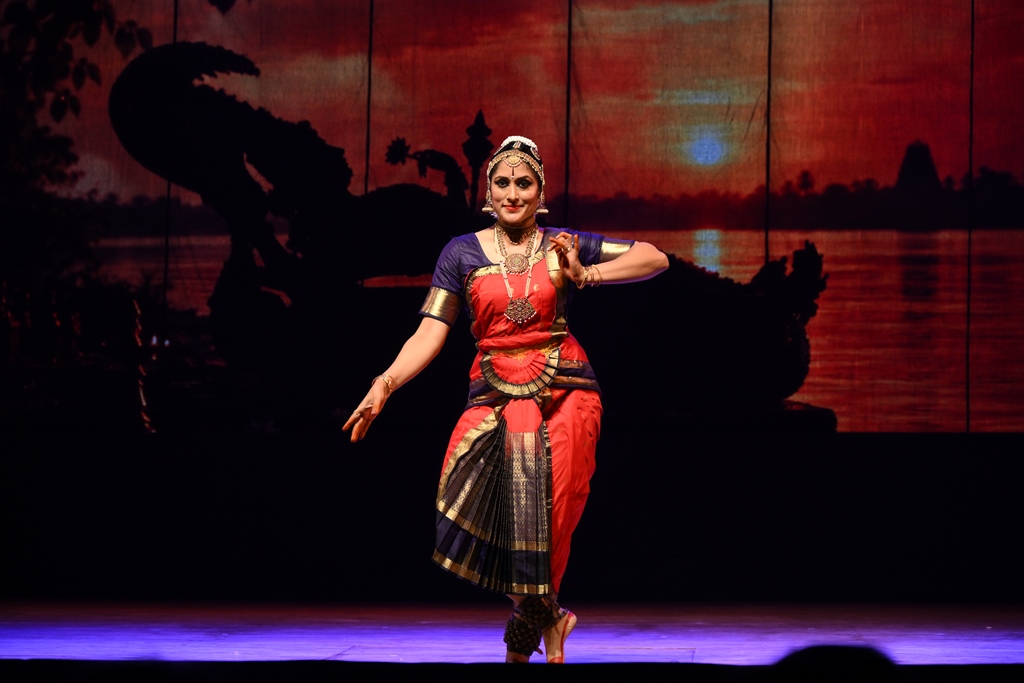
Dr.
Janaki Rangarajan opened the cultural presentation with Maharaja Swati
Tirunal’s celebrated Pada
Varnam, “Sami Ninne”, in Ragam Yadukulakambhoji and Adi Talam. A
disciple of Madhavi Chandrasekhar and Dr. Padma Subrahmanyam, Rangarajan
brought to the piece a distinctive combination of precision, individuality and
expressive depth.
The
varnam,
centred on the viraha
utkanthita nayika yearning for Lord Padmanabha, allowed the artiste
to explore the many shades of separation and devotion. Rather than confining
the heroine to the familiar pathos of longing, Rangarajan gave her an expansive
emotional dimension, moving between vulnerability, intensity and spiritual
yearning. Her nuanced abhinaya
transformed the devotional poetry into an intimate psychological portrait,
while her assured technique maintained the formal rigour of Bharatanatyam.
 She
was accompanied by Shilpa Gopalakrishnan on vocals, TV Sukanya on violin, K.
Sarvesh on mridangam and S. Vijay Kumar on nattuvangam. The performance was
enhanced by the creative light design of Debiprasad Mishra.
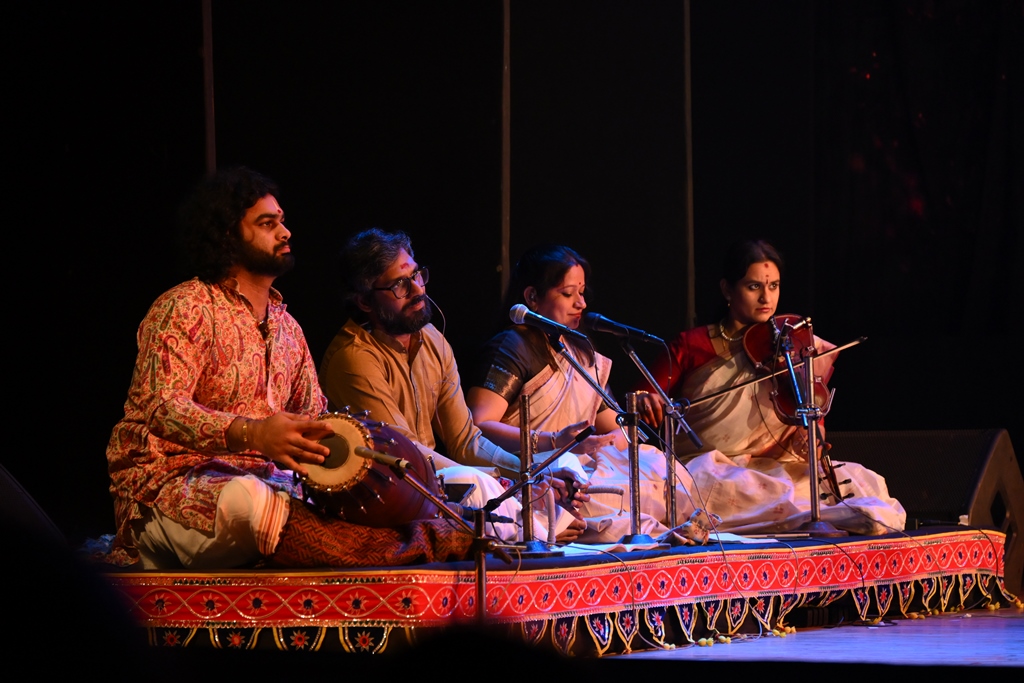
She
was accompanied by Shilpa Gopalakrishnan on vocals, TV Sukanya on violin, K.
Sarvesh on mridangam and S. Vijay Kumar on nattuvangam. The performance was
enhanced by the creative light design of Debiprasad Mishra.
The
evening subsequently shifted from the vocabulary of dance to the language of
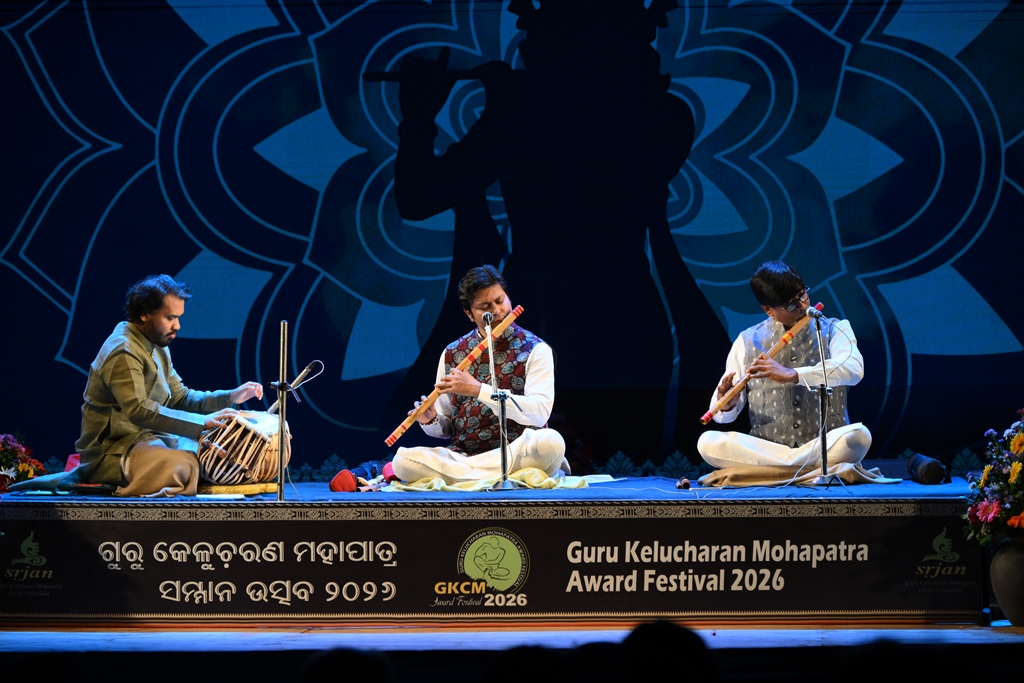
melody, as two accomplished Odisha flautists, Abhiram Nanda and Srinibas
Satapathy, came together for a flute jugalbandi.
Nanda,
a disciple of Pt. Hariprasad Chaurasia and recipient of the Odisha Sangeet Natak
Akademi Award, brought tonal warmth and rhythmic assurance to the presentation.
Satapathy, an Ustad Bismillah Khan Yuva Puraskar recipient, complemented him
with melodic delicacy and vitality.
The
duet began with a composition in Raag Madhuvanti set to Rupak Taal, before
progressing through presentations in Madhyalaya Teen Taal and Dhrut Teen Taal.
The two musicians maintained a sensitive balance between meditative
expansiveness and technical dexterity, allowing the distinct timbres of their
flutes to converge without losing their individual character.
The
presentation then moved into Pahadi
Dhun, first in Dadra and subsequently in Keherwa. Beginning on a
tranquil and lilting note, the rendition gradually gathered rhythmic momentum,
culminating in an energetic musical exchange. Their interplay alternated
between majestic resonance and delicate melodic phrases, creating an atmosphere
of acoustic harmony.
Young
tabla artiste Yashwant Vaishnav added further vitality to the jugalbandi,
responding to the flautists with crisp and agile rhythmic passages.
The
evening’s technical presentation was supported by the festival’s sound team,
led by Chief Sound Engineer C. Anand Krishna, with Bharath Krishna overseeing
sound engineering and graphic design. The lighting was designed and operated by
Debiprasad Mishra and D. Dhilip Kumar.
Coming a day after the festival witnessed a standing ovation for Odisha’s first presentation of Marganatya, Saugandhikaharanam, by Dr. Piyal Bhattacharya’s Chidakash Kalalay — Centre of Art and Divinity, the fourth evening reaffirmed the festival’s commitment to presenting diverse classical traditions on a common platform.
The 32nd GKCM Award Festival 2026 is supported by the Ministry of Culture, Government of India, and the Department of OLLC, Government of Odisha.