
THEBUSINESSBYTES
BUREAU
NEW
DELHI, JANUARY 20, 2026
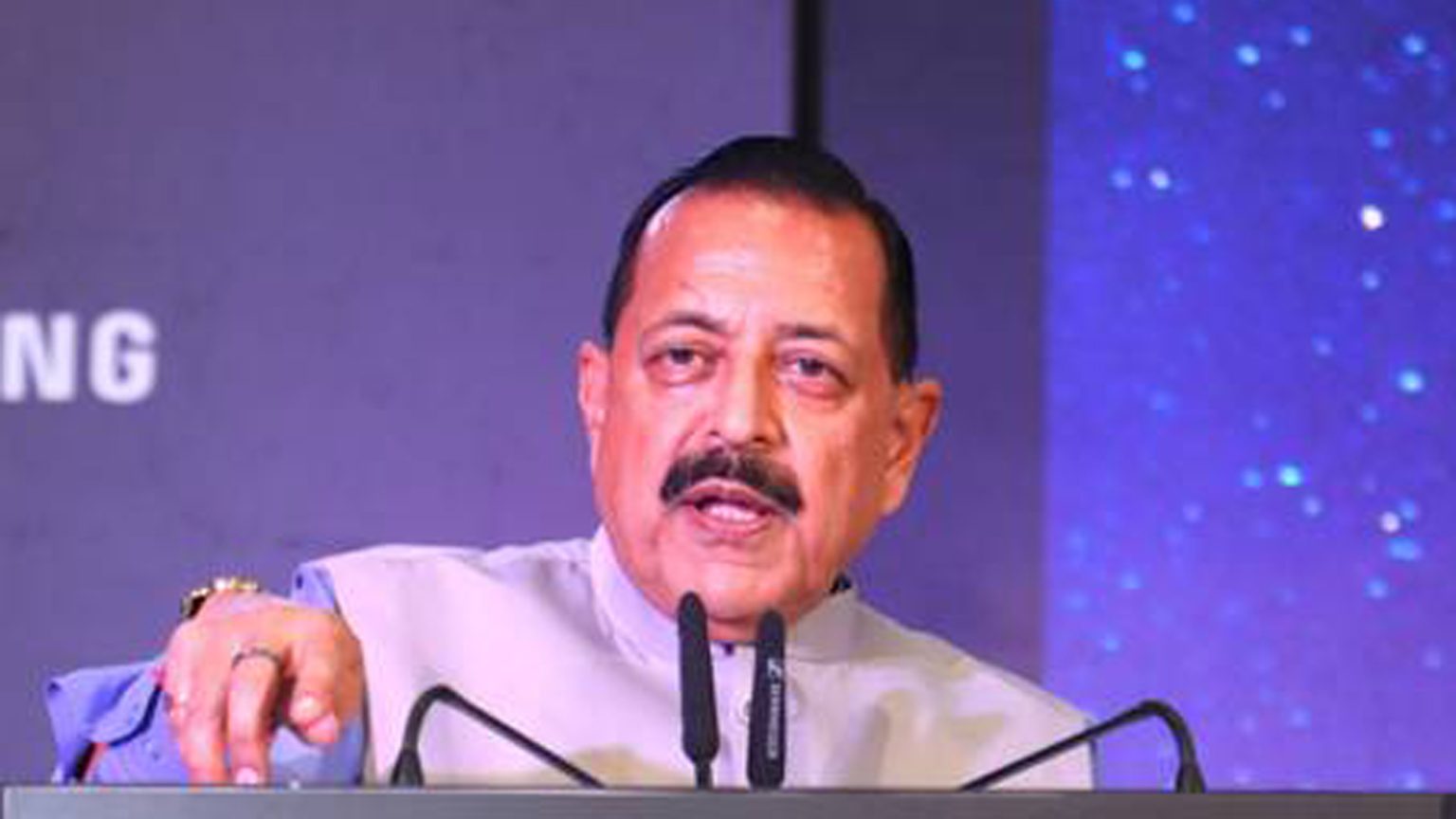
Union Minister of State (Independent
Charge) for Science and Technology Dr Jitendra Singh on Tuesday strongly
advocated the wider adoption of steel slag–based road construction and repair
technology, particularly across hilly and Himalayan regions, to create more
durable, sustainable and climate-resilient road infrastructure. Emphasising its
relevance for regions prone to heavy rainfall, landslides and frequent road
damage, the Minister said the technology has the potential to significantly
improve road longevity while reducing maintenance costs.
 Addressing an event marking the
signing of an agreement between the Technology Development Board (TDB) and Visakhapatnam-based
Ramuka Global Eco Work Private Limited, Dr Singh noted that despite proven
benefits, awareness of steel slag road technology remains limited in several
hill States and Union Territories. To bridge this gap, he announced that a
two-day workshop on steel slag road technology will be held in Jammu and
Kashmir next week, followed by similar outreach programmes across other States
and UTs to familiarise engineers and road-building agencies with its
application and advantages.
Addressing an event marking the
signing of an agreement between the Technology Development Board (TDB) and Visakhapatnam-based
Ramuka Global Eco Work Private Limited, Dr Singh noted that despite proven
benefits, awareness of steel slag road technology remains limited in several
hill States and Union Territories. To bridge this gap, he announced that a
two-day workshop on steel slag road technology will be held in Jammu and
Kashmir next week, followed by similar outreach programmes across other States
and UTs to familiarise engineers and road-building agencies with its
application and advantages.
Highlighting the suitability of the
innovation for regions with short construction windows and challenging weather
conditions, Dr Singh said Himalayan states stand to gain the most from this
technology. However, uneven awareness and limited exposure among implementing
agencies have slowed its adoption, underlining the need for targeted training
and capacity-building initiatives.
The agreement enables the commercial
rollout of ‘ECOFIX’, a ready-to-use pothole repair mix developed by the
CSIR–Central Road Research Institute (CRRI). The product converts processed
iron and steel slag into a durable construction input and can be applied even
in wet or waterlogged conditions, sharply reducing repair time and minimising
traffic disruption. Dr Singh traced the technology’s journey, noting that pilot
trials began around two years ago in Surat, Gujarat, and parts of the
Northeast, including Arunachal Pradesh. Since then, steel slag-based solutions
have been deployed to varying extents in Karnataka, Uttar Pradesh, Assam,
Gujarat, Jharkhand and Andhra Pradesh, though many potential users remain
unaware of its availability.
Officials said the technology has
undergone rigorous laboratory validation and field testing under Indian
climatic and traffic conditions, with studies pointing to improved durability
and lower lifecycle costs compared to conventional repair methods. Beyond
performance, the use of steel slag supports circular economy objectives by
reducing reliance on natural aggregates while addressing industrial waste
disposal challenges.
Stressing the importance of
translating publicly funded research into tangible public benefits, Dr Singh
said innovations like ECOFIX demonstrate how science can solve everyday
problems such as potholes that affect road safety, vehicle maintenance and
commuter stress. He also highlighted the evolving public-private partnership
model, noting that the industry partner’s investment matches government
support.
Under the partnership, TDB and the
industry partner plan to set up an iron and steel slag processing facility with
an annual capacity of nearly two lakh tonnes, with commercial production
expected by end-2027. The facility’s proximity to major steel plants is
expected to ensure steady raw material supply while generating local employment.
Calling for wider dissemination, the Minister urged state governments and the
media to actively promote the technology so that steel slag roads can be
adopted more rapidly, especially in climate-vulnerable regions.
The agreement-signing ceremony was
attended by CSIR Director General Dr Kalaiselvi, TDB Secretary Rajesh Kumar
Pathak, CSIR-CRRI Director Dr C H Ravi Sekhar, senior officials from the
Department of Science and Technology and CSIR, and representatives of Ramuka
Global Eco Work Private Limited.