THEBUSINESSBYTES
BUREAU
BHUBANESWAR,
JUNE 3, 2026
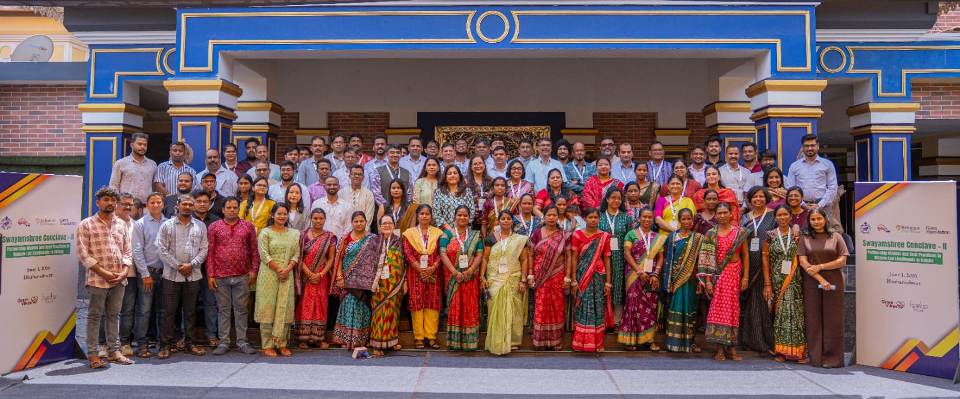
The Swayamshree programme, a
collaborative initiative of Reliance Foundation, the Gates Foundation and the
Department of Mission Shakti, on Wednesday convened the second edition of the
Swayamshree Conclave in Bhubaneswar, highlighting a transformative journey that
has economically empowered more than 4.2 lakh women across rural Odisha over
the past three years.
The conclave brought together
policymakers, development practitioners, industry leaders, civil society
organisations and women’s collectives to share key learnings from the field,
strengthen Public-Private-Community Partnerships (PPCPs), and chart a roadmap
for scaling women-led livelihood models across the state.
Addressing the gathering, Jyotishankar
Mohapatra, Additional Secretary, Department of Mission Shakti, Government of
Odisha, said the Swayamshree programme had chosen to work in a highly dynamic
and impactful sector. “Congratulations to the Swayamshree programme for
choosing to work in a dynamic field. In a resource-constrained scenario,
collective efforts are needed to achieve the desired results. We are keen to
take the learning from the Swayamshree programme and replicate it on a larger
scale,” he said.
 Highlighting the transformative power
of collective action, N Deepthi Reddy, Chief-Women Empowerment, Reliance
Foundation, said the initiative has demonstrated how organised women’s collectives
can drive sustainable economic growth when equipped with access to technology,
markets and institutional support.
Highlighting the transformative power
of collective action, N Deepthi Reddy, Chief-Women Empowerment, Reliance
Foundation, said the initiative has demonstrated how organised women’s collectives
can drive sustainable economic growth when equipped with access to technology,
markets and institutional support.
“In Odisha, we have seen what becomes possible
when women are organised into collectives and given the tools, technology, and
markets they need. Across seven districts — from tribal uplands of Kandhamal to
the handloom clusters of Bargarh — more than 4.2 lakh women have moved from
subsistence farming to enterprise-led livelihoods. Women who once guarded crops
through the night against wildlife are now adopting solar fencing technologies
that further enhanced production and economic empowerment, and are leading
collectively as Producer Groups and selling their harvests to institutional
buyers,” she said.
She added that the newly launched compendium
documenting the programme’s achievements serves not only as a record of success
but also as a practical blueprint for future replication and scale.
Echoing the importance of
collaborative development models, Saachi Bhalla, Deputy Director, Gender
Equality, Gates Foundation, said the Prime Minister’s vision of creating
“Lakhpati Didis” has generated strong momentum for women’s economic empowerment
across the country.
“The Swayamshree programme builds on this
vision by working with State Rural Livelihood Missions and grassroots partners
to create sustainable income pathways. The learnings from Odisha — across farm,
off-farm, non-farm and enterprise models — demonstrate how collaboration
between government, philanthropy, private sector, and civil society can deliver
transformative, scalable change,” she said.
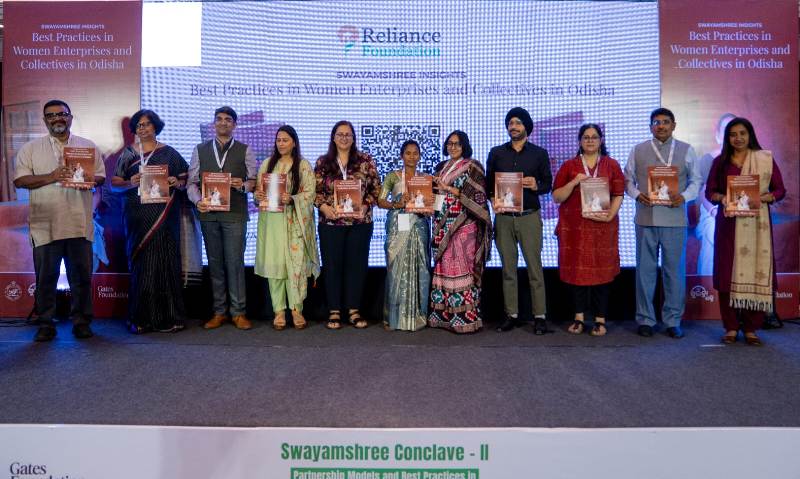
A key highlight of the conclave was
the launch of a compendium titled Best
Practices from Odisha for Strengthening Women’s Livelihoods, documenting
high-impact and replicable livelihood models developed under the Swayamshree
programme. The publication captures successful interventions implemented across
the state through partners such as Gram Vikas and Harsha Trust, with
documentation support from ILRT Foundation.
The compendium showcases successful
women-led enterprises across farm-based sectors such as paddy, vegetables and
dairy; off-farm activities including food processing and handloom; and non-farm
ventures spanning retail and service enterprises. It has been designed as a
practical toolkit for policymakers, practitioners and institutions seeking to
replicate proven livelihood models.
The conclave also featured a panel
discussion on partnership and innovation models, where industry leaders
explored strategies for accelerating the growth of women-led enterprises
through targeted collaborations. Women entrepreneurs from across Odisha shared
first-hand accounts of enterprise transformation, improved market access and
increased incomes.
An exhibition showcasing products made by Self-Help Groups (SHGs) and Farmer Producer Organisations (FPOs) provided participants with an opportunity to engage directly with women entrepreneurs and witness the impact of Swayamshree’s interventions across farm, off-farm and non-farm value chains.
With its growing footprint in Odisha, the Swayamshree programme is emerging as a powerful model for inclusive rural development, bringing together government, philanthropy, private sector and community institutions to create sustainable livelihoods and expand economic opportunities for women across the state.