

THEBUSINESSBYTES
BUREAU
BHUBANESWAR,
JUNE 3, 2026
Ahead of World Environment Day,
Vedanta Aluminium, India’s largest aluminium producer, showcased the growing
impact of its water stewardship and watershed development initiatives across
Odisha’s Kalahandi and Rayagada districts surrounding its Lanjigarh refinery.
The company has created more than 18 lakh cubic metres of water storage and
groundwater recharge capacity, significantly enhancing irrigation access and
strengthening water security for rural communities.
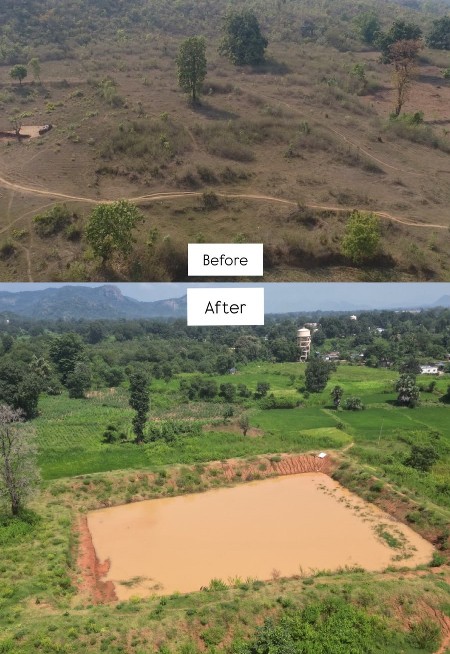 Through an integrated approach to
watershed development and community water management, Vedanta Aluminium has
rejuvenated 73 water bodies across 26 villages and enabled irrigation over more
than 1,600 acres of farmland, benefiting upwards of 4,000 people. The
initiatives are helping address chronic water scarcity challenges in one of
Odisha’s most climate-sensitive regions.
Through an integrated approach to
watershed development and community water management, Vedanta Aluminium has
rejuvenated 73 water bodies across 26 villages and enabled irrigation over more
than 1,600 acres of farmland, benefiting upwards of 4,000 people. The
initiatives are helping address chronic water scarcity challenges in one of
Odisha’s most climate-sensitive regions.
“Water used to be a daily struggle, especially
during the dry months when sources would run low. Now, with the restoration of
water bodies in our village, water is available closer to home and throughout
the year. It has reduced our hardship and improved our quality of life,” said
Karbi Majhi, a resident of Banigaon village.
In Kalahandi, a predominantly agrarian
district that has emerged as one of Odisha’s leading paddy-producing regions,
improved irrigation infrastructure and water availability are directly
contributing to higher farm productivity, crop diversification and enhanced
farmer incomes. Given the region’s heavy reliance on monsoon rainfall, such
interventions have become critical for sustaining agricultural growth and rural
livelihoods.
Vedanta Aluminium’s watershed
programme focuses on scientific rainwater harvesting, groundwater recharge and
the revival of traditional water systems to ensure year-round water
availability for both agricultural and domestic use. The interventions include
the construction of water harvesting structures, farm ponds, check dams and
community-led water management systems that improve soil moisture retention and
minimise runoff losses.
“Earlier, farming here depended entirely on
rainfall. With the water bodies restored and irrigation now available, we are
able to cultivate more confidently and even grow an additional crop. It has
brought stability to our income and hope for our families,” said Dhananjaya
Patra, a farmer from Batelima village.
Building on these grassroots efforts,
the company has developed a comprehensive hydrogeological blueprint for the
Sijimali region aimed at further enhancing water security. Scientific
assessments indicate the potential to increase local water availability by up
to 200 per cent through improved runoff capture and groundwater recharge
supported by a network of soil and water conservation measures.
The proposed plan includes contour
bunding, check dams, settling ponds, slope stabilisation structures and a 7.5-kilometre
drainage network designed to channel rainwater more efficiently into local
catchments and water bodies.
Vedanta Aluminium said the project has
been designed with robust safeguards to protect groundwater resources. Studies
indicate that groundwater reserves occur at depths of approximately 350 to 550
metres below ground level, while the proposed interventions will be carried out
at significantly shallower levels, ensuring no direct interaction with
aquifers.
Complementing its water conservation efforts, the company is also undertaking a large-scale ecological restoration programme, having planted more than 2.2 million trees across Kalahandi and Rayagada districts. The afforestation initiative is expected to improve soil stability, enhance moisture retention, support biodiversity and strengthen long-term ecological resilience.
With a sustained focus on water conservation, recycling, groundwater recharge and ecosystem restoration, Vedanta Aluminium said the Sijimali hydrogeological plan reflects its commitment to combining scientific planning with responsible resource management to drive sustainable development and positive environmental outcomes.