
THEBUSINESSBYES
BUREAU
MUMBAI,
SEPTEMBER 16, 2026
Tata Steel has
unveiled the second phase of its corporate brand campaign #WeAlsoMakeTomorrow
with ‘Recycle of Life’, a film that highlights the infinite recyclability of
steel and the company’s sustainability ambitions.
The film has been
created in collaboration with acclaimed British animator Martyn Pick and agency
VML, and builds on the first phase of the campaign launched in 2018, which
focused on the role of technology and innovation in shaping the future.
The latest chapter
puts sustainability at the centre of the narrative, highlighting how
responsible materials, manufacturing practices, products and solutions can
contribute to a more sustainable future.
At the heart of
‘Recycle of Life’ is steel’s ability to be recycled repeatedly without losing
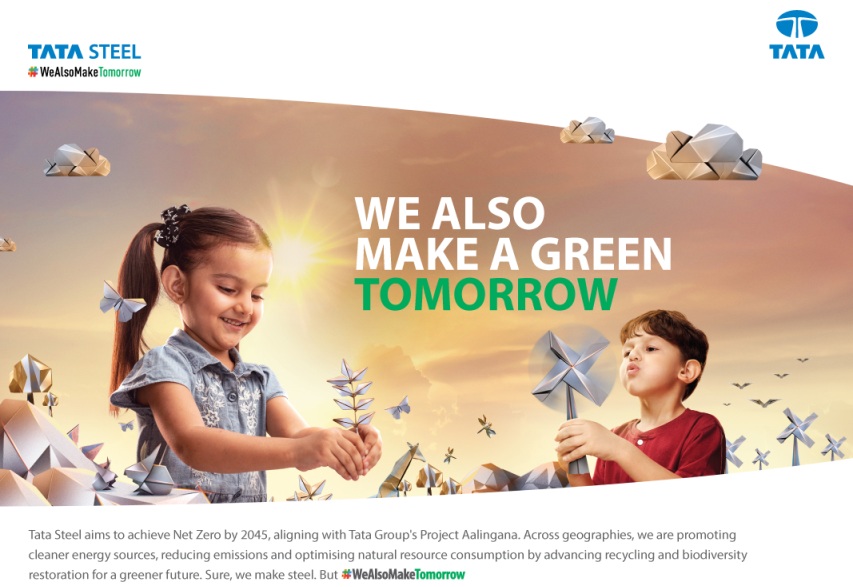
its essential properties. The film uses children, representing future
generations, and origami-inspired transformations to depict the continual
renewal and repurposing of steel.
As a sheet of
steel-textured paper changes form repeatedly in the hands of children, the film
seeks to illustrate how steel can be reimagined and reused while retaining its
fundamental characteristics.
Aligned with the Tata
Group’s ‘Aalingana’ initiative, Tata Steel has set a target of achieving Net
Zero emissions by 2045 and is pursuing a range of initiatives across its
operations and geographies.
In India, the company
is advancing scrap-based steelmaking through electric arc furnaces (EAFs),
including its facility in Punjab and two upcoming plants in western and
southern India. In Europe, Tata Steel is progressing towards lower-carbon
steelmaking through its planned 3.2 million tonnes per annum EAF at Port Talbot
and the Green Steel Plan in the Netherlands.
The company aims to
produce 10-15 million tonnes of steel annually through the recycling route over
the next 10-15 years.
At its existing blast
furnace sites, Tata Steel is also piloting technologies such as HIsarna and
EASyMelt, while increasing the use of alternative fuels including biochar and
natural gas to reduce carbon emissions.
The company is
further expanding renewable energy integration and increasing scrap utilisation
across its operations. As part of its circular economy approach, Tata Steel is
transforming around 15 million tonnes per annum of industrial by-products into
valuable resources.
Directed by Pick, ‘Recycle
of Life’ combines live action, computer-generated imagery and painted
environments to create a constantly transforming visual world.
Pick said the film
uses a bespoke “Painting into Pixels” technique that treats digital imagery
like wet paint to create a distinctive textured aesthetic. The approach, he
said, was intended to visualise the impact of Tata Steel’s sustainability
processes through look, feel and texture.
The animator said
capturing the sense of wonder among children was central to the film as they
represent the spirit of tomorrow. He also sought to establish a metamorphic
flow reflecting Tata Steel’s transformation of materials and the spontaneous
creativity of children.
The film’s visual
narrative is complemented by ‘Recycle Raga’, an original composition by
musician Dhruv Ghanekar featuring renowned Carnatic vocalist Sanjay
Subrahmanyan.
Ghanekar said the
composition draws on the idea of reimagining the Indian classical raga system
by rearranging notes as they ascend the musical scale. Drawing a metaphor from
Tata Steel’s efforts to reinvent itself through steel recycling, the
composition reinterprets the seven notes by “recycling” the ancient raga
system.
The music repeatedly resets, rearranges and renews itself as the scale rises, before returning to where it began, mirroring the concept of continuous recycling.
With ‘Recycle of Life’, Tata Steel is expanding the #WeAlsoMakeTomorrow platform from its earlier focus on innovation to a broader narrative centred on sustainability, underscoring its stated commitment to creating long-term value for customers, communities and the planet.