THEBUSINESSBYES BUREAU
JAMNAGAR, SEPTEMBER 4, 2026
Vantara on Friday announced the full membership of its newly established
independent Governing Council, bringing together prominent Indian and
international experts to oversee its conservation, rescue and compliance work,
while playing a key role in shaping the wildlife organisation’s vision for the
next five years and beyond.
The five-member council, along with one ex-officio non-voting member,
comprises experts with extensive experience in wildlife policy, Indian and
international law, institutional governance, wildlife crime, human-wildlife
conflict, zoo and aquarium standards, veterinary care, stakeholder engagement
and community-based conservation.
 John E. Scanlon AO, renowned environmentalist and former
Secretary-General of the Convention on International Trade in Endangered
Species of Wild Fauna and Flora (CITES), who was appointed as the independent
Chair in August 2026, will lead the council.
John E. Scanlon AO, renowned environmentalist and former
Secretary-General of the Convention on International Trade in Endangered
Species of Wild Fauna and Flora (CITES), who was appointed as the independent
Chair in August 2026, will lead the council.

 Joining Scanlon on the council is Justice Krishna Murari, former Judge
of the Supreme Court of India and former Chief Justice of the Punjab and
Haryana High Court, who brings extensive experience in law, governance and
institutional oversight.
Joining Scanlon on the council is Justice Krishna Murari, former Judge
of the Supreme Court of India and former Chief Justice of the Punjab and
Haryana High Court, who brings extensive experience in law, governance and
institutional oversight.
 Craig Hoover, Executive Vice President of the Association of Zoos and
Aquariums (AZA), is another member of the council. Hoover has three decades of
experience in wildlife conservation, including senior positions with the US
Fish and Wildlife Service, where he worked on international conservation and
wildlife trade. He will begin his term in January 2027 after completing his
tenure with AZA.
Craig Hoover, Executive Vice President of the Association of Zoos and
Aquariums (AZA), is another member of the council. Hoover has three decades of
experience in wildlife conservation, including senior positions with the US
Fish and Wildlife Service, where he worked on international conservation and
wildlife trade. He will begin his term in January 2027 after completing his
tenure with AZA.
 Subhash K. Malkhede, a senior Indian Forest Service officer and former
Chief Wildlife Warden of Karnataka, will contribute his extensive experience in
wildlife conservation, protected-area and endangered-species management,
human-wildlife conflict, wildlife law enforcement and regulatory oversight.
Subhash K. Malkhede, a senior Indian Forest Service officer and former
Chief Wildlife Warden of Karnataka, will contribute his extensive experience in
wildlife conservation, protected-area and endangered-species management,
human-wildlife conflict, wildlife law enforcement and regulatory oversight.
 The council will also include Greta F. Iori, an Ethiopian-Italian
conservation expert with significant experience in wildlife crime,
human-wildlife coexistence, women’s leadership and community-based conservation
across Africa.
The council will also include Greta F. Iori, an Ethiopian-Italian
conservation expert with significant experience in wildlife crime,
human-wildlife coexistence, women’s leadership and community-based conservation
across Africa.
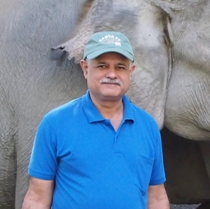 Dr Kushal Konwar Sarma, an Indian wildlife veterinarian and elephant
specialist and former Professor and Head of the Department of Surgery and
Radiology at the College of Veterinary Science, Guwahati, will serve as an
ex-officio, non-voting member.
Dr Kushal Konwar Sarma, an Indian wildlife veterinarian and elephant
specialist and former Professor and Head of the Department of Surgery and
Radiology at the College of Veterinary Science, Guwahati, will serve as an
ex-officio, non-voting member.
Vantara said all council members will serve in an independent personal
capacity, while its employees cannot serve as voting members of the Governing
Council.
“The Governing Council has a central role to play in setting the future
vision for Vantara and in ensuring it embeds recently announced changes into
its daily operations,” Scanlon, Chair of the Governing Council, said.
“With these appointments, we are
bringing in people with outstanding professional credentials, extensive
experience, and exemplary personal credibility. It’s an exceptional team that
blends deep expertise from within India and globally,” he added.
Scanlon said the council would work to create a lasting and
transformative positive impact on wildlife conservation while engaging with
Vantara staff and the wider conservation community.
Vantara CEO Vivaan Karani welcomed the appointments, saying the council
would be instrumental in setting the organisation’s future vision and ensuring
that it operates to the highest standards as it advances science-led
conservation.
“The independent authority of the
Council is central to our efforts to fully implement the commitments made in
our letter to the Indian CITES Management Authority last month, and to ensuring
Vantara’s decisions are subject to rigorous and independent oversight,” Karani
said.
The Governing Council will function as Vantara’s peak governing body,
with overall responsibility for supervising its conservation, rescue and
rehabilitation activities, compliance with Indian law, CITES and other
international agreements, as well as helping determine its strategic direction
for the coming years.
Under Vantara’s recently announced governance reforms, the organisation
has committed that no application to import an animal will be made before June
5, 2027. Thereafter, commitments restricting applications to import animals in
specified circumstances will apply, and no application can be advanced without
the council’s prior written approval following an internal due diligence
process.
Vantara said the creation of the Governing Council forms part of its
wider voluntary commitments aimed at strengthening transparency, due diligence
and operating practices. The reforms place greater emphasis on adherence to
CITES, supporting wildlife in their range states and prioritising rescue,
rehabilitation and conservation efforts within India.
The council will also continuously review Vantara’s progress in
implementing the commitments contained in its August 19, 2026 letter to the
Indian CITES Management Authority.
The Governing Council will be supported by a new CITES Due Diligence
Committee and an Advisory Board, along with the Special Director and the Office
of Compliance and Due Diligence, all of which form part of the governance
framework outlined in Vantara’s letter to the Indian CITES Management
Authority.
Vantara has also committed to deeper engagement with the conservation
community. As part of this effort, the council will explore a mechanism for
sustained dialogue with conservation professionals working in the field, with
the aim of sharing knowledge, ideas and perspectives.
The council is expected to gather feedback from stakeholders before
determining the most appropriate mechanism for such engagement, marking a
further step in Vantara’s stated efforts to strengthen independent oversight,
transparency and collaboration in wildlife conservation.