THEBUSINESSBYTES
BUREAU
JHARSUGUDA,
SEPTEMBER 8, 2026
Vedanta Aluminium,
India’s largest aluminium producer, is stepping up its artificial intelligence,
digitalisation and automation drive, joining hands with global technology
majors and deep-tech startups in a bid to unlock up to ₹2,100 crore in business value across
its operations.
The company, in
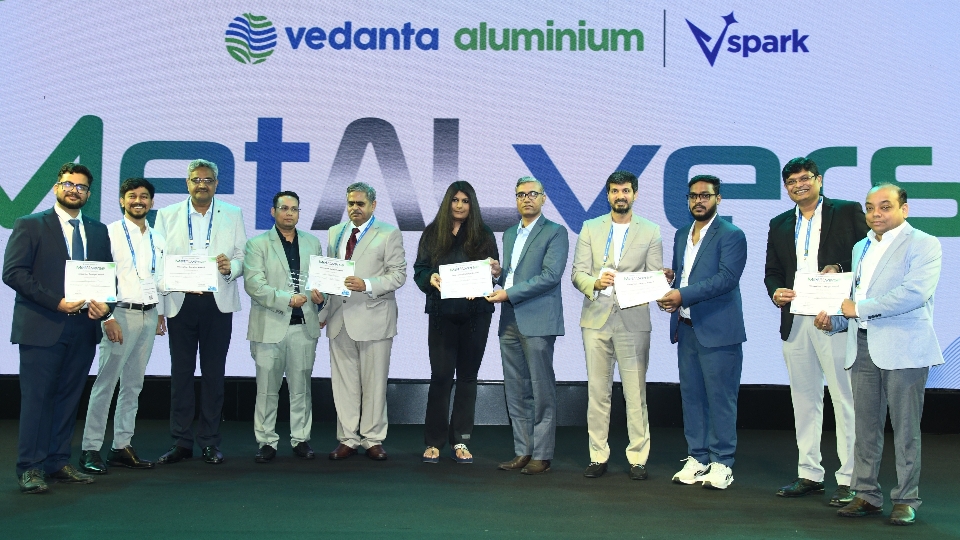
collaboration with V-Spark, India’s largest manufacturing deep-tech incubator,
recently hosted MetALverse, an immersive technology showcase in Jharsuguda,
Odisha, bringing together technology leaders, emerging startups and industry
experts to accelerate the adoption of next-generation solutions across
large-scale manufacturing operations.
As part of the
initiative, Vedanta Aluminium announced collaborations with technology
companies including OpenAI, Microsoft, SAP, AVEVA, Rockwell Automation,
Thoughtworks and Fives, alongside a host of deep-tech innovators. The partnerships
are aimed at evaluating, piloting and scaling solutions that can improve plant
productivity, optimise costs, strengthen asset reliability and advance
sustainability across the company’s integrated value chain.
The ₹2,100-crore value opportunity is expected
to emerge from the deployment of these technologies across mining, alumina
refining and aluminium production, with the company seeking measurable gains in
operational efficiency, decision-making, asset performance and resource
optimisation.
 The MetALverse
initiative comes as large industrial companies increasingly look to move beyond
experimentation with artificial intelligence and convert emerging technologies
into enterprise-scale deployments. For Vedanta Aluminium, the strategy is to
use its expansive manufacturing footprint as a real-world testing ground where
promising technologies can be validated under live industrial conditions before
being scaled across operations.
The MetALverse
initiative comes as large industrial companies increasingly look to move beyond
experimentation with artificial intelligence and convert emerging technologies
into enterprise-scale deployments. For Vedanta Aluminium, the strategy is to
use its expansive manufacturing footprint as a real-world testing ground where
promising technologies can be validated under live industrial conditions before
being scaled across operations.
“India’s manufacturing sector is entering a
defining decade. The future will belong to companies that combine scale with
intelligence, sustainability and the courage to rethink what is possible,” said
Priya Agarwal Hebbar, Non-Executive Director, Vedanta Limited and Chairperson,
Hindustan Zinc.
“At Vedanta Aluminium, we see AI as a catalyst
for that transformation, with human intelligence providing the judgement and
direction behind it. We are bringing together the best minds across industry
and technology because we don’t want to simply make today’s plants better. We
want to build the metal of the future, using the technologies of the future,”
she added.
The company’s
technology partnerships cover a broad range of industrial applications. OpenAI
will work on generative AI and intelligent agents, while Microsoft will support
cloud, AI and enterprise transformation initiatives. SAP will focus on
integrated enterprise processes, with AVEVA bringing capabilities in industrial
data, digital twins and advanced analytics.
The collaboration
with Rockwell Automation will target smart manufacturing and control systems,
while Thoughtworks will contribute to digital engineering. Fives will work on
aluminium process technologies and carbon plant optimisation, adding a
process-engineering dimension to the company’s technology transformation programme.
Vedanta Aluminium is
also looking to tap the capabilities of emerging deep-tech companies. Ripik.AI
has partnered with the company for industrial vision and process optimisation,
while XYMA will focus on high-temperature asset monitoring. Faclon will work on
industrial intelligence and connected manufacturing, and DesignX on AI-enabled
factory workflows.
Other partnerships
include DigitalPaani for industrial water optimisation, AutoVRse for immersive
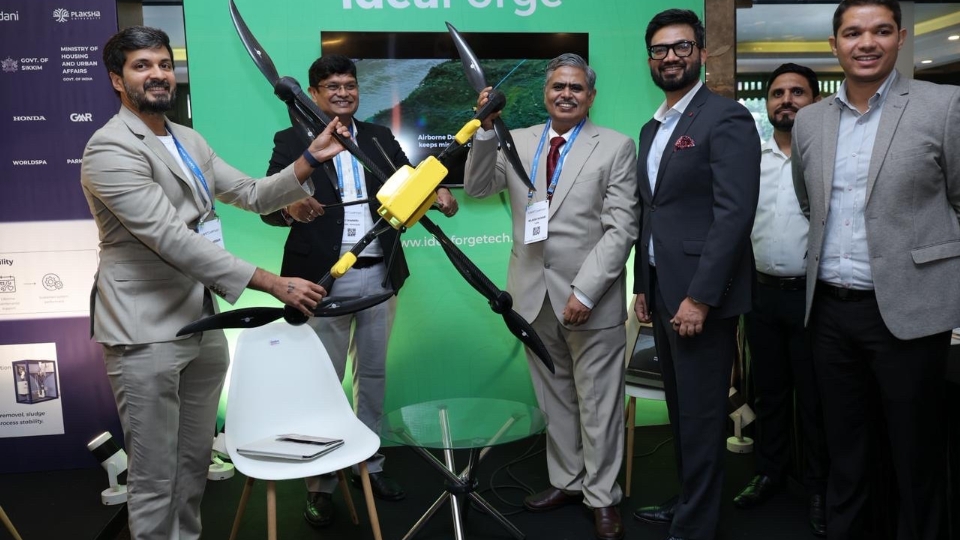
workforce training, Enmovil for AI-led logistics and ideaForge for drone-based
industrial intelligence.
The partnerships are
expected to move through technical evaluation, data integration, pilot
deployment and eventual scale-up, with the overarching objective of translating
deep-tech innovation into tangible improvements in productivity, safety,
sustainability, reliability and operational decision-making.
Akarsh Hebbar,
Non-Executive Vice Chairman, Vedanta Aluminium and Chairman, V-Spark DeepTech
Ventures, said the biggest opportunity in industrial innovation lies in taking
emerging technologies beyond proof-of-concept stages and deploying them at
scale.
“Vedanta Aluminium, as one of the top
producers of the metal of the future globally, provides the expansive operating
footprint, technical depth and determination to industrialise breakthrough
solutions, while V-Spark is the engine that identifies, validates and
accelerates these technologies from concept to enterprise-wide deployment,” he
said.
The company’s
deep-tech push is already gaining traction, with nearly 70 startups currently
collaborating with Vedanta Aluminium under the V-Spark programme. The initiative
spans the company’s major operating locations, including its alumina refinery
in Lanjigarh, Odisha, its single-location aluminium plant in Jharsuguda and
BALCO in Korba, Chhattisgarh.
The scale of these
assets gives V-Spark an unusually large industrial environment in which to test
and refine technologies before taking them to wider commercial deployment. The
model seeks to bridge a longstanding gap in industrial innovation—moving
promising technologies from the laboratory and pilot stage into complex,
high-volume manufacturing environments.
Pinak Dattaray,
Founder and CEO, Ripik.AI, said AI is opening new avenues for industrial
organisations to transform how knowledge is accessed, decisions are made and
operations are managed.
“At Ripik.AI, we are focused on making
advanced AI capabilities accessible through tools that help people and
organisations solve complex problems and work more effectively. We are excited
to collaborate with Vedanta Aluminium as it explores new applications of AI
across its business,” he said.
With MetALverse,
Vedanta Aluminium is positioning its manufacturing ecosystem as a
“megaincubation environment” for industrial deep-tech, combining the scale of
its operations with the innovation pipeline of V-Spark. The strategy could
potentially allow the company to shorten the journey from technology discovery
to deployment while creating a common ecosystem for AI-led manufacturing
innovation.
The initiative also signals a broader shift in the metals sector, where technology adoption is increasingly being linked not merely to automation but to productivity, energy and resource efficiency, operational resilience and decarbonisation. For Vedanta Aluminium, the focus now is on turning that technology opportunity into measurable value across its integrated operations.
With nearly 70 startups already part of the ecosystem and partnerships spanning some of the world’s leading technology companies, the company’s next challenge will be to convert pilots into scaled deployments — and translate its ₹2,100-crore value opportunity into sustained operational gains.