 THEBUSINESSBYTES
BUREAU
THEBUSINESSBYTES
BUREAU
NEW
DELHI, APRIL 29, 2026
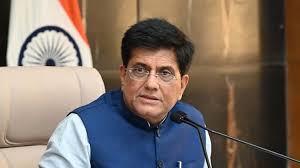
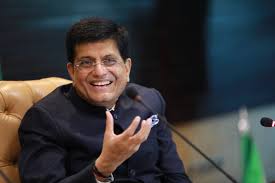
“Brand India must lead our export surge,”
Union Commerce and Industry Minister Piyush Goyal said on Wednesday as he
reviewed the implementation of the Export Promotion Mission (EPM) and charted
an aggressive roadmap to help India achieve its ambitious USD 2 trillion export
target by 2030-31.
Chairing
a high-level meeting, Goyal directed officials to intensify efforts in key
areas including MSME exports, agricultural shipments, overseas warehousing,
testing and certification, while ensuring that the benefits of government
schemes reach exporters at the grassroots level. The review focused on
accelerating India's journey towards USD 1 trillion each in merchandise and
services exports over the next five years.
India's
export strategy is being driven through a comprehensive monitoring framework
that identifies sector-specific interventions across high-growth industries
such as engineering goods, textiles, electronics, pharmaceuticals, chemicals
and services. Goyal stressed that the export target would rest on three
critical pillars—clearly defined action points with strict timelines, seamless
inter-departmental coordination, and a robust IT-enabled monitoring system for
real-time progress tracking.
He
said each sectoral initiative must have measurable outcomes, with
responsibilities assigned to nodal officers and a structured review mechanism
to swiftly resolve bottlenecks faced by exporters.
The
Minister also called for a parallel import substitution strategy in priority
sectors, aimed at strengthening domestic manufacturing capabilities while
expanding India's global export footprint.
A
major thrust of the review was on the Export Promotion Mission, the Centre's
flagship MSME-focused initiative designed to remove barriers and promote
broad-based, inclusive export growth. The mission operates through two
integrated sub-schemes — Niryat Protsahan,
which facilitates access to trade finance, and Niryat Disha, which focuses on
market access.
Ten
critical components of the EPM have already been operationalised, including
interest subvention, export factoring, credit support for e-commerce exporters,
collateral assistance, risk-sharing mechanisms, testing and certification
support, market access assistance, export warehousing and logistics, inland
transport support, and trade facilitation services.
Goyal
emphasised that effective implementation would be the key differentiator. He
directed Export Promotion Councils, Commodity Boards and regional offices of
the Directorate General of Foreign Trade to significantly enhance outreach so
that first-time exporters, MSMEs and genuine entrepreneurs can fully leverage
the available schemes.
Special
attention, he noted, must be given to overseas warehousing, logistics
infrastructure, and testing and certification capabilities—areas crucial for
improving the international competitiveness of Indian MSMEs.
Agricultural
exports and micro and small enterprises, Goyal said, should remain central to
the government's export strategy across all EPM components. He also called for
broader participation in market access initiatives by including field-level
organisations beyond traditional Export Promotion Councils.
To
provide exporters with greater visibility and planning certainty, the Minister
directed the preparation of a rolling three-year calendar covering trade fairs,
Buyer-Seller Meets, Reverse Buyer-Seller Meets and international trade
delegations.
Underscoring
the importance of branding, Goyal said a stronger and more cohesive "Brand
India" would be vital in enhancing India's visibility and competitiveness
across global markets.
In
his concluding remarks, the Minister asserted that all policy interventions
must translate into tangible support for exporters in finance, market access,
compliance, logistics and brand promotion.
He
expressed confidence that India's USD 2 trillion export aspiration is well
within reach, provided execution remains disciplined, monitoring stays
real-time, and coordination across ministries remains seamless.
Senior
officials, including the Director General of Foreign Trade, Additional Secretaries,
Joint Secretaries and other top officers of the Department of Commerce,
attended the meeting.