With
political will, administrative agility, and strategic foresight, Odisha is
well-positioned to harness the transformative potential of the Urban Challenge
Fund, writes Pravakar Sahoo
 The skyline of a nation is often its most
visible declaration of intent. As India advances toward the aspirational
horizon of Viksit Bharat 2047, the role of cities as engines of economic
growth, innovation, and social mobility has become undeniable. In this context,
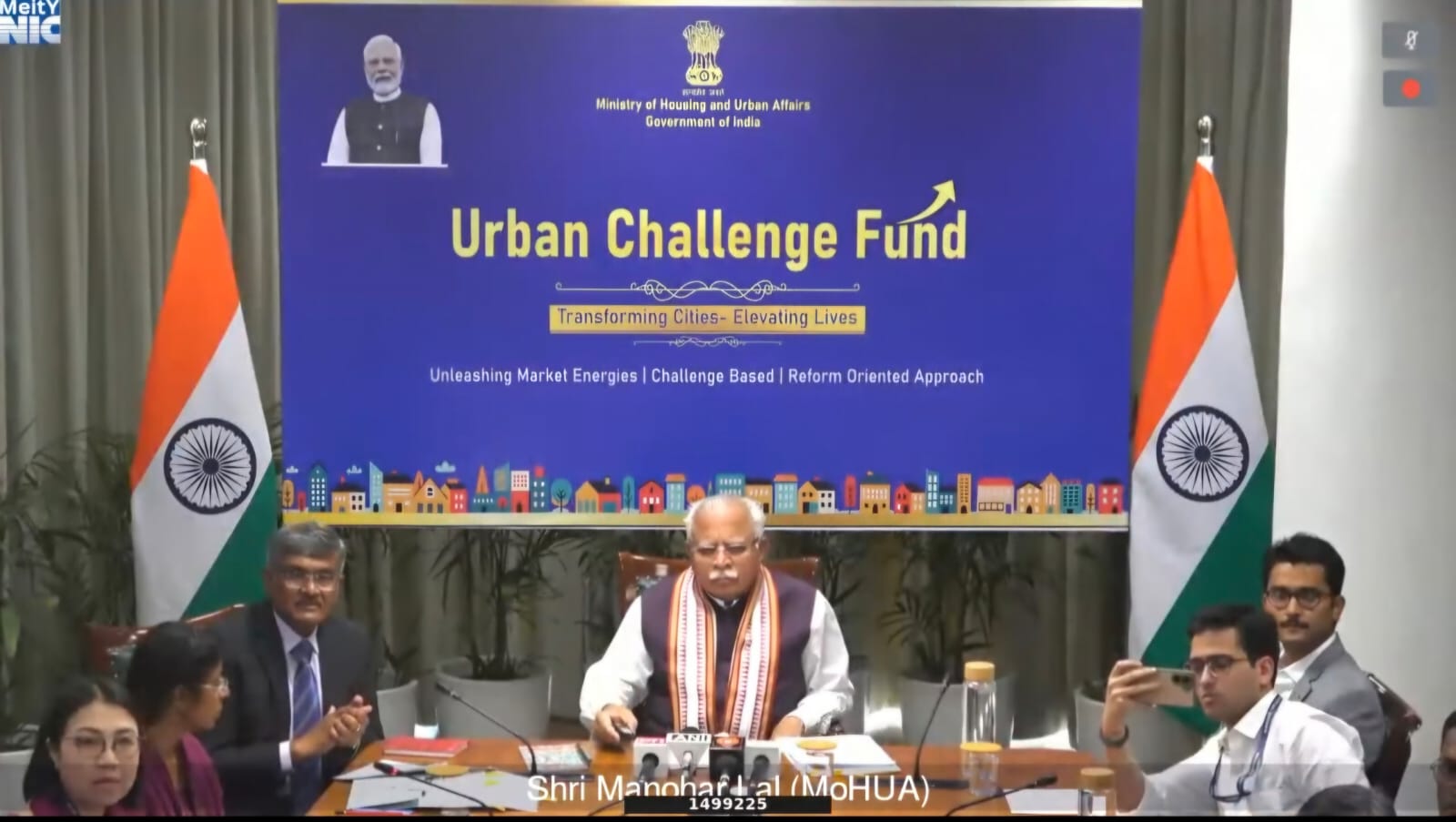
the launch of the Urban Challenge Fund (UCF) by Union Minister Manohar Lal
Khattar marks a decisive shift in India’s urban development paradigm — one that
moves beyond traditional public expenditure toward market-linked, reform-driven
growth.
The skyline of a nation is often its most
visible declaration of intent. As India advances toward the aspirational
horizon of Viksit Bharat 2047, the role of cities as engines of economic
growth, innovation, and social mobility has become undeniable. In this context,
the launch of the Urban Challenge Fund (UCF) by Union Minister Manohar Lal
Khattar marks a decisive shift in India’s urban development paradigm — one that
moves beyond traditional public expenditure toward market-linked, reform-driven
growth.
For Odisha, this moment carries particular
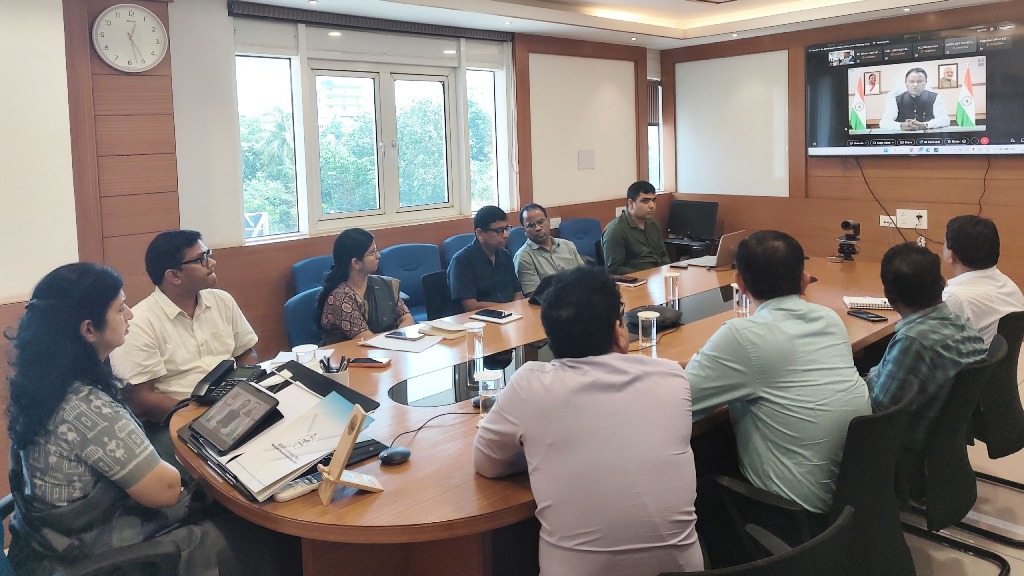
significance. The proactive participation of Chief Minister Mohan Charan Majhi
in the national rollout is more than symbolic; it reflects a clear political
and administrative commitment to reposition the state’s urban centres as
drivers of long-term economic transformation.
At its core, the Urban Challenge Fund represents
a structural rethinking of how urbanisation is financed and governed. With a
central outlay of ₹1 lakh crore aimed at crowding in nearly four
times that amount in total investment, the UCF seeks to use public funds as
catalytic capital rather than mere expenditure. This marks a clear departure from legacy
grant-based schemes, which often struggled with issues of scale, efficiency,
and sustainability.
 The emphasis now is on building
investment-ready cities — urban ecosystems that are not only infrastructure-rich
but also institutionally robust, financially viable, and policy-stable. In this
framework, reform becomes the currency of growth. Cities that demonstrate
governance innovation, fiscal discipline, and project readiness will be best
positioned to attract investment flows.
The emphasis now is on building
investment-ready cities — urban ecosystems that are not only infrastructure-rich
but also institutionally robust, financially viable, and policy-stable. In this
framework, reform becomes the currency of growth. Cities that demonstrate
governance innovation, fiscal discipline, and project readiness will be best
positioned to attract investment flows.
Odisha’s urbanisation story has historically
been modest, with only about 17 per cent of its population residing in cities.
Yet, as Chief Minister Majhi has underscored, the future demands a bold
recalibration. The vision of “Prosperous Odisha 2036” places urban
transformation at the heart of the state’s development strategy, with an
ambitious target of raising urbanisation levels to 60 per cent.
This is not merely a demographic transition —
it is an economic imperative. Higher urbanisation is intrinsically linked to
productivity gains, employment generation, and innovation-led growth. For
Odisha, which aspires to evolve into a $1.5 trillion economy by 2047, cities
must emerge as hubs of manufacturing, services, logistics, and knowledge
industries. The UCF provides both the framework and the financial architecture
to accelerate this shift.
One of the most compelling features of the UCF
is its focus on outcomes rather than outputs. The goal is not simply to build
roads, pipelines, or housing units, but to create integrated urban ecosystems
that are livable, sustainable, and economically vibrant.
Odisha has already identified several
high-impact projects aligned with this vision. Initiatives such as the Mahanadi
Riverfront Development, the Sambalpur Master Plan, and the
Bhubaneswar–Cuttack–Puri–Paradip Economic Region (BCPPER) are not isolated
infrastructure efforts. They represent strategic interventions aimed at
redefining urban geography, unlocking land value, and strengthening regional
connectivity. Executed effectively within the UCF framework, these projects can
attract private capital, stimulate local economies, and create a virtuous cycle
of growth.
The success of the Urban Challenge Fund will
depend significantly on robust Centre–State collaboration. Odisha’s approach in
this regard reflects a mature model of cooperative federalism. By aligning its
state-level vision with national priorities, it is positioning itself to
maximise the benefits of central initiatives.
The continued support of the Union Government
under Prime Minister Narendra Modi has already been instrumental in advancing
urban reforms through flagship programmes such as AMRUT 2.0, Swachh Bharat
Mission 2.0, and PMAY 2.0. The UCF builds on this foundation, introducing a
more dynamic and competitive dimension to urban financing.
However, while the opportunities are immense,
the challenges are equally substantial. Transitioning to a market-linked model
requires deep institutional reforms at the urban local body (ULB) level.
Constraints such as limited technical capacity, weak financial management, and
fragmented planning frameworks could impede progress if not addressed
proactively.
To fully leverage the UCF, Odisha must invest
in strengthening urban governance systems. This includes enhancing project
preparation capabilities, improving municipal revenue mechanisms, and adopting
digital governance tools to ensure transparency and efficiency. Measures such
as workflow automation and integrated command centres can play a transformative
role. Equally important is the establishment of robust accountability
frameworks, with clearly defined and rigorously monitored performance metrics.
 The launch of the Urban Challenge Fund is not
merely another policy initiative — it is a defining moment in India’s urban
journey. For Odisha, it presents a rare convergence of vision, policy, and
opportunity.
The launch of the Urban Challenge Fund is not
merely another policy initiative — it is a defining moment in India’s urban
journey. For Odisha, it presents a rare convergence of vision, policy, and
opportunity.
If harnessed effectively, the UCF can enable
the state to move beyond incremental growth and embrace a more ambitious,
transformative trajectory. It offers the potential for cities to evolve from
administrative centres into dynamic engines of economic expansion.
Yet, the true test will lie in execution.
Vision must translate into viable projects, policy into performance, and intent
into tangible impact.
As India’s development narrative enters a new
phase, cities will increasingly become the arenas where the future is shaped.
The Urban Challenge Fund recognises this reality and seeks to empower them as
active participants in the nation’s growth story.
For Odisha, the message is unequivocal: the
path to prosperity runs through its cities. With political will, administrative
agility, and strategic foresight, the state is well-positioned to harness the
transformative potential of the UCF — and, in doing so, emerge as a model for
others navigating the complex yet promising journey of urban transformation.
The
author may be reached at cell-phone number 9439654222