
THEBUSINESSBYTES
BUREAU
NEW
DELHI, MARCH 29, 2026
Prime Minister
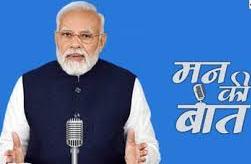
Narendra Modi on Sunday struck a note of resilience, unity, and optimism as he
addressed the nation in the March 29 edition of his monthly radio programme
Mann Ki Baat, highlighting how collective public participation and grassroots
innovation continue to power India’s journey amid global uncertainties. Touching
upon a wide range of themes including geopolitical challenges, youth
participation, sports achievements, cultural preservation, sustainability, and
women-led entrepreneurship, the Prime Minister underscored the importance of
citizen-driven development in shaping a self-reliant India.
Referring to the
turbulent global environment marked by conflict and instability, the Prime
Minister acknowledged the challenges posed by ongoing war in India’s
neighbourhood, particularly its impact on energy supplies and global markets.
He expressed gratitude to Gulf nations for supporting more than one crore
Indians working there and urged citizens to remain united and vigilant in the
face of misinformation. Emphasizing national unity, he called upon people to
rely only on authentic information shared by the government and avoid being
influenced by rumours or political opportunism.
Highlighting India’s
cultural richness, Modi encouraged citizens to participate in the Gyan Bharatam
Survey, an initiative aimed at documenting and preserving the country’s vast
repository of manuscripts. Through the Gyan Bharatam App, people are sharing
images and details of rare manuscripts written in diverse scripts including
Tai, Gurmukhi, Tibetan, and those inscribed on palm leaves and copper plates.
He described the initiative as a powerful example of how public participation
can help safeguard India’s civilizational heritage for future generations.
 The Prime Minister
also praised the enthusiasm of India’s youth, describing them as the driving
force behind the country’s progress. He highlighted the role of the MY Bharat
initiative in connecting young citizens with policymaking processes through
activities such as the “Budget Quest” quiz, which saw participation from nearly
12 lakh youth across the country. Many participants presented innovative ideas
on agriculture, women-led development, green growth, sports talent
identification, and skill development, reflecting a strong desire among young
Indians to contribute meaningfully to nation-building.
The Prime Minister
also praised the enthusiasm of India’s youth, describing them as the driving
force behind the country’s progress. He highlighted the role of the MY Bharat
initiative in connecting young citizens with policymaking processes through
activities such as the “Budget Quest” quiz, which saw participation from nearly
12 lakh youth across the country. Many participants presented innovative ideas
on agriculture, women-led development, green growth, sports talent
identification, and skill development, reflecting a strong desire among young
Indians to contribute meaningfully to nation-building.
Sports achievements
featured prominently in the address, with Modi congratulating the Indian
cricket team for its T20 World Cup victory and lauding the Jammu and Kashmir
cricket team for winning the Ranji Trophy after nearly seven decades. He commended
captain Paras Dogra and bowler Aaqib Nabi for their exceptional performance and
expressed hope that such achievements would inspire youth in the region to
pursue sports with renewed passion. He also applauded athlete Gulveer Singh for
his historic performance in the New York City Half Marathon and young squash
sensation Anahat Singh for her international success at the age of 17.
Reiterating the
importance of fitness and preventive healthcare, the Prime Minister urged
citizens to adopt healthier lifestyles by reducing sugar consumption and
cutting down cooking oil intake by 10 percent. With less than 100 days
remaining for International Yoga Day, he encouraged people to embrace yoga as a
pathway to physical and mental well-being.
The Prime Minister
highlighted several inspiring initiatives aimed at promoting scientific
curiosity and innovation among students, including the Anveshan programme
launched by the Prayog Institute of Education Research in Bengaluru. He also
spoke about the traditional Morung learning system in Nagaland, which combines
cultural knowledge with modern education to nurture curiosity in subjects such
as mathematics and science.
With summer
approaching, Modi stressed the importance of water conservation, noting that
over 50 lakh artificial water harvesting structures have been created under the
Jal Sanchay Abhiyan. He cited examples from Tripura, Chhattisgarh, and
Telangana where community-led efforts such as rooftop rainwater harvesting,
recharge ponds, and soak pits have significantly improved groundwater levels
and reduced water scarcity.
Highlighting the
growing role of innovation in fisheries, the Prime Minister shared the
inspiring story of Sujata Bhuyan from Odisha’s Sambalpur district, who
transformed from a homemaker into a successful aquapreneur through fish farming
in the Hirakud reservoir. Despite initial challenges, her determination enabled
her to build a thriving business within a few years, inspiring women in her
community to explore entrepreneurship opportunities. He also mentioned other
examples such as cold storage entrepreneur Havva Gulzar from Lakshadweep and
pond farmer Shivling Satappa Huddar from Karnataka, illustrating the expanding
scope of livelihood opportunities in fisheries and seaweed cultivation.
The Prime Minister
also praised community-led environmental efforts, including the planting of
over 2.51 lakh saplings in Varanasi within a single hour, creating a Guinness
World Record, and the conservation of more than 150 varieties of traditional
seeds by women in Nagaland’s Chizami village. He noted that such initiatives
demonstrate how traditional knowledge and community participation can provide
effective solutions to modern challenges like climate change.
Highlighting India’s rapid progress in renewable energy adoption, Modi spoke about the impact of the PM Surya Ghar Muft Bijli Yojana, which is enabling households to generate solar power and reduce electricity costs. He cited examples of individuals benefiting from solar rooftop installations and solar-powered irrigation, emphasizing how clean energy is transforming livelihoods across urban and rural India.
Concluding his address, the Prime Minister emphasized that Mann Ki Baat has evolved into a shared national dialogue that connects citizens from diverse backgrounds through stories of innovation and collective effort. He encouraged people to continue sharing inspiring initiatives from their communities, noting that even small efforts can create meaningful change and inspire others to contribute to the nation’s development journey.