THEBUSINESSBYTES
BUREAU
BHUBANESWAR,
MARCH 29, 2026
As India sharpens its
Vision 2047 ambition and states recalibrate their industrial strategies, one
structural question stands out: why have some mineral-rich regions successfully
translated natural resources into sustained employment, while others continue
to remain suppliers of raw inputs?
According to Prof.
Suresh Chandra Misra, former Professor, IIT Kharagpur, India’s journey towards
becoming a $5 trillion economy is constrained by a visible value-chain gap.
This is particularly evident in Odisha, which holds over half of the country’s
bauxite reserves, yet many refineries continue to rely on uncertain and often
disrupted imports of raw material.
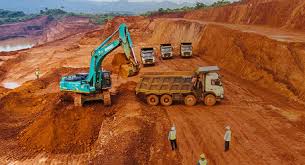
Opening up bauxite
mines in districts such as Kalahandi and Rayagada is therefore, not merely
about accelerating industrial growth; it is about securing India’s raw material
future and strengthening economic resilience.
At the same time, the
development of a bauxite-led industrial corridor can position aluminium as a
cornerstone of India’s next phase of growth. From semiconductors and clean
energy to infrastructure, mobility and defence, aluminium plays a critical role
in sectors that will drive both India’s Vision 2047 and Odisha’s Vision 2036.
The choice before
policymakers is clear: remain a supplier of raw potential, or build robust,
integrated value chains within the country. By linking bauxite resources to a
vibrant domestic aluminium ecosystem, India can generate employment, strengthen
MSMEs, and promote more balanced regional development.
The issue is not
resource abundance, but how effectively these resources are integrated into
manufacturing value chains. India produces over 95 percent of its iron ore, 55
percent of its bauxite and 90 percent of its chromite domestically. Odisha
alone accounts for more than half of the country’s bauxite reserves and nearly
one-third of its iron ore output—strategic assets that underpin India’s
ambitions in steel, aluminium, infrastructure and the energy transition.
Yet mineral dominance
does not automatically translate into manufacturing depth or employment
density. Evidence across India suggests that job creation accelerates when
mineral development is closely aligned with downstream industries.
 Bauxite-rich Odisha
has already attracted significant investment in world-class alumina refineries.
However, despite this natural and infrastructural advantage, the full potential
of these facilities remains underutilised because several captive bauxite mines
within the state are yet to become operational. The result is a missed
opportunity not only in terms of production, but also in employment generation,
local enterprise growth and regional economic multiplier effects.
Bauxite-rich Odisha
has already attracted significant investment in world-class alumina refineries.
However, despite this natural and infrastructural advantage, the full potential
of these facilities remains underutilised because several captive bauxite mines
within the state are yet to become operational. The result is a missed
opportunity not only in terms of production, but also in employment generation,
local enterprise growth and regional economic multiplier effects.
Odisha occupies a
unique position in India’s mineral economy. It is central to the country’s aluminium
and steel capacity and hosts major refineries and processing facilities.
However, the depth of downstream manufacturing and domestic mineral production
ecosystems remains uneven, particularly in the western and southern districts
where a significant portion of the resource base is located.
Large capital
investments often produce impressive figures, but capital intensity does not
always translate into proportional job creation. When upstream activities such
as mineral extraction occur outside the state, employment multipliers shift
geographically and the local economy loses potential value.
At a time when
aluminium is becoming increasingly vital for renewable energy infrastructure,
electric mobility, defence manufacturing and construction, strengthening
value-chain integration is even more critical. Mineral-rich states that deepen
domestic production, component manufacturing and MSME clustering tend to
generate significantly higher employment intensity than those dependent solely
on later-stage value chain activities.
Odisha’s vast mineral
wealth — particularly in bauxite, iron ore and coal — positions the state as
one of India’s most strategic engines of industrial growth. Efficient logistics
and connectivity will be crucial in converting these resources into large-scale
manufacturing and employment opportunities.
The state has made
notable progress in strengthening hinterland connectivity through road and rail
networks such as NH-16, the upcoming Coastal Highway, the Haridaspur–Paradip
rail line and logistics corridors under the Sagarmala programme. As a result,
the Dhamra–Paradip–Gopalpur coastal belt has evolved into Odisha’s maritime
growth spine, linking mineral and industrial hubs including Angul, Kalinganagar
and Jharsuguda with major ports.
However, if
industrialisation accelerates at the pace envisioned, existing infrastructure
alone may not be sufficient. Greater integration of rail, road and inland
waterways will be necessary to enable efficient cargo movement. In this
context, the development of National Waterway-5 along the Brahmani river system
— from Talcher to Dhamra and Paradip — presents a strategic opportunity to
connect Odisha’s mining and industrial centres with its ports through a
cost-effective inland cargo route with year-round navigability.
Ultimately, the
transformation of mineral wealth into widespread economic prosperity depends
not on extraction alone, but on the ability to build integrated ecosystems that
convert natural advantage into sustainable employment, industrial depth and
long-term competitiveness.