
THEBUSINESSBYTES
BUREAU
BHUBANESWAR,
APRIL 7, 2026
Emphasising that the
true strength of Indian democracy lies in its grassroots institutions, Odisha’s
Minister for Panchayati Raj, Drinking Water, and Rural Development, Rabi
Narayan Naik on Tuesday called for reimagining capacity-building frameworks to
create empowered, accountable, and future-ready Panchayati Raj Institutions
(PRIs). He stressed the need to move beyond conventional training models
towards a continuous process of learning, unlearning, and relearning that is
human-centric, technology-enabled, and rooted in local realities.
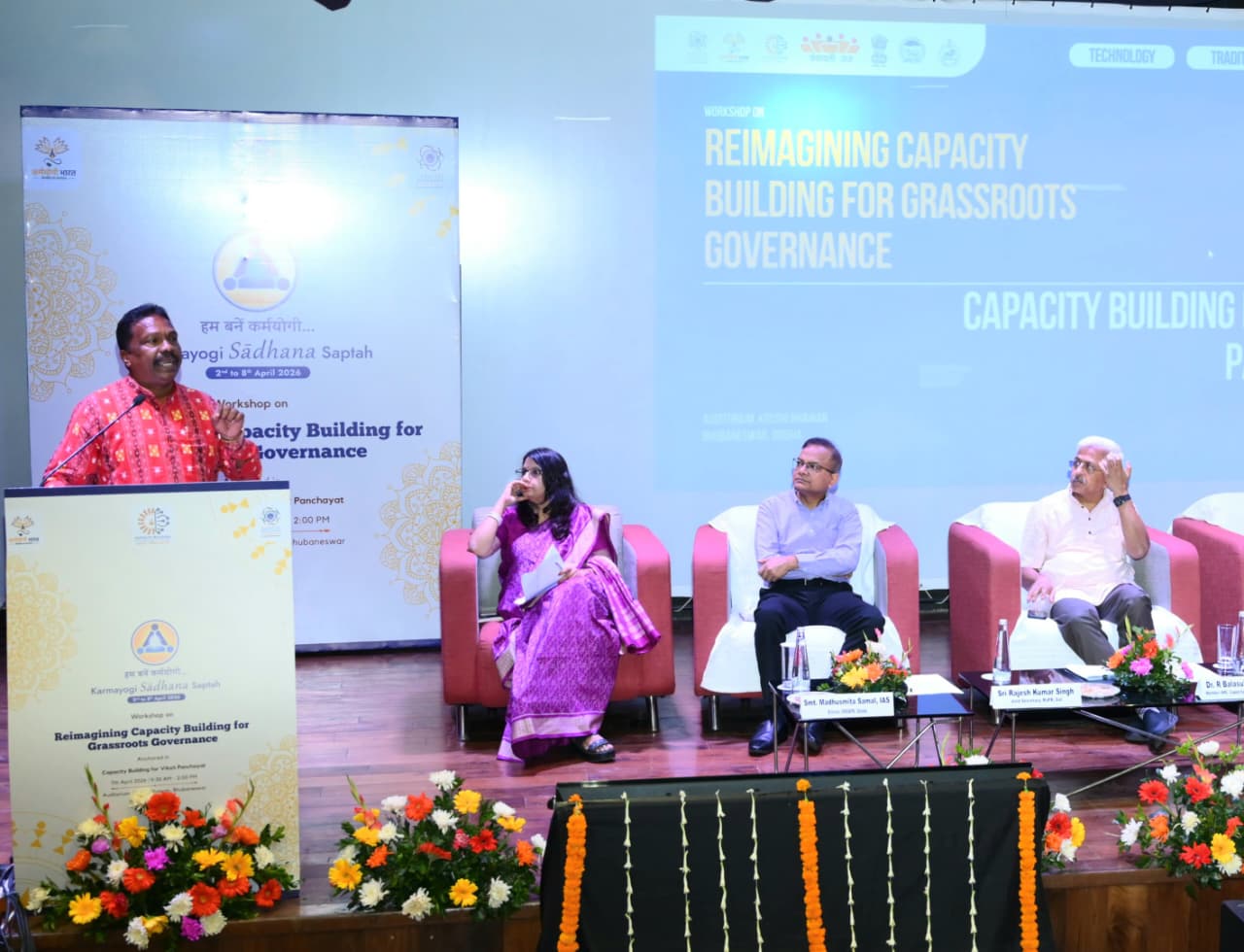 Addressing a
high-level workshop on “Reimagining Capacity Building for Grassroots
Governance” in Bhubaneswar as part of the nationwide SADHANA Saptah (2–8 April
2026), the Minister highlighted that achieving the vision of Viksit Bharat
requires robust institutional capabilities supported by digital empowerment,
behavioural transformation for empathy and accountability, and localized
learning in vernacular languages. He also emphasised the importance of
data-driven planning and effective implementation of Gram Panchayat Development
Plans (GPDPs) to ensure tangible outcomes at the grassroots level.
Addressing a
high-level workshop on “Reimagining Capacity Building for Grassroots
Governance” in Bhubaneswar as part of the nationwide SADHANA Saptah (2–8 April
2026), the Minister highlighted that achieving the vision of Viksit Bharat
requires robust institutional capabilities supported by digital empowerment,
behavioural transformation for empathy and accountability, and localized
learning in vernacular languages. He also emphasised the importance of
data-driven planning and effective implementation of Gram Panchayat Development
Plans (GPDPs) to ensure tangible outcomes at the grassroots level.
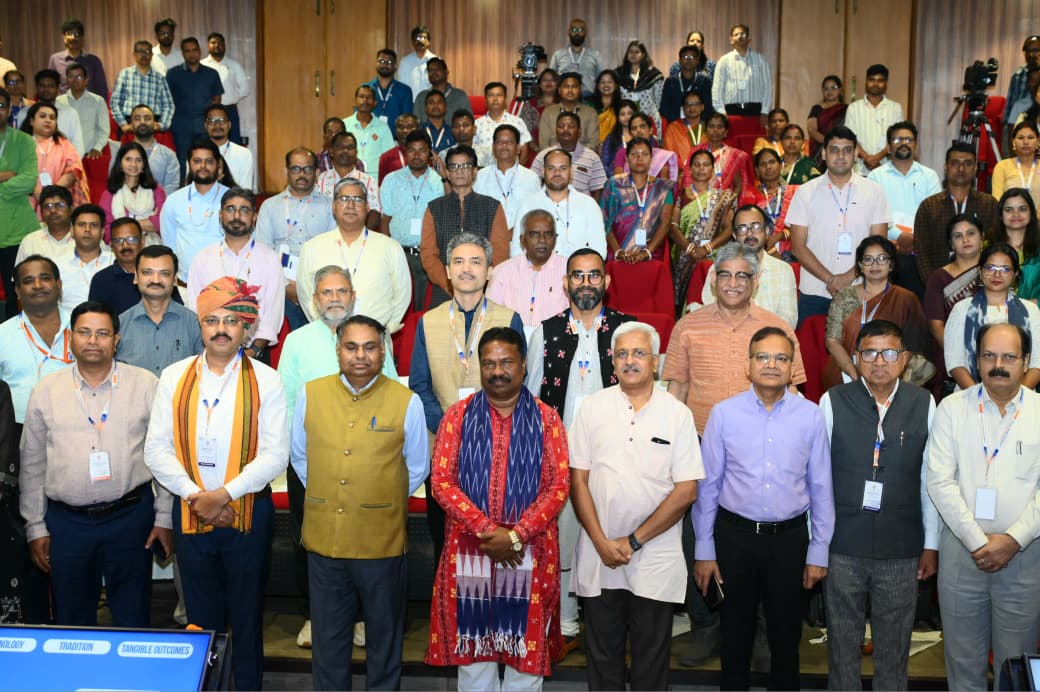
The workshop was
organised by the Capacity Building Commission in collaboration with the
Department of Personnel and Training, Karmayogi Bharat, and the Government of
Odisha. It brought together senior policymakers, government officials,
representatives from State Institutes for Rural Development (SIRDs), civil
society organisations, and Panchayati Raj Institutions to deliberate on
strengthening grassroots governance through continuous learning, innovation,
and technology-driven solutions. The deliberations aligned with the broader
theme of SADHANA Saptah — “Technology, Tradition, and Tangible Outcomes” —
aimed at building resilient and responsive local institutions.
R. Balasubramaniam,
Member (HR), Capacity Building Commission, elaborated on the transformative
vision of Mission Karmayogi, highlighting the shift from rule-based to
role-based governance through competency-driven frameworks. He underscored the
importance of building citizen-centric governance systems that can effectively
respond to the evolving needs of society and support India’s journey towards
becoming a developed nation.
Rajesh Kumar Singh,
Joint Secretary, Ministry of Panchayati Raj, Government of India, also attended
the inaugural session, reflecting the Centre’s commitment to strengthening
local governance institutions through structured reforms and capacity-building
initiatives.
A major highlight of
the workshop was the focus on the “Viksit Panchayat Karmayogi” initiative, a
flagship reform under Mission Karmayogi aimed at equipping PRI representatives
with essential competencies, digital tools, and practical knowledge for effective
governance. The initiative integrates structured learning through the iGOT
Karmayogi platform, AI-powered advisory systems, mobile-enabled learning
modules, and real-time problem-solving mechanisms aligned with the “Prashasan
Gaon Ki Aur” approach.
In Odisha, the
initiative is being piloted in select Gram Panchayats across Koraput and
Mayurbhanj districts. Early outcomes indicate improved capacity among PRI
representatives, greater adoption of digital learning platforms, enhanced
access to real-time advisory support, and stronger community participation in
governance processes.
The workshop also
witnessed the launch of an AI-enabled WhatsApp chatbot designed for PRI
functionaries, along with structured e-learning modules under the Viksit
Panchayat initiative. Experience-sharing sessions, thematic discussions on
last-mile governance challenges, and an exhibition showcasing innovative
digital tools further enriched the deliberations, reinforcing the collective
resolve to strengthen grassroots governance through innovation, collaboration,
and continuous capacity building.