
THEBUSINESSBYTES
BUREAU
BASEL (SWITZERLAND), APRIL 7, 2026
Syngenta, a global
leader in agricultural innovation, has unveiled VIRESTINA technology (active
ingredient: metproxybicyclone), the world’s first selective herbicide in nearly
four decades designed to effectively control resistant grass weeds in soybean and
cotton crops. The technology marks a major advancement in crop protection,
offering farmers a powerful new tool to safeguard productivity and
sustainability.
The global launch
follows regulatory approval in Argentina, the first nation to authorize the use
of VIRESTINA technology. Syngenta plans to expand its availability to key
agricultural markets including Brazil, Australia, the United States and Canada.
 Argentina, the
world’s third-largest producer of soybeans, is widely regarded as one of the
most progressive agricultural markets, often serving as an early adopter of
breakthrough technologies. Soybeans remain one of the most important global
crops, valued for their rich amino acid content and their role as a major
source of high-protein animal feed.
Argentina, the
world’s third-largest producer of soybeans, is widely regarded as one of the
most progressive agricultural markets, often serving as an early adopter of
breakthrough technologies. Soybeans remain one of the most important global
crops, valued for their rich amino acid content and their role as a major
source of high-protein animal feed.
Resistant weeds pose
a growing threat to global agriculture, surviving conventional herbicide
treatments and competing aggressively with crops for nutrients, water and
sunlight. These weeds also serve as a “green bridge” for pests and pathogens,
including viruses, fungi and bacteria, potentially causing severe yield losses
and reducing farmland productivity.
With herbicide
resistance now reported in 75 countries and affecting more than 100 crops, the
challenge continues to intensify. Grass weeds alone account for nearly 40
percent of the 273 weed species known to exhibit resistance. Against this
backdrop, VIRESTINA technology provides farmers with a much-needed solution,
particularly as the pipeline of new herbicide innovations has remained limited
in recent decades.
In major crops such
as soybean and cotton, VIRESTINA technology demonstrates strong effectiveness
against grass weeds resistant to widely used herbicides such as glyphosate and
clethodim. The solution is designed to be crop-safe and rapidly biodegradable
in soil, contributing to a reduced environmental footprint. It also allows
greater flexibility in crop rotation and cover crop selection, while reducing
soil compaction and greenhouse gas emissions by minimizing the need for
repeated use of heavy machinery.
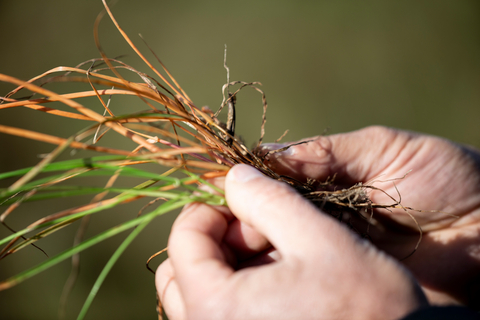 Scientists at
Jealott’s Hill International Research Centre in the United Kingdom used
advanced predictive science to bring the innovation to market in just 10 years
— significantly faster than the typical 12–14-year development cycle for
agricultural technologies.
Scientists at
Jealott’s Hill International Research Centre in the United Kingdom used
advanced predictive science to bring the innovation to market in just 10 years
— significantly faster than the typical 12–14-year development cycle for
agricultural technologies.
Ioana Tudor, Global
Head of Crop Protection Marketing at Syngenta, said the innovation reflects the
company’s commitment to anticipating growers’ challenges and delivering timely
solutions. She emphasized that VIRESTINA technology demonstrates Syngenta’s
strong innovation pipeline and its ability to accelerate research and
development to meet evolving agricultural needs.
Syngenta continues to strengthen its leadership in crop protection innovation, with plans to introduce at least 20 new proprietary technologies over the next decade across advanced crop protection and agricultural biologicals. Its portfolio already includes widely recognized solutions such as TYMIRIUM technology for nematode and fungal control, PLINAZOLIN technology for insect management and ADEPIDYN technology for fungal disease protection, alongside a growing range of biocontrols, biostimulants and AI-enabled precision agriculture solutions.
Developed using Syngenta’s expertise in ACCase-inhibitor herbicides (HRAC Group 1), VIRESTINA technology represents the fourth generation of this foundational agricultural chemistry. It is engineered to effectively control weeds resistant to older herbicides as well as those from other chemical groups, reinforcing its significance as a next-generation solution for sustainable farming.